LATEST NEWS:
Jenny Holzer & Andy Goldsworthy win 2026 Praemium Imperiale • €9m Renoir museum heist in France • Dimitris Daskalopoulos donates 51 works to museums in Greece & Scotland • Artist Lucien Smith dies aged 37 • Faro Santander opens with 1,000-work collection • Argentina orders return of Nazi-looted Old Master • Greece rejects Parthenon Marbles loan request • Smithsonian chief Lonnie Bunch announces retirement
Go Back
Magazine

Four Generations of Collecting: How the Thyssen Family Is Building a Museum for the 21st Century

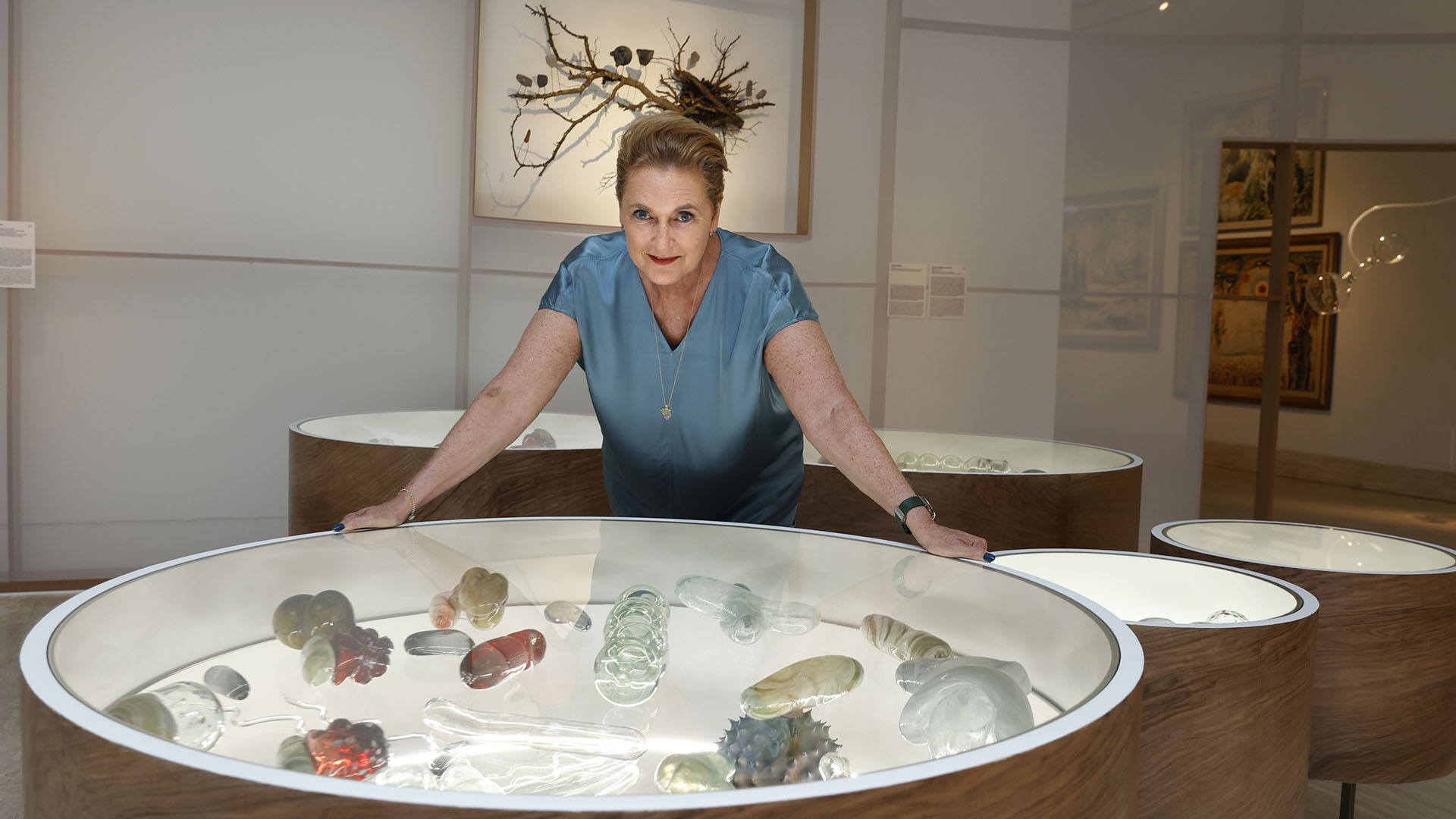
Francesca Thyssen-Bornemisza and her heirs are transferring 186 TBA21 works into Spanish public ownership and lending 179 more. The deeper story is how four generations of one collecting family have repeatedly redefined what legacy can mean.

Articles
Articles
Four Generations of Collecting: How the Thyssen Family Is Building a Museum for the 21st Century

Private collections rarely enter public life in a single clean movement. They are lent, dispersed, partially gifted, inherited, re-contextualised and, sometimes, rebuilt around a new institutional purpose. The latest chapter in the Thyssen-Bornemisza story is unusually ambitious because it combines several of those mechanisms at once.

On 16 September, Spain’s Ministry of Culture and TBA21 announced that Francesca Thyssen-Bornemisza and her heirs will donate 186 works from the TBA21 Collection to the Spanish state, while another 179 works will be placed on long-term loan. The group is intended for an extension of the Museo Nacional Thyssen-Bornemisza in Madrid’s former Palacio del Hielo y del Automóvil, a 10,000-square-metre building a short walk from the museum’s Palacio de Villahermosa.

The numbers are striking, but the more consequential story is not financial. It is about what happens when a family collection changes its definition of legacy. One generation built a historical collection; another rebuilt and internationalised it; Francesca Thyssen-Bornemisza used private collecting to create a commissioning institution focused on contemporary art, ecology and social transformation. Now a substantial part of that twenty-first-century collection is being transferred permanently into public ownership.

From possession to stewardship

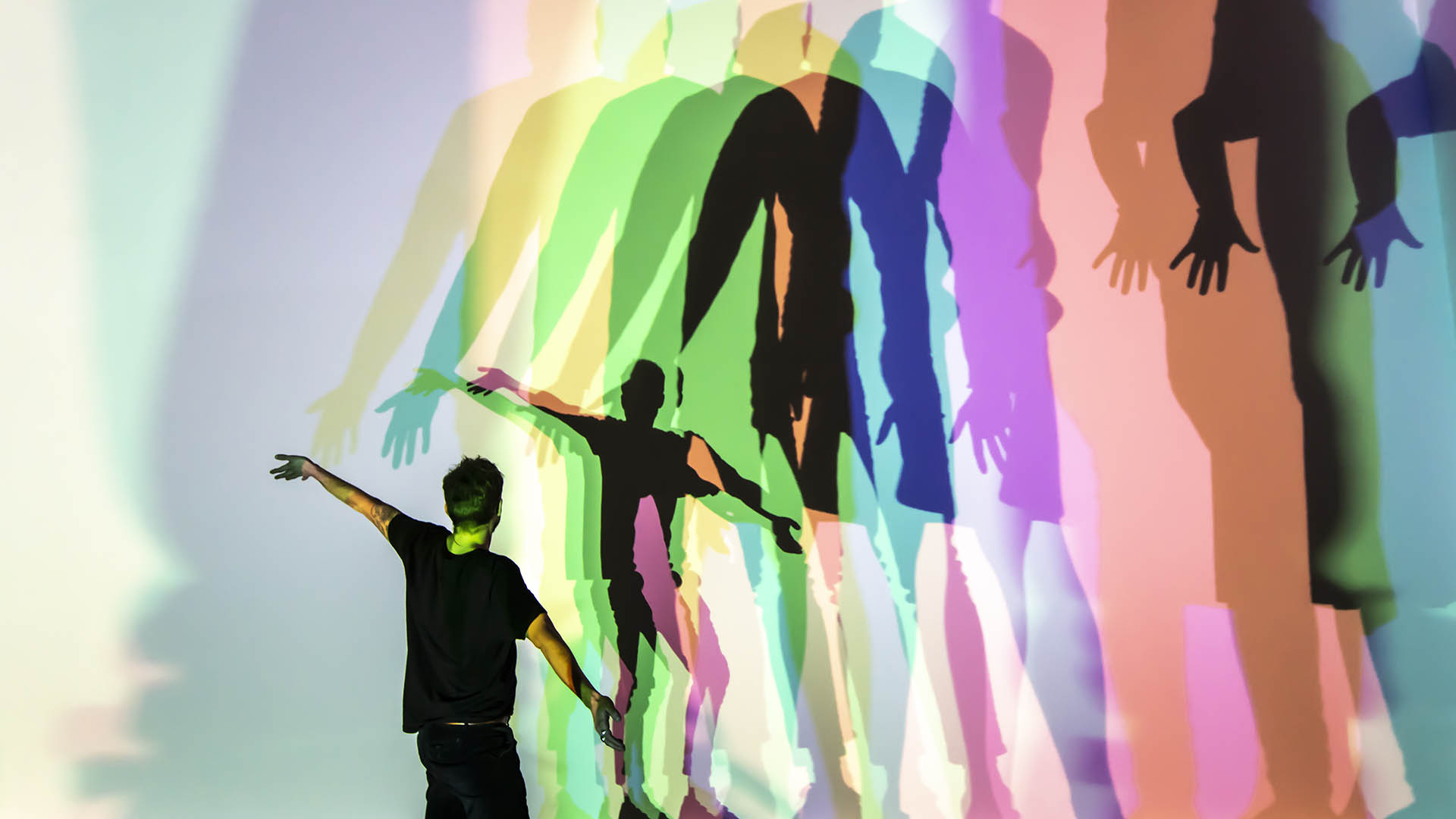
Installation view, Olafur Eliasson: In real life, Tate Modern, London, 2019. Photo: María del Pilar García Ayensa | Studio Olafur Eliasson, Berlin. TBA21 Collection.

Francesca Thyssen-Bornemisza has described a collection not as a possession but as a conversation with the world, held only briefly in trust. That language is more than an elegant philanthropic statement. It identifies one of the central questions facing mature private collections: what form should continuity take when the collector’s original act of selection is no longer enough?

The Thyssen family has confronted that question repeatedly. Francesca’s great-grandfather August commissioned Rodin. Her grandfather Heinrich built a gallery at Villa Favorita for Old Masters. Her father, Baron Hans Heinrich Thyssen-Bornemisza, spent decades reassembling and extending a collection that had been divided among heirs, adding German Expressionism, Impressionism, modern art and American painting before the collection found its permanent public home in Madrid. Francesca’s response was not to duplicate his taste. She pushed the family narrative into the present.

TBA21, founded in 2002, quickly moved beyond conventional acquisition. Within its first years the foundation made a deliberate decision to commission works and long-term artistic projects rather than simply purchase finished objects. That changed the collector’s role from buyer to producer, patron, research partner and institutional collaborator.

A collection that could not simply be bought today

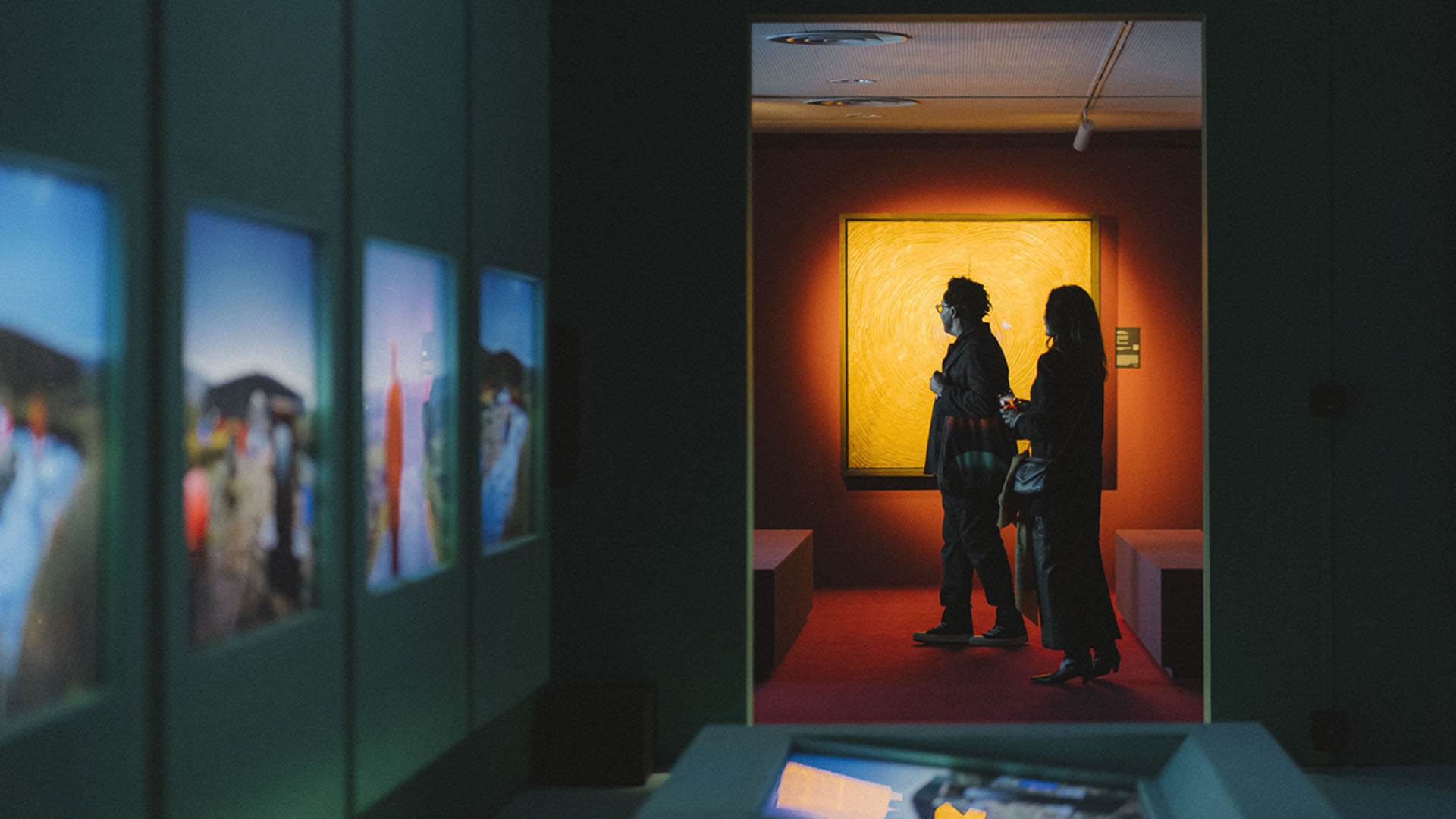
Installation view from John Akomfrah’s Listening All Night To The Rain at Museo Nacional Thyssen-Bornemisza, 2025. Photo: Maru Serrano; courtesy TBA21.

The 365 works being donated or lent span artists including Ai Weiwei, Marina Abramović, John Akomfrah, Monica Bonvicini, Candice Breitz, Janet Cardiff and George Bures Miller, Claudia Comte, Olafur Eliasson, Taloi Havini, Nikita Kadan, Pierre Huyghe, Rashid Johnson, Ernesto Neto, Bill Viola and Wu Tsang. TBA21 describes the group as a coherent body shaped around ecology, social justice and expanded contemporary practice.

That coherence matters. A mature collection is not simply a list of recognisable names. Its value as a collection lies in the relationships among works, the history of how they entered the group, the exhibitions and commissions that produced them, and the intellectual infrastructure built around them. Some of TBA21’s most consequential works emerged from years of collaboration. That history is difficult to reproduce by shopping the secondary market.

For collectors, this is a useful distinction between market value and institutional value. The Spanish government has assigned €16 million in value to the donation and €10 million to the long-term loan, while existing historical loans by Francesca Thyssen-Bornemisza are valued at about €70 million. Yet the deeper asset being transferred is the accumulated network of research, commissioning, documentation and curatorial context that makes the works legible as a body.

Donation, loan and the architecture of control

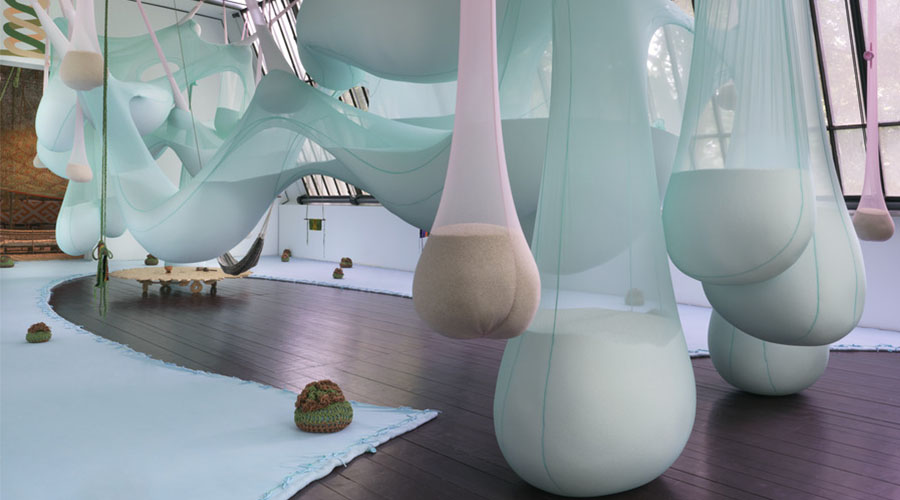
Ernesto Neto installation from the TBA21 Collection at TBA21–Augarten, Vienna, 2015. Photo: Jens Ziehe; courtesy TBA21.

The structure of the agreement is also instructive. A donation and a long-term loan may look similar to the public once works are hanging on museum walls, but they are fundamentally different instruments. The 186 donated works become public assets permanently. The 179 long-term loans remain privately owned while entering the museum’s programme for an extended period.

For collectors planning succession, the distinction is significant. Donation maximises permanence and public stewardship but relinquishes ownership. Long-term lending can preserve family ownership, flexibility and future decision-making while still allowing a collection to function publicly. Combining the two lets a collector define a permanent core while retaining a second tier of works that can evolve over time.

The Thyssen arrangement makes that division visible on an unusually large scale. It also demonstrates that collection planning is not merely a late-life administrative exercise. The museum and TBA21 have collaborated since 2018. The current transfer is the result of institutional trust built through exhibitions, research and public programmes over years.

The museum as a civic project

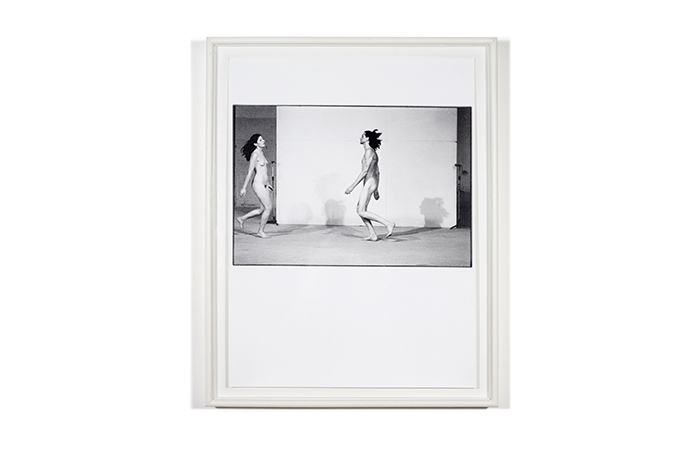
Marina Abramović and Ulay, Relation in Space, 1976, performance documentation in the TBA21 Collection. Courtesy TBA21; artwork/documentation © respective rightsholders.

The proposed new venue changes the meaning of the gift again. Rather than absorbing the works into existing galleries, the museum plans to use the former Palacio del Hielo as a dedicated centre for contemporary art, ecology and public participation. TBA21’s own language emphasises assemblies, research, education and civic infrastructure as much as display.

That follows the logic of the collection itself. A work commissioned around oceans, climate, Indigenous knowledge or social justice loses something if the institution treats it only as an object to be stored and periodically hung. Many works require moving image, sound, performance, archives, scientific collaboration or public participation. The building therefore becomes part of the collecting strategy.

For ARTCOLLECTORNEWS readers, this is where the story moves beyond philanthropy. The most interesting private collections increasingly create their own methods of display, research and audience-building before they ever enter a museum. When those collections are transferred, institutions inherit not just objects but expectations about how the objects should remain active.

Four generations, four definitions of collecting

The enduring fascination of the Thyssen-Bornemisza story is that continuity has never required repetition. The family’s successive generations have collected differently because the cultural questions around them changed. Old Masters, modernism, post-war art and contemporary ecological practice do not form a single taste profile. They form a history of collecting as adaptation.

That may be the most useful lesson for collectors thinking about legacy. Preserving a collection does not necessarily mean freezing it. A family can preserve a collecting culture while allowing the next generation to reject the previous generation’s categories, methods and priorities. The stronger inheritance may be permission to look independently.

When the new Thyssen contemporary centre eventually opens, its significance will therefore extend beyond the 365 works currently defining the agreement. It will test whether a museum built from a historic private collection can make room for a radically different model of collecting without smoothing away the tension between them.

For a dynasty whose public identity has been shaped by art for more than a century, that tension is not a problem to solve. It is the point.

Date
Sep 22, 2026
Share

Latest Posts

September 22, 2026
Articles
Articles
Four Generations of Collecting: How the Thyssen Family Is Building a Museum for the 21st Century

Francesca Thyssen-Bornemisza and her heirs are transferring 186 TBA21 works into Spanish public ownership and lending 179 more. The deeper story is how four generations of one collecting family have repeatedly redefined what legacy can mean.
September 21, 2026
Exhibitions
Exhibitions
William Kentridge and the City That Cannot Stop Being Erased

Ahead of the global premiere of William Kentridge’s twelfth Drawings for Projection film at Goodman Gallery London, we look at why charcoal, erasure and revision remain central to the artist — and what collectors should understand across drawings, prints, film and sculpture.

September 21, 2026
Exhibitions
Exhibitions
Frieze Sculpture 2026 Reviewed: What Happens When Sculpture Leaves the White Cube

Frieze Sculpture 2026 turns The Regent’s Park into a live test of scale, material, siting and weather. For collectors, the strongest lesson is not which work 'wins' — but what outdoor presentation reveals that the white cube can hide.