
October 18, 2026
Exhibitions
Exhibitions

From a £5 million Brueghel and three major Alice Neel sales to George Rickey, global modernism and a £675,000 Triceratops skull, Frieze Masters rewarded collectors who looked beyond categories.
Christie’s and Sotheby’s are reportedly competing for roughly 300 works left in Herbert Lust’s estate. The $60 million figure is the news hook; the deeper story is a collector who built through friendship, scholarship and decades of changing his mind.
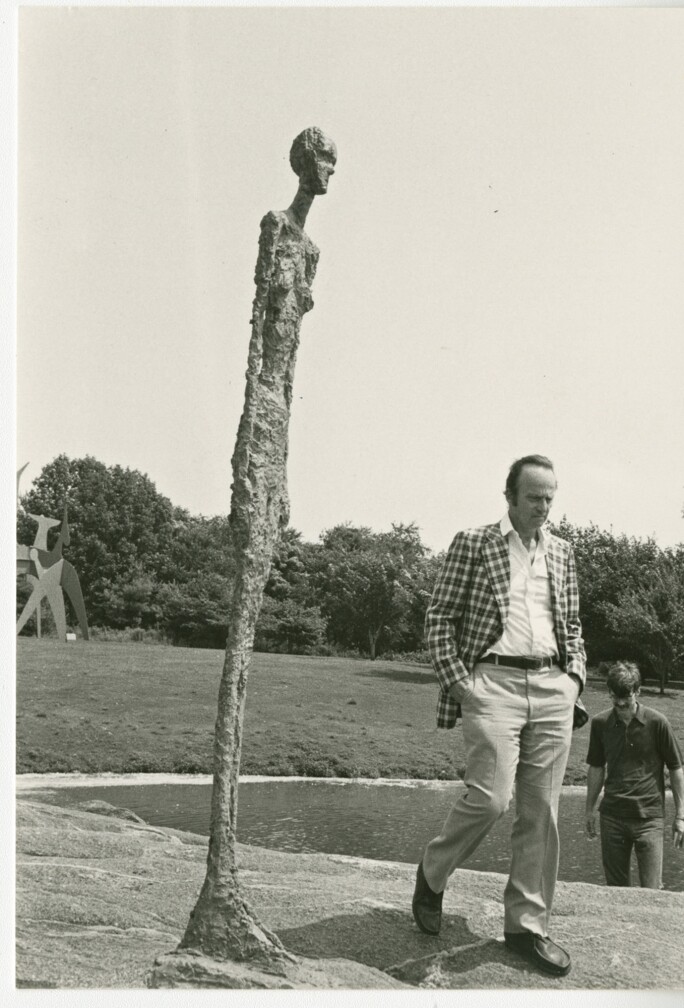
At the end of a collector’s life, the language changes. Friendship becomes provenance. Curiosity becomes inventory. A room that once made sense as a private constellation of objects becomes, in the hands of an estate, a sequence of lots, estimates, guarantees and competing proposals from auction houses.
That transition is now beginning for the collection of Herbert Lust, the American banker, writer, scholar and collector who died in May at the age of 99. According to art-market reporting, Lust’s estate is shopping roughly 300 works with a collective value in the region of $60 million, and Christie’s and Sotheby’s are among those competing for the material. Much of the group is understood to consist of works suitable for day sales, but sources have described around ten major objects, with a large sculpture by Alberto Giacometti expected to be among the most valuable.
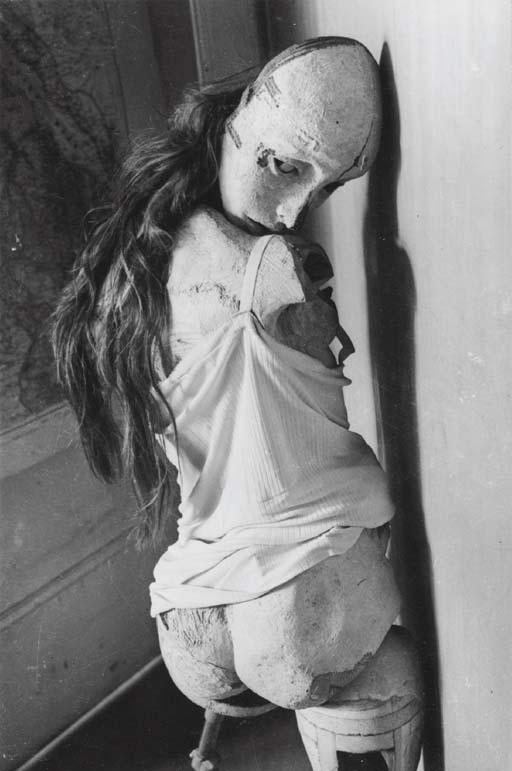
The numbers make an obvious headline. They do not, however, explain the collection. Lust’s significance was never reducible to the quantity of Giacometti, Robert Indiana, Hans Bellmer, Frank Stella or other artists he owned. What made him unusual was the way collecting folded into the rest of his intellectual life. He did not simply acquire artists; he befriended some of them, wrote about them, produced reference books on their work, supported them through difficult periods and eventually placed substantial groups of objects into museums.
Estate sales are always exercises in translation. Auction houses have to convert the private logic of a collection into the public logic of a market. They identify the trophy works, separate the museum-grade material from the more modest holdings, reconstruct provenance, commission new photography and write cataloguing that explains why objects which may have sat in the same house for decades should now command attention individually.
Lust’s estate presents that challenge in unusually concentrated form. The fresh market report says he had already donated hundreds of works to museums before his death. What remains is therefore not the whole collection as it once existed, but the residue of a lifetime of buying after decades of gifts, loans, scholarship and earlier sales. In other words, the approximately 300 works now under discussion are both a collection and the final chapter of one.
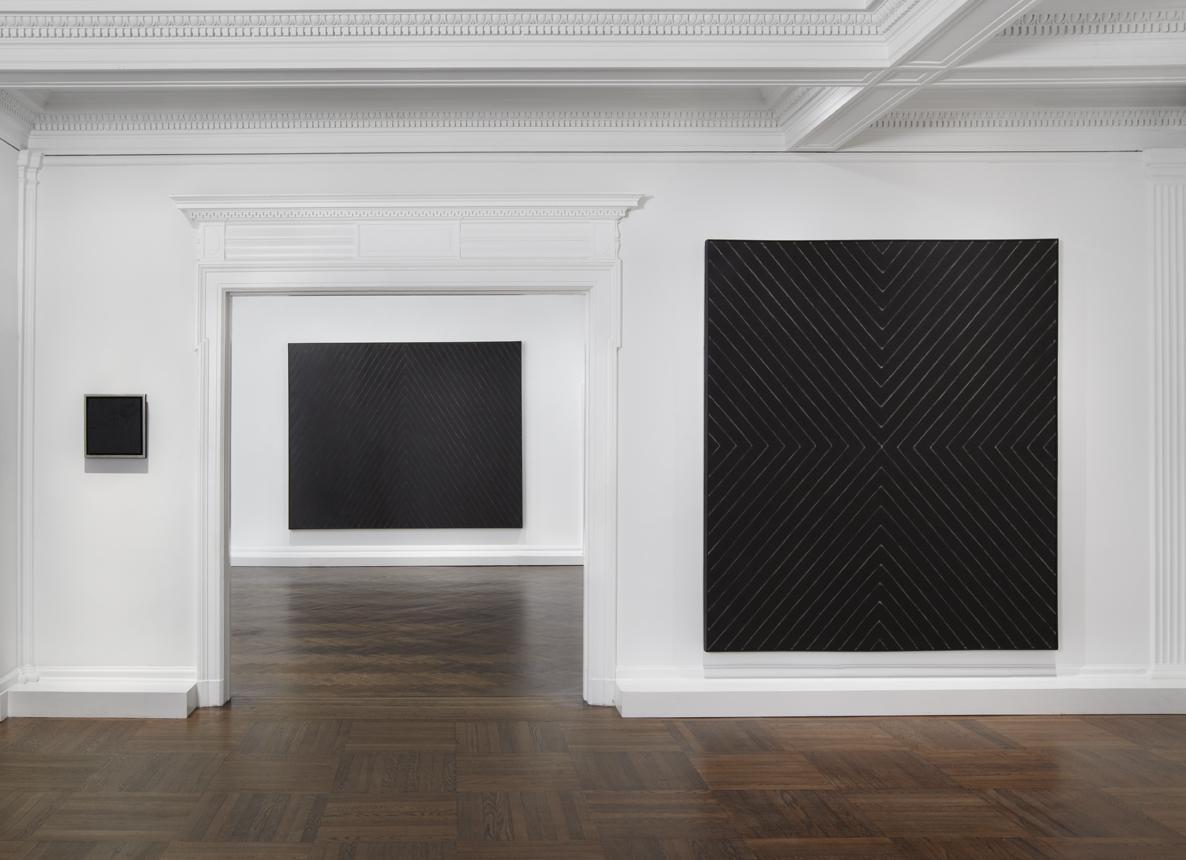
That distinction matters. A single-owner sale can create an aura of coherence even when the objects themselves vary enormously in quality. With Lust, coherence was real but eccentric. His home in Connecticut, as Sotheby’s described it in a 2019 profile, contained paintings by Indiana, Stella and Bellmer alongside sculpture by Calder, Giacometti and Carl Andre. It was less a neatly taxonomised survey of twentieth-century art than a record of intellectual attraction accumulated over many decades.
The origin story is almost too good for the art market, because it begins with a collector who did not particularly like art.
Born in 1926 and raised largely in Indiana, Lust arrived in Paris on a Fulbright scholarship after completing graduate study at the University of Chicago. Literature, not visual art, had been the obsession that redirected his life. In Paris, a chance encounter brought him into contact with Alberto Giacometti. The young American was intrigued by the artist as a person but initially found the work difficult, even ugly. Rather than treating that reaction as a verdict, Lust treated it as evidence that he might not yet understand what he was looking at.
That intellectual reversal became one of the defining episodes of his life. Giacometti invited him into the studio; conversation became friendship; friendship became sustained looking. Lust eventually acquired hundreds of works associated with the artist and in 1970 published Giacometti: The Complete Graphics and 15 Drawings, a scholarly reference that continues to appear in cataloguing today.
For collectors, the episode is more revealing than the later scale of the holdings. The most important act was not purchasing Giacometti early. It was allowing judgment to evolve. Collecting is usually narrated retrospectively as a succession of correct decisions. Lust’s story preserves the uncertainty that actually precedes conviction. He first resisted the work, then studied it, then came to understand it, and only then built depth.
That is almost the opposite of the contemporary fair-speed model in which collectors are asked to decide quickly, often from a preview PDF or a few minutes in a booth. Lust’s method was relational and slow. He did not mistake immediacy for certainty.
The art market loves a provenance that includes direct contact with an artist. It adds intimacy and sometimes scarcity. Yet in Lust’s case, artist friendships were not anecdotes appended to ownership; they were part of the mechanism through which the collection formed.
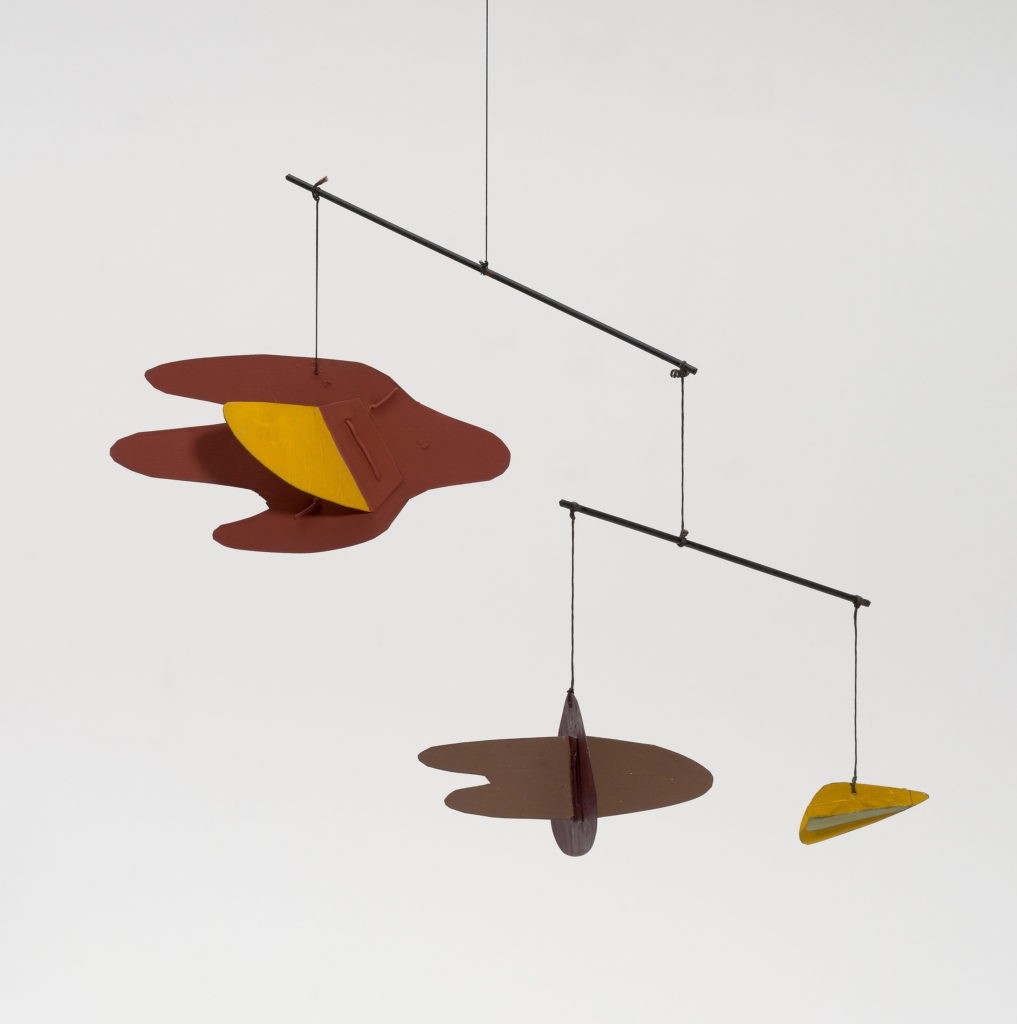
Giacometti introduced him to Alexander Calder. On another occasion, Lust encountered Robert Indiana through a social connection in New York. Once again, he initially thought the art was absurd. Indiana’s use of blunt words and signs did not immediately persuade him. Once again, exposure altered his view.
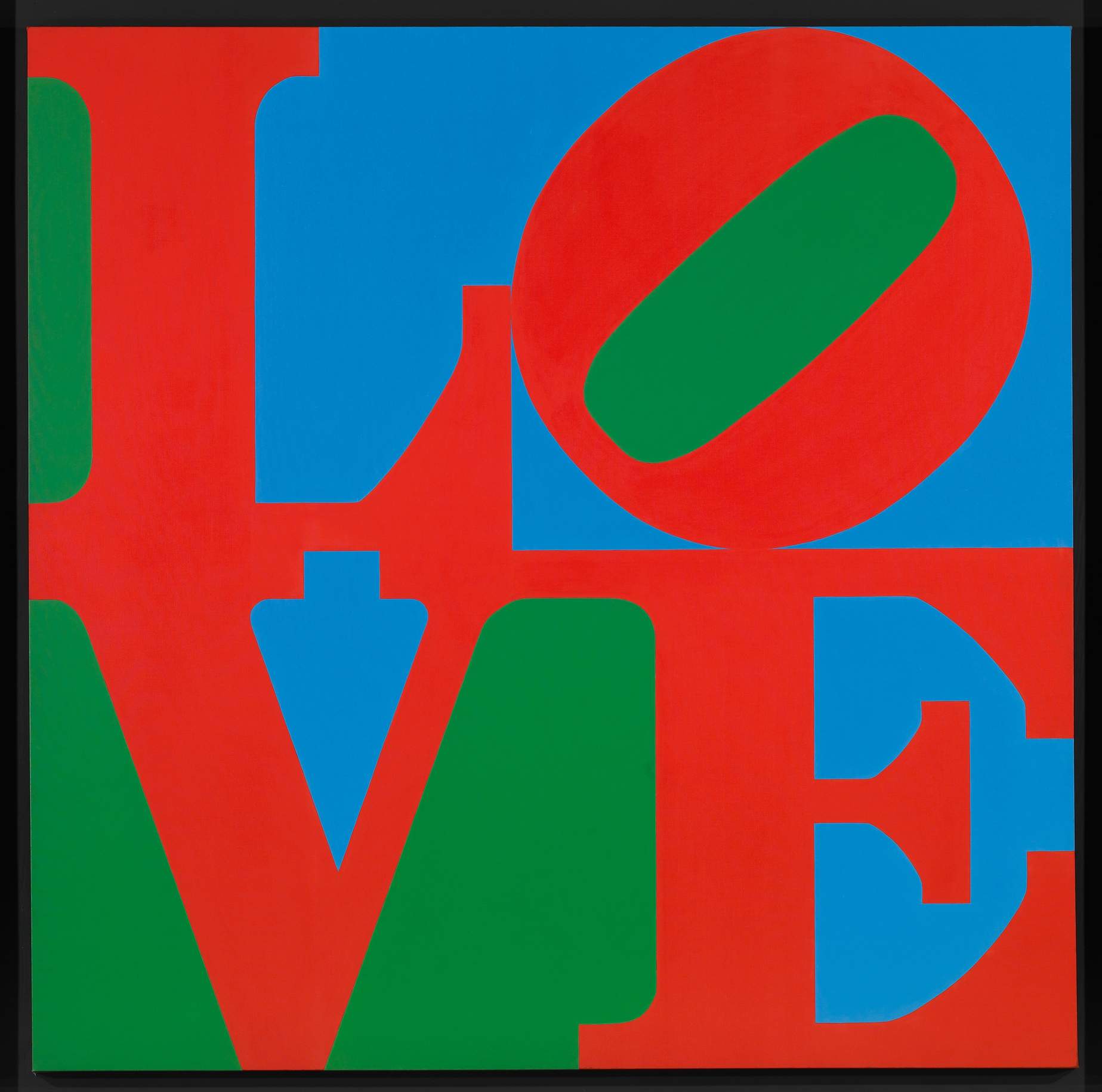
He later acquired dozens of Indiana works and became an important personal supporter. The relationship matters because it complicates the clean boundary between collector, patron and friend. Lust was not merely waiting for the market to validate Indiana before participating. He continued to buy when the artist’s career became difficult, and his holdings eventually became important enough for Sotheby’s to stage a dedicated exhibition and auction of material from the Herbert Lust Collection in 2017.
There is a caution here, too. Friendship can produce access, but access is not automatically connoisseurship. What distinguished Lust was that proximity was accompanied by research. His support of artists did not prevent him from interrogating their work; indeed, the two activities seem to have reinforced one another.
Collectors routinely finance catalogues. Far fewer write the scholarly apparatus themselves.
Lust did. Beyond Giacometti, he wrote and published material on artists including Enrico Baj and Robert Indiana. The New York Times obituary noted that when Sotheby’s exhibited his Indiana holdings in 2017, Lust wrote the catalogue essay. A Sotheby’s executive told the paper that she knew of no other collector who had written catalogues raisonnés on artists in quite the same way.
This is an important distinction because it changes what ownership can mean. Scholarship requires a different relationship to the object than acquisition. It asks for chronology, comparison, documentation, editions, states, exhibition histories and corrections. It forces the collector to look outside the collection rather than only inward at what he owns.
The result is a form of collecting in which intellectual capital compounds alongside financial value. Lust’s catalogue of Giacometti graphics, for example, is still cited by auction houses describing impressions that may have no direct connection to him as an owner. His name therefore survives in the market not only as provenance but as literature.
That may be the most sophisticated version of collector legacy: the collector becomes part of the infrastructure by which future collectors understand the artist.
Lust’s philanthropy pushes the story further. Before his death, he had already given large numbers of works to institutions. One particularly clear example is his sustained support of the Hirshhorn Museum and Sculpture Garden. The museum’s forthcoming exhibition devoted to experimental photographer Carlotta Corpron is built substantially around recent gifts from Lust, including forty-eight works that entered the collection through him.
The importance of such gifts is easy to underestimate when the market is focused on the $60 million group that remains. Museums often receive the deeper, less obviously commercial parts of a collection: bodies of photographs, works on paper, archival material and groups that make scholarly sense together. Auction houses, by contrast, are structurally incentivised to identify the objects that can carry estimates and generate competition.
Neither destination is inherently more legitimate. But together they show how a collection fragments after a collector’s death. Some works become public patrimony. Some remain with family. Some re-enter circulation. The original architecture of taste dissolves, and each object begins another biography.
At this stage, the most important fact is also the one most likely to be forgotten: no final auction-house consignment has been publicly announced. The estate is reportedly being courted, and the $60 million figure is an informed valuation, not a guaranteed sale total.
The distinction matters because competition for estates at this level happens long before a catalogue appears. Auction houses may compete through estimates, guarantees, commission structures, marketing commitments, sale placement and promises about how aggressively the collection will be contextualised. Winning a major estate is partly about revenue, but it is also about reputation. A collection with a compelling biography can give an entire auction season a narrative centre.
Lust’s remaining holdings offer that possibility. A major Giacometti can anchor evening-sale attention. Indiana can reopen discussion around an artist whose market has long had to negotiate the overwhelming familiarity of LOVE. Bellmer brings a different history of Surrealism and postwar collecting. More modest works can benefit from the halo of a named provenance, particularly when that provenance carries direct intellectual and personal ties to artists.
But provenance should not be mistaken for magic. The market will still discriminate fiercely among individual objects. Condition, date, medium, subject, rarity and exhibition history will matter more than the romance of the name on the previous ownership line. If the estate ultimately comes to auction, the real test will not be whether the headline sculpture performs; it will be whether buyers extend conviction across the depth of the collection.
Lust liked to describe his life as accidental. There were certainly accidents: Paris, Giacometti, introductions, dinners, transatlantic encounters. Yet his own late-life correction to that mythology is more useful. Many people met great artists, he observed; what mattered was that he pursued the relationship.
That is a better description of collecting than luck. Access creates possibility, but attention creates a collection.
The estate now entering the market was formed before art collecting became the globally professionalised ecosystem it is today—before online viewing rooms, instant price databases, art-advisory platforms and the relentless calendar of international fairs. Lust’s model cannot simply be recreated. Nor should it be romanticised; private access and financial means were essential conditions of the story.
Still, the collection preserves an idea worth carrying forward: that serious collecting can be an intellectual practice rather than a sequence of acquisitions. Lust changed his mind. He read. He argued. He wrote. He supported artists when the market was not necessarily rewarding them. He gave works away. He allowed a collection to become scholarship.
If Christie’s or Sotheby’s eventually secures the estate, the catalogue will assign values to what remains. That is the auction house’s job. The more interesting measure of Herbert Lust’s collection is the amount of cultural work it had already done before a single one of those final 300 objects received an estimate.
Reporting status: 21 August 2026. The estate is reportedly shopping the remaining works; no final Christie’s or Sotheby’s consignment has been publicly confirmed at time of writing.
From a £5 million Brueghel and three major Alice Neel sales to George Rickey, global modernism and a £675,000 Triceratops skull, Frieze Masters rewarded collectors who looked beyond categories.

Frieze London closed with sold-out emerging booths, meaningful institutional acquisitions and selective blue-chip buying. The real story was not a boom, but a market rewarding specificity.

Nearly 150 works from RM’s collection meet SFMOMA in a major exhibition of Korean modern and contemporary art. Its real lesson is how a private collection develops a coherent eye.