
September 8, 2026
Articles
Articles
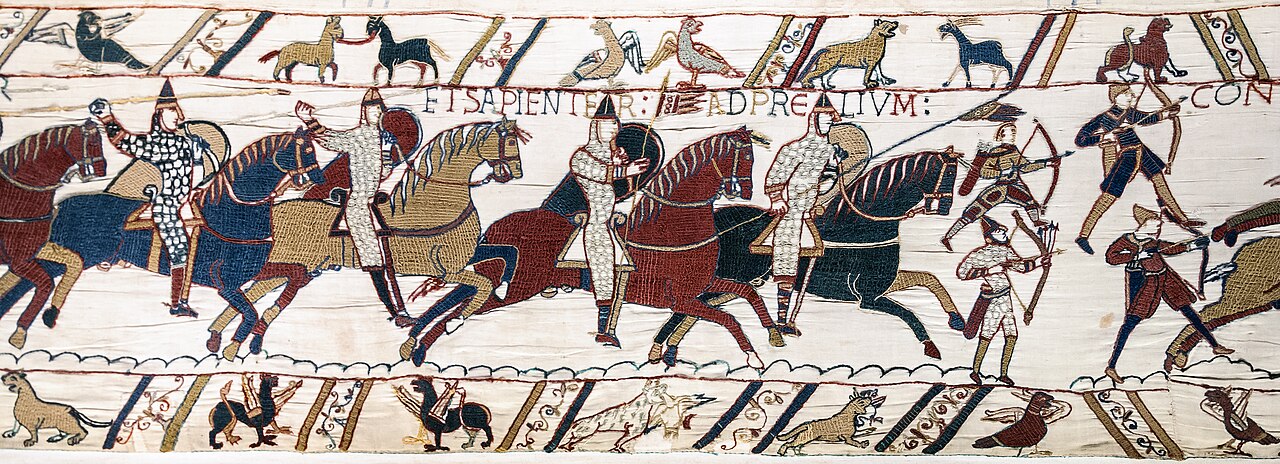
The Bayeux Tapestry opens at the British Museum after returning to England for the first time in nearly 1,000 years. Beyond 1066, it is a lesson in material, narrative and conservation.
Pierre Chapo’s elm furniture has moved from connoisseur design into the art collector’s field of vision. The reason is not fashion alone: his best pieces make construction itself the subject.

Pierre Chapo’s furniture has become familiar in the homes of art collectors because it refuses the subordinate role furniture is usually given. A Chapo table does not simply support objects; it announces structure, weight and joinery with the confidence of sculpture.
The easiest way to misunderstand Pierre Chapo is to describe him as a maker of beautiful wooden furniture. The description is true but insufficient. What makes his best work compelling is that construction is not concealed behind finish. The joint, brace, leg and span are allowed to become the image of the object.
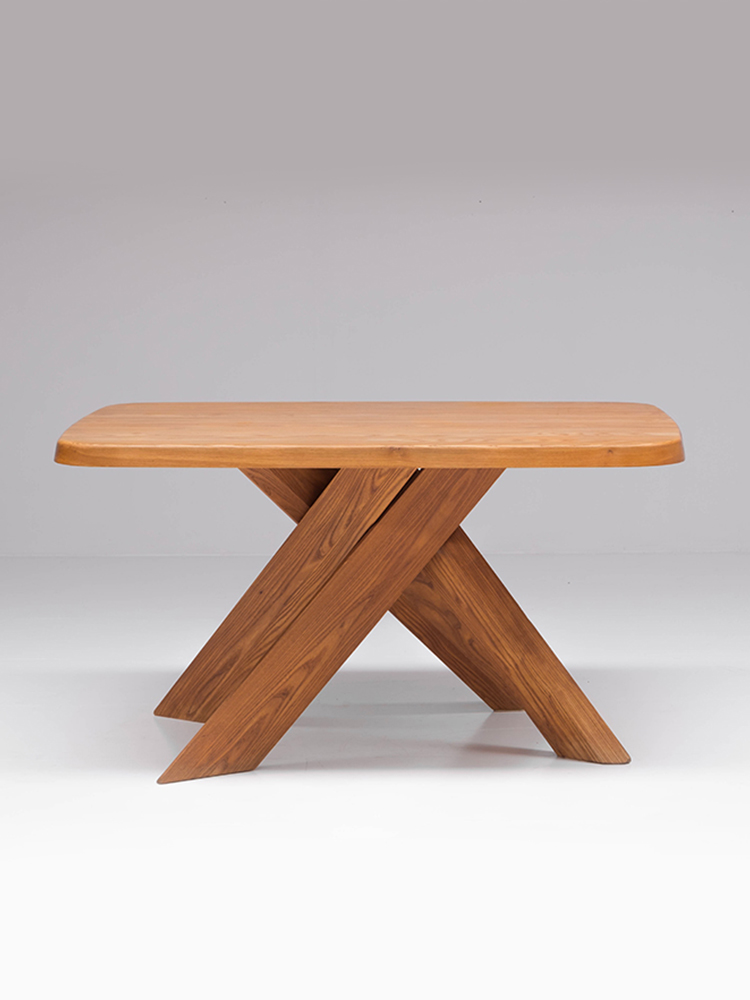
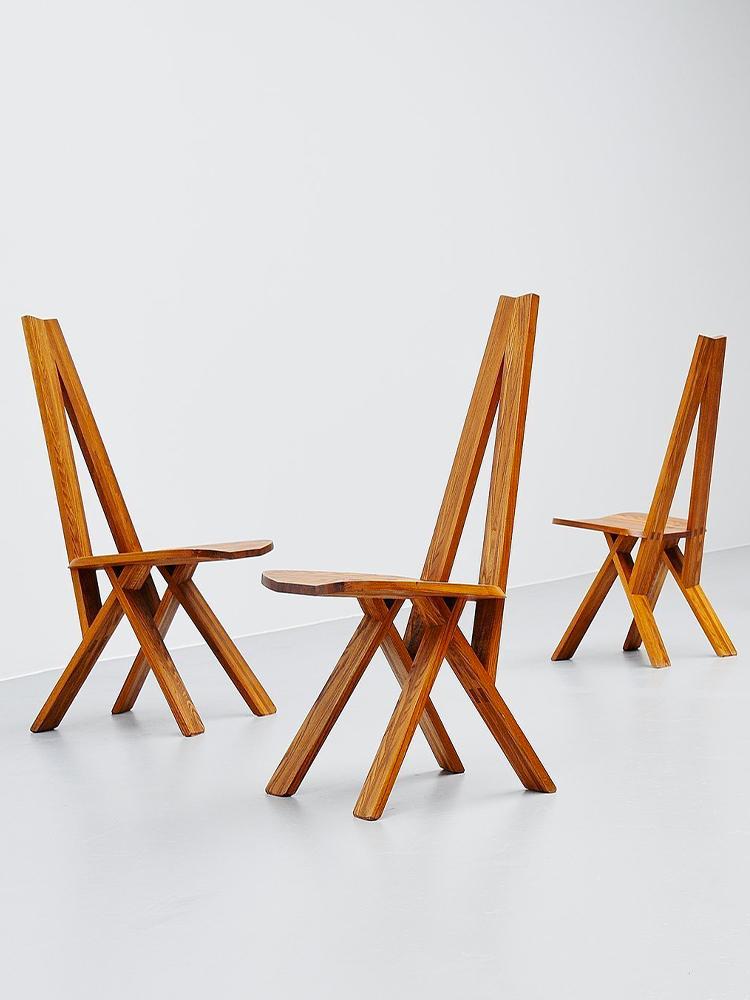
That is why Chapo increasingly belongs in the same collector conversation as postwar art and architecture. A T35 table can anchor a room with the spatial authority of sculpture. An S45 chair turns an engineering problem into an instantly legible silhouette. The B17 bookshelf makes gravity part of its design logic. These are functional objects, but function never exhausts their meaning.
The market has noticed. At Sotheby’s in June 2026, a circa-1972 T20B dining table sold for $35,840 against a $10,000–$15,000 estimate. One result does not establish a straight-line market thesis, nor should collectors approach Chapo as a speculative trade. It does demonstrate that the best examples now attract the sort of attention once reserved for a narrower canon of twentieth-century design.
Chapo was born in Paris in 1927 and studied architecture at the École des Beaux-Arts. The official family chronology describes an early encounter with a marine carpenter as formative, followed by travel through Central and North America in the mid-1950s and exposure to modern architecture. With Nicole Lormier Chapo, he opened Galerie Chapo in Paris in 1958, showing his own early furniture alongside design and decorative objects.
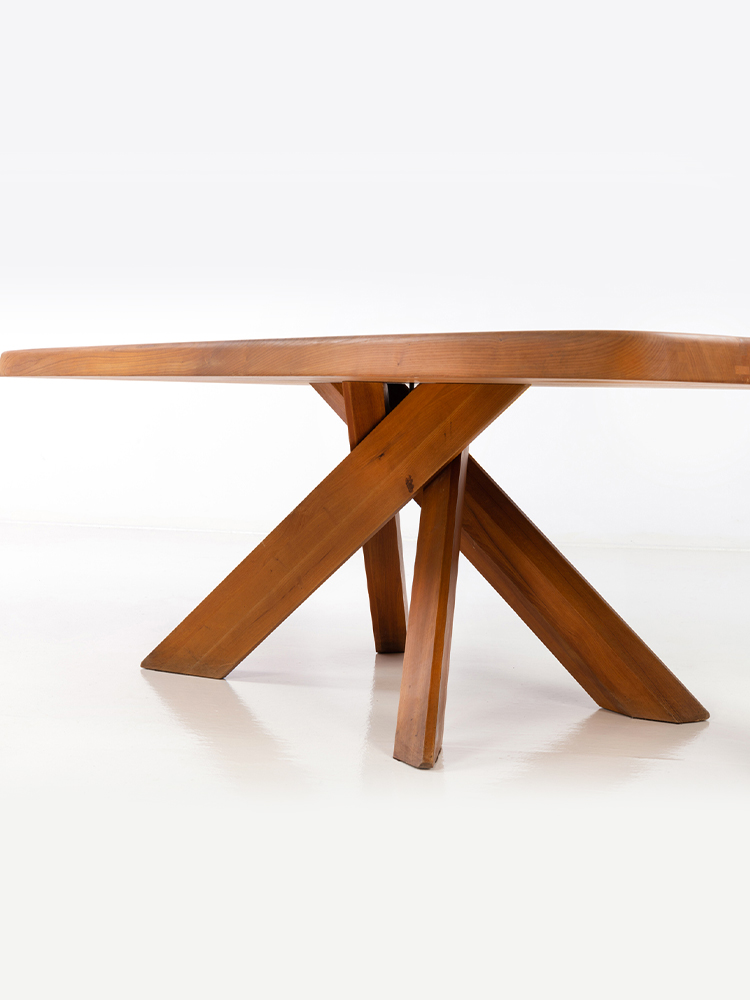
This architectural training matters. Chapo did not treat a table as a top plus four supports or a chair as an outline to be upholstered. He approached furniture as a small structural system. Loads travel. Pieces brace one another. Proportions have consequences. Even where the forms are heavy, there is a sense that every section has been asked to justify its presence.
Solid wood is central, but Chapo’s work is not rustic nostalgia. The grain is allowed to remain visible because material specificity is part of the design. Edges are shaped; members meet in ways that draw attention to the force passing through them. His furniture can look archaic and modern simultaneously—closer in spirit to a well-built bridge or agricultural tool than to polite luxury furniture.
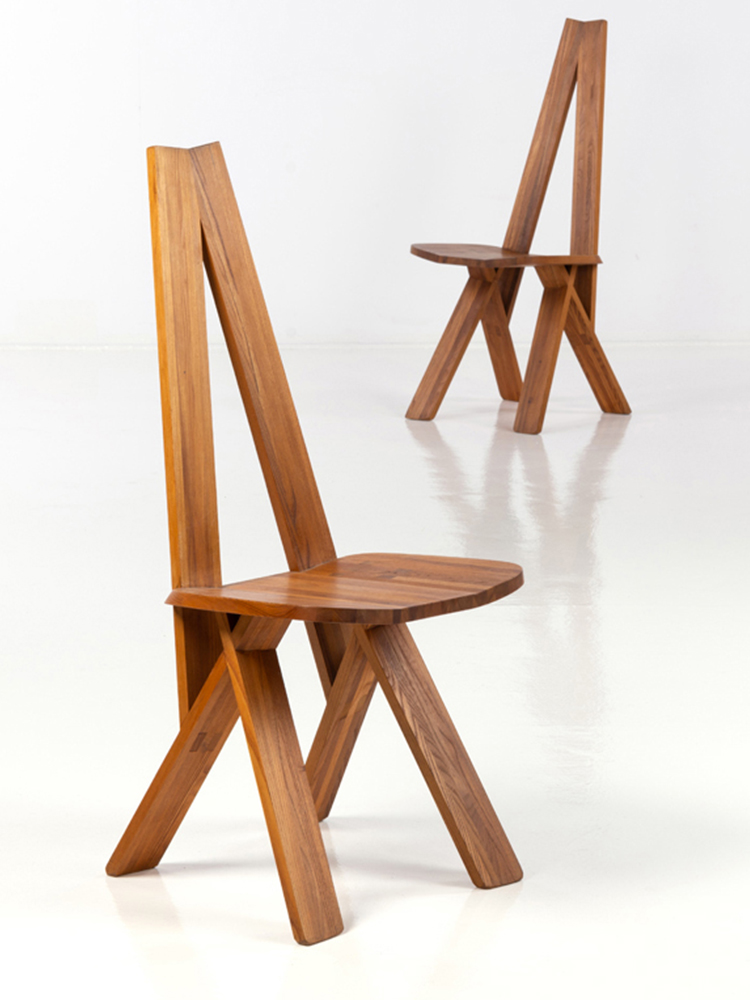
The S45, designed in 1979, is one of the clearest examples of Chapo’s late technical thinking. The chair uses the patented CHLACC process, assembling numerous smaller wood sections into a comparatively fine, dynamic structure. The official description notes eleven assembly points joining seven sections, with the user’s weight carried primarily through crossed feet and the back secured into sharply angled rear legs.
Those technical facts explain the appearance. The S45’s high split back reads almost like a drawn line in space, while the crossed base compresses several structural events beneath the seat. It is sculptural not because it abandons comfort or usefulness, but because the mechanics of usefulness create the form.
For art collectors moving into design, this is a valuable criterion. Rather than asking whether a chair is “iconic,” ask whether the object contains an idea you can see. What problem did the designer solve? What material decision could not be exchanged without changing the work? Does the object remain intellectually legible when removed from the fashionable interior in which you first encountered it?
There is a practical reason designers like Chapo have become fixtures in collector interiors: their furniture is strong enough to coexist with strong art. A room containing a major painting does not necessarily need quiet furniture. It needs furniture that knows what it is.
Chapo’s solid wood provides material warmth against plaster, concrete, glass and painted surfaces, but the forms are too architectonic to dissolve into “cosiness.” That balance is especially useful in homes where collectors want to move away from the gallery-white model without turning art into decorative colour.
The furniture can also create scale. A substantial table establishes a horizontal field beneath wall works; a vertical S45 can act almost as a graphic counterpoint to painting; benches and shelving create long lines that architecture can pick up. This is why Chapo is often at his best in rooms where objects are allowed plenty of space rather than packed into a design scheme.
The collectible object earns its place beside art when material, construction and authorship remain interesting after fashion has moved on.
Growing recognition creates a second problem: the name “Pierre Chapo” can conceal meaningful differences between objects. The Chapo Création workshop continues to make designs in France, while the official site also maintains a section devoted to vintage pieces. Collectors should therefore establish exactly what they are buying rather than treating every example as interchangeable.
Date, workshop history, wood species, dimensions, repairs, surface condition and provenance matter. So does the difference between an original-period piece and a contemporary authorized production. Neither category needs to be dismissed—the question is simply whether the object is correctly described and priced for what it is.
Condition deserves particular attention because Chapo furniture is meant to be used. Wear can be attractive evidence of life, but structural repairs, aggressive refinishing or replacement elements may change both integrity and value. A table that has been sanded repeatedly can lose edge profiles and surface character; a chair with compromised joints presents an issue more serious than cosmetic patina.
The recent enthusiasm for collectible design can encourage the same bad habits as any heated art market: logo collecting, price chasing and buying recognizable forms without understanding them. Chapo is better approached slowly. Look at the joints. Compare sizes of the same model. Sit in the chairs. Understand why a base changes when a tabletop gets longer. Learn which decisions belong to Pierre Chapo’s original thinking and which belong to later fabrication.
Seen that way, the market attention becomes less important than the object. Chapo’s relevance is not that furniture has suddenly become “art.” It is that collectors are becoming more comfortable admitting that the intellectual life of a room does not stop at the picture frame.
A great Chapo piece can be used every day and still reward the kind of looking usually reserved for sculpture. That is not a compromise between design and art. It is precisely the reason his furniture has become so difficult to keep in separate categories.
Start underneath. Chapo’s furniture rewards the unglamorous view because the underside often explains the whole object: how the top meets the base, whether loads are carried through a crossbar or angled members, how joints have been cut and where later intervention may have occurred. Photographs that show only the silhouette are insufficient for serious comparison.
Then look at proportion across examples of the same model. A large T35 is not simply a small T35 stretched longer; the relationship between top and base has to remain structurally and visually credible. Chapo’s own design logic changes as scale changes. This is one reason measurements should be considered part of connoisseurship rather than an administrative detail.
Surface is equally revealing. Solid elm and oak record light, use and repair. Patina can deepen an object, but collectors should distinguish natural oxidation and wear from finishes applied to manufacture age or conceal restoration. Ask for photographs in neutral daylight and close views of joints, edges, feet and any branded or documented marks. For important vintage pieces, provenance should connect the object to a credible period of production rather than relying on stylistic resemblance alone.
These habits are familiar to art collectors. They are simply being transferred to another category. The reward is the same: the object becomes more interesting as knowledge increases, and value becomes a consequence of specificity rather than a substitute for it.
After provenance and condition, put the object back into space. Chapo’s furniture is unusually sensitive to surrounding scale because its members are so visually assertive. A large table can make a room feel architecturally calmer by establishing one dominant horizontal plane; the same piece can overwhelm a smaller interior and reduce everything around it to accessories. An S45 can read as a precise linear accent in one setting and theatrical quotation in another.
This is why measurements, templates and floor plans are more useful than mood boards. Tape the footprint on the floor. Check the height against nearby works. Consider whether a chair back interrupts a sightline to a painting or whether that interruption creates a productive rhythm. Collectible design becomes part of the collection at exactly this point: when it is judged not in isolation, but by the relationships it can sustain over years of use.
The Bayeux Tapestry opens at the British Museum after returning to England for the first time in nearly 1,000 years. Beyond 1066, it is a lesson in material, narrative and conservation.
Pierre Chapo’s elm furniture has moved from connoisseur design into the art collector’s field of vision. The reason is not fashion alone: his best pieces make construction itself the subject.
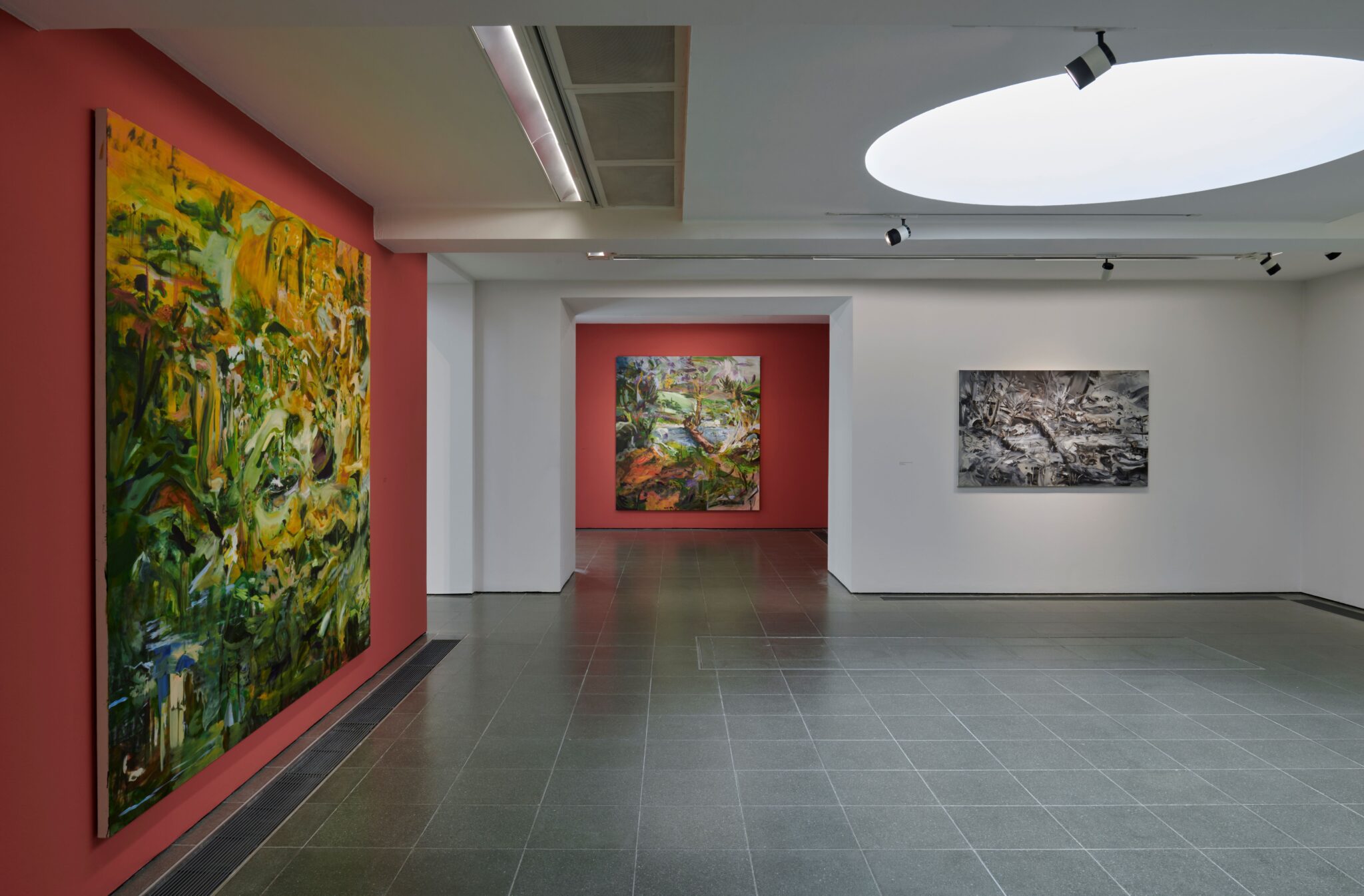
Cecily Brown’s Picture Making turns uncertainty into a painterly method: figures emerge, dissolve and return across twenty-five years of paintings, drawings and monotypes.