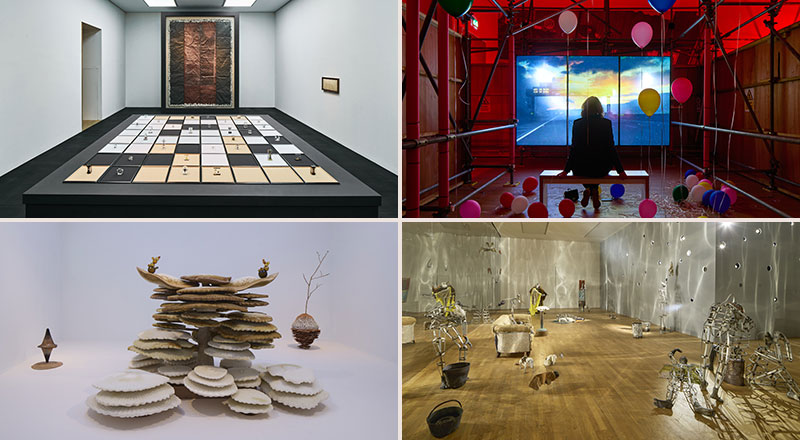
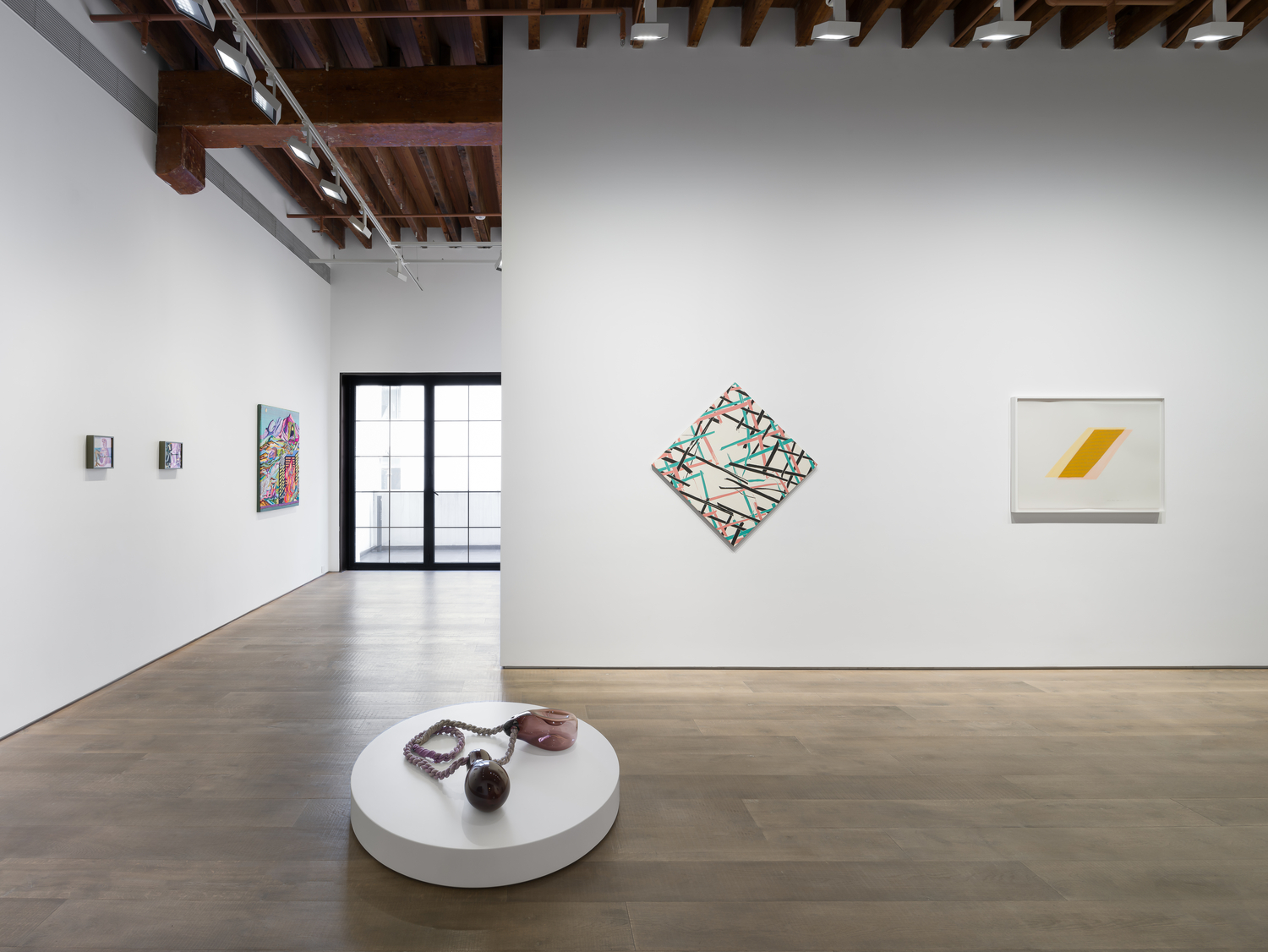
The Turner Prize can be most interesting when its four finalists refuse to represent a single trend. At Middlesbrough Institute of Modern Art, the 2026 exhibition brings together Simeon Barclay, Kira Freije, Marguerite Humeau and Tanoa Sasraku. Their presentations differ sharply in scale, material and temperament, yet all ask how contemporary life becomes embedded in the things we make, transport, inhabit or consume. The exhibition opened on 26 September and continues until 29 March 2027; the winner is due to be announced on 10 December 2026.
Shanghai in November 2026: Six Exhibitions Collectors Should See
West Bund and ART021 bring the market to Shanghai in November, but the strongest collector route runs through Rockbund, Yuz, West Bund Museum and focused gallery exhibitions.

Shanghai’s November art week can make the city feel like one continuous fair, with West Bund Art & Design and ART021 concentrating galleries and collectors into a few days. The more useful editorial approach is to treat the fairs as context and spend serious time with exhibitions that cannot be reduced to booths. This route begins with one of the month’s most intelligent new institutional commissions, moves through a historically focused Pop presentation and textile-led group exhibition, and ends with sculpture, geometry and a long view of computational art.
1. Wong Kit Yi — TEM-PLE-OKE / Kit Yi Wong: BANK-A-OKE
Rockbund Art Museum · 31 October 2026–21 February 2027
Rockbund’s first institutional solo presentation of Wong Kit Yi is actually two interlocked exhibitions with separate entrances and mirrored logics. BANK-A-OKE turns the museum’s main entrance into a fictional financial institution where money, qi and voice become asset classes; TEM-PLE-OKE uses the building’s historic bagua windows and feng shui logic to construct a parallel temple economy. At the centre are new karaoke-based works in which singing becomes deposit, loan and spiritual transaction. The structure sounds playful—and it is—but Wong uses that play to connect credit, colonial history, bodily vitality and karmic obligation. In Shanghai’s historic financial district, the site is unusually precise. For collectors, the exhibition is important because it demonstrates how Wong’s videos, lecture-performances, contracts and objects belong to a single system rather than separate media categories. The commissioned architecture and participatory elements make this a genuinely institutional proposition, not simply a gallery show scaled up.
2. Tom Wesselmann — The Greatness of the Everyday
Almine Rech · 9 November 2026–9 January 2027
Wesselmann’s first solo exhibition in mainland China spans four decades, from the Great American Nude period through later Sunset Nudes. That breadth allows the exhibition to do something more useful than repeat Pop Art’s familiar iconography. Wesselmann’s work was always about the friction between everyday objects, desire, advertising and the history of painting; the flatness of the image is countered by a persistent interest in scale, contour and the physical objecthood of the support. In Shanghai, where Western postwar art is often encountered through compressed museum surveys or fairs, a focused presentation can clarify how much of Wesselmann’s practice was built through serial variation. Collectors should look beyond the most instantly recognisable motifs and compare drawing, shaped formats and later works. The market may privilege iconic imagery, but the show’s art-historical value lies in seeing how consistently he tested the boundary between still life, nude, sign and sculptural silhouette.
3. Group Exhibition — Threads of Kinship
Yuz Museum + KADIST · 14 November 2026–7 March 2027
The third edition of Threads of Kinship brings KADIST’s long-running investigation of collectivity, care and chosen kinship to Shanghai, with textile functioning as both material and metaphor. Earlier iterations in Paris and Shunde established a transgenerational field that ranged from modern Chinese art to contemporary diasporic practices; the Shanghai version extends that inquiry into the city’s own histories. The exhibition is significant because textiles are not treated as a decorative category. Weaving, stitching and fabric become systems for storing knowledge, organising labour and sustaining relationships outside conventional family structures. For collectors, the group format offers a different kind of value from the solo shows dominating fair week: it can reveal artists through unexpected historical adjacency and make material practices legible across regions. Give it time. The curatorial argument depends on connections between works, and the most rewarding discoveries may be artists whose names are less visible in the commercial fair halls nearby.

4. Lynn Chadwick — HYPERCYCLE / CHAPTER III: VIGILANTS (1978–1995)
Perrotin Shanghai · 9 November–23 December 2026
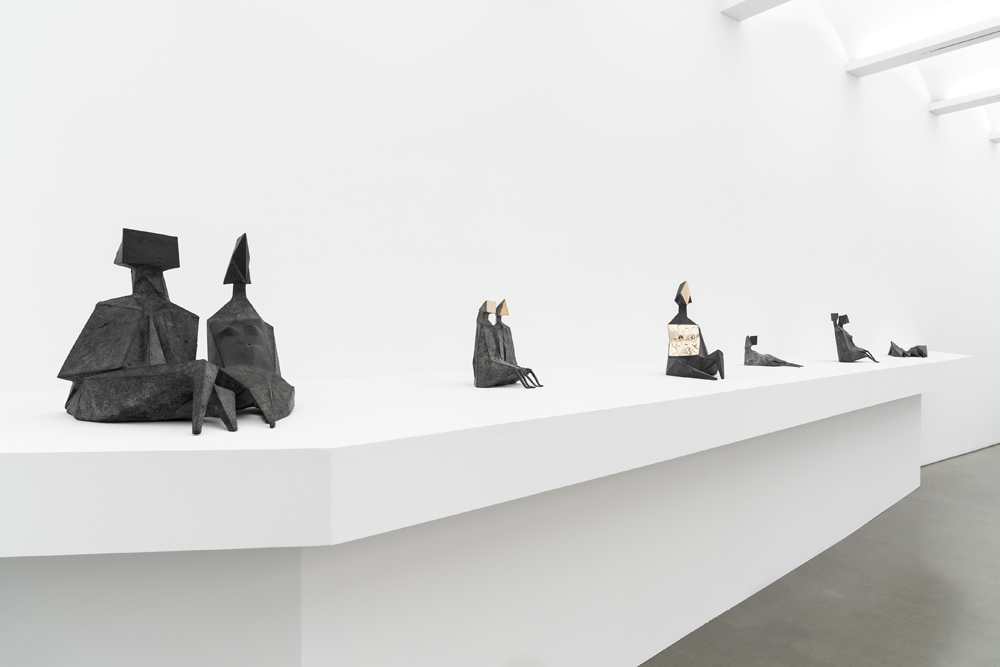
Perrotin’s third HYPERCYCLE chapter focuses on Chadwick’s later Vigilants, a body of work that deserves more attention than the generic “postwar British sculpture” label often allows. Chadwick’s angular figures are immediately recognisable, but the late works are especially interesting for the way geometric heads, cloaked bodies and paired stances transform human presence into a kind of watchful architecture. In the 1978–95 period, monumentality is achieved less through sheer scale than through silhouette and stance. That makes the Shanghai presentation useful for collectors who know Chadwick primarily from outdoor sculpture or auction catalogues. Seeing several works together reveals distinctions in posture, surface and gendered pairing that isolated images can flatten. The show also provides a historical counterweight to Shanghai’s aggressively contemporary fair week: it asks how a sculptural language can remain consistent across decades without becoming static, and where repetition becomes typology rather than formula.

5. Group Exhibition — CIRCLE — LINE — SQUARE
Lisson Gallery Shanghai · 12 September–28 November 2026
Closing on 28 November, Lisson’s group exhibition is the month’s useful last-chance stop. The show draws artists including Carmen Herrera, Richard Deacon, Anish Kapoor, Richard Long, Hiroshi Sugimoto, Julian Opie, Ryan Gander and Pedro Reyes into a conversation around elemental geometry, but the Shanghai-specific element is equally important: works are staged in dialogue with Art Deco furniture and the city’s design history. Geometry can easily become an empty curatorial theme; here the stronger reading is about how circles, lines and squares migrate between autonomous art, architecture and designed interiors. Collectors should use the exhibition comparatively. Herrera’s precision, Long’s material trace and Deacon’s spatial logic do not mean the same thing simply because they share geometric vocabulary. The show works when those differences stay visible. It is also a reminder that a tightly installed group exhibition can offer sharper art-historical comparison than a fair booth filled with unrelated signatures.

6. Group Exhibition — Computer Worlds
West Bund Museum · 24 September 2026–14 February 2027
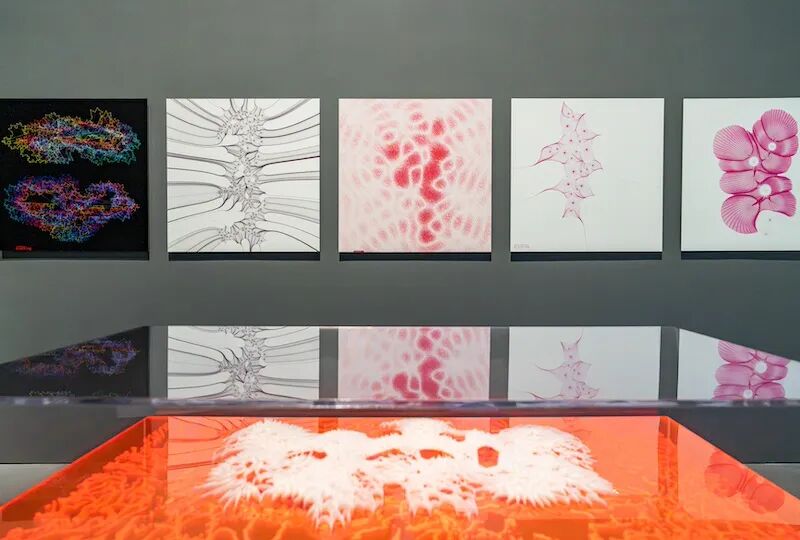
Computer Worlds is the broad institutional survey in this Shanghai route, bringing nearly 180 works and archival objects into a history that runs from early computer and generative art to network culture, NFTs and AI. The danger with such exhibitions is technological determinism—the idea that new tools automatically produce new art. The better sections instead show how artists repeatedly misuse systems, translate data into material form and expose the cultural assumptions inside technical infrastructure. For collectors navigating a market still prone to treating “digital art” as a separate asset class, the exhibition is a useful corrective. It places code, plotter drawings, digital craft, architecture and contemporary AI practices inside a much longer lineage. The strongest takeaway is historical: computation did not suddenly arrive with blockchain or generative AI. Artists have been testing the aesthetic and political consequences of machines for decades, and that continuity changes how recent work should be judged.

During fair week, resist the temptation to measure every exhibition by immediate market visibility. Rockbund and Yuz need the longest visits; Almine Rech and Perrotin give the commercial circuit historical depth; Lisson is a smart comparison exercise before it closes on the 28th; and West Bund Museum is the place to recalibrate the digital-art conversation beyond current hype. Together they show why Shanghai matters in November not simply as a marketplace, but as a city where institutional and commercial narratives are increasingly being written at the same time.
Exhibition dates and programmes were checked against current museum, gallery and fair listings on 31 October 2026. Opening hours, access arrangements and programmes can change; check the venue before travelling.
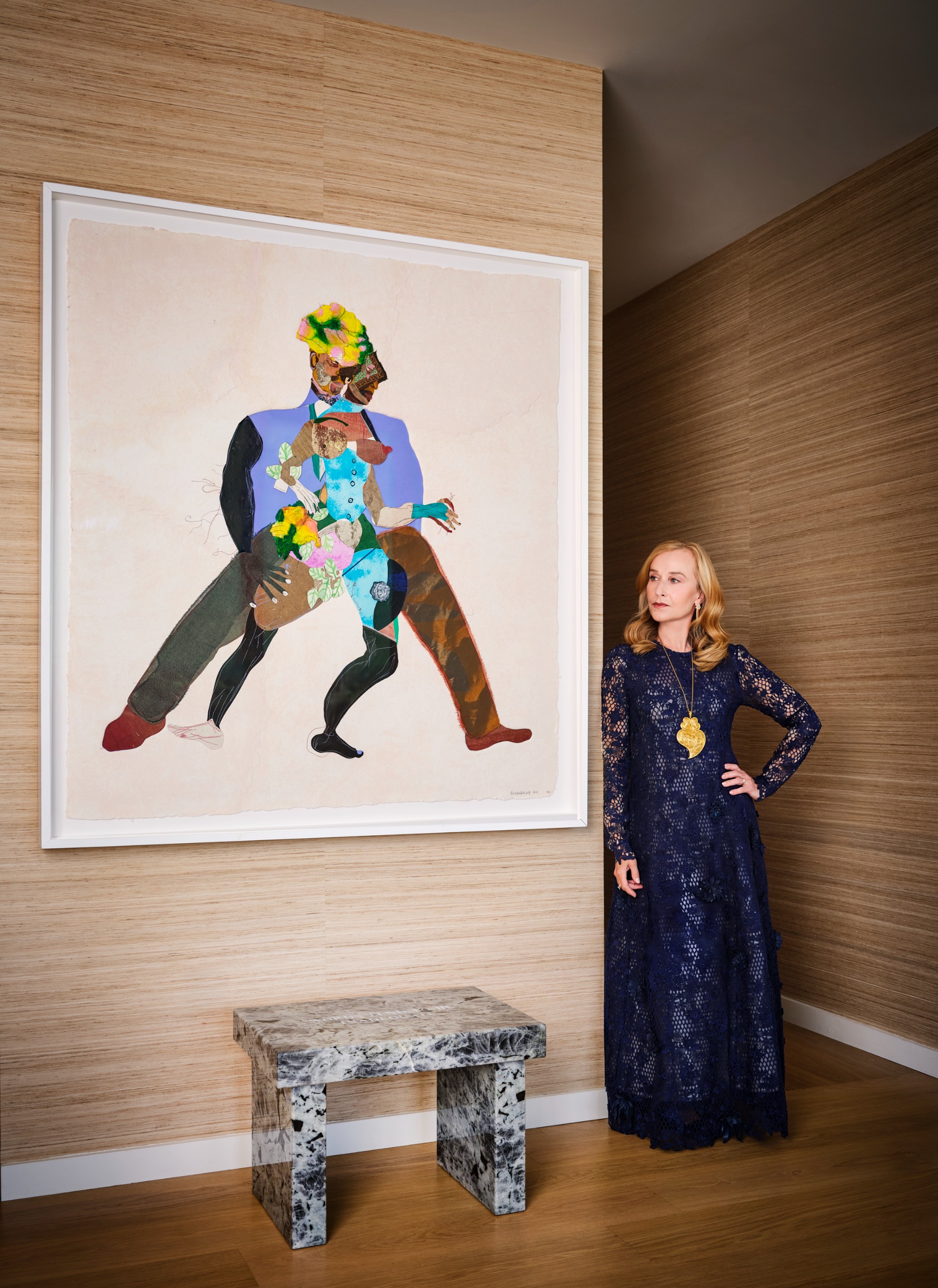
Kelly Behun’s West Chelsea apartment for former US ambassador Randi Charno Levine shows how a serious contemporary collection can grow from relationships, patronage and a new Joana Vasconcelos commission.
At Pinacoteca Agnelli, Chris Ofili places new paintings beside Manet’s portrait of Laure, restoring a named sitter to the centre of a story art history kept at the edge.