Go Back
Magazine

Building the Bridge: How Sonia Borrell Is Rewriting the Path from Studio to Gallery

Through mentorship, international networks, and her members’ platform StudioToGallery, curator and advisor Sonia BB London is creating a fairer infrastructure for emerging artists — replacing gatekeeping with guidance and access with education.

Reviews
Reviews
Building the Bridge: How Sonia Borrell Is Rewriting the Path from Studio to Gallery

In today’s art world, access can be as decisive as talent. Careers are often shaped not only by what artists make, but by who helps them navigate the system — the contracts, the conversations, the quiet introductions that determine where work is seen and how it is valued. For many emerging practitioners, those pathways remain opaque.

For curator, collector, and mentor Sonia Borrell, making those pathways visible has become both a methodology and a mission.

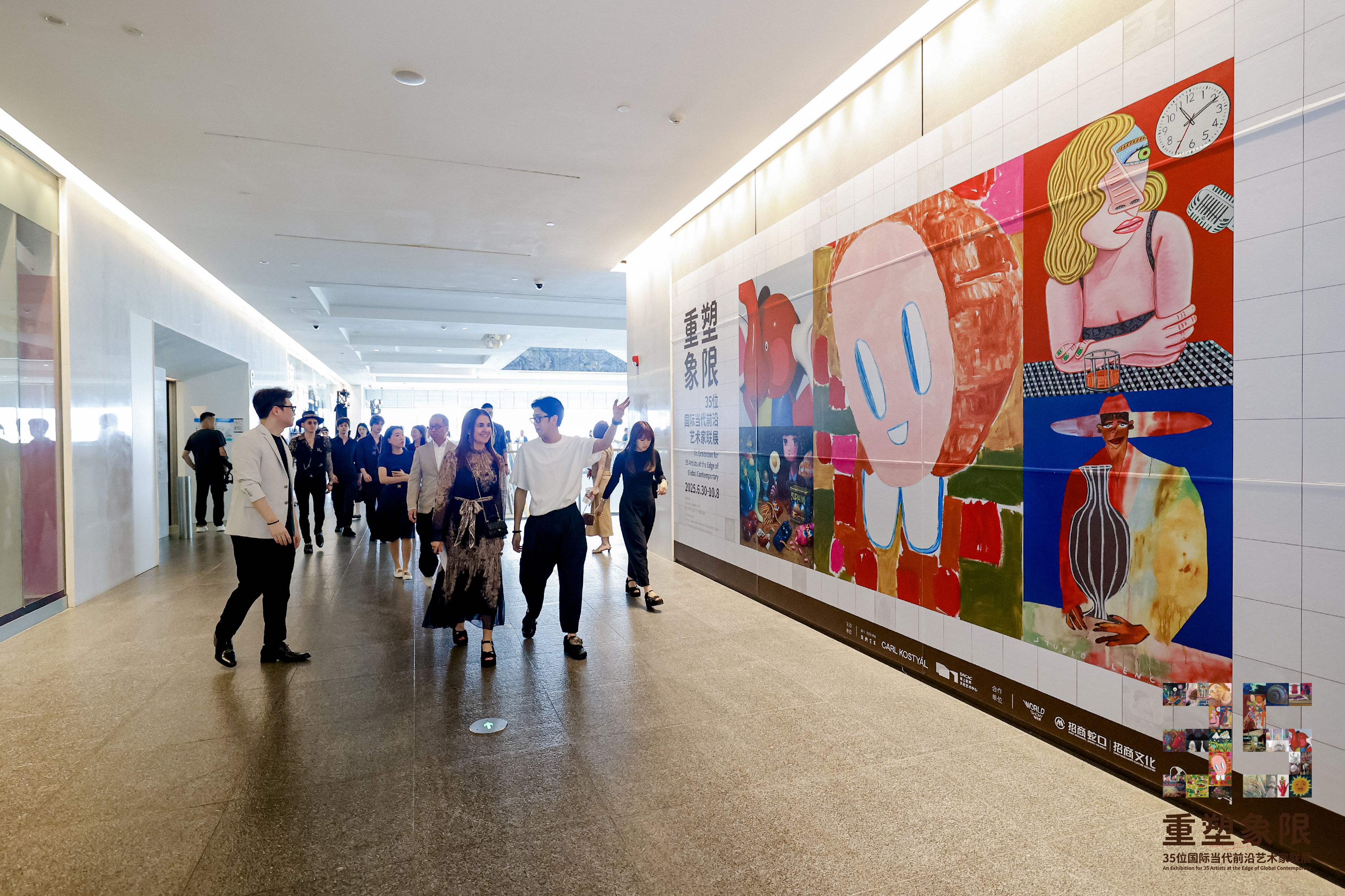
Reshaping the Quadrant, 35 Artists at the Edge of Global Contemporary Art | L3 Garden Gallery, Sea World Culture and Arts Center (SWCAC) Shenzhen | Image: Courtesy of Tryson Collection

Over the past decade, she has built a discreet yet far-reaching presence across studios, art fairs, and institutions from London to Riyadh, Barcelona to Shanghai. Her practice is unusually hybrid — curator, advisor, editor, mentor, and philanthropist — moving easily between artists’ studios and international cultural infrastructures.Each year, she mentors around fifty artists through sustained studio visits and long-term professional guidance, while advising institutions in Saudi Arabia, China, and Spain and serving as Editor at Large for Bonart Cultural and Disruptors Magazine.

Her curatorial collaborations include SWCAC Museum in China, D Contemporary in London, Gallery Zberro in Paris, and Galería Mayoral in Barcelona. She has launched publications such as Arts to Heart Magazine and Create Magazine, and founded initiatives including the Overseas section of the Women in Art Prize in London. Her book, Art in Real Time, has quietly become a trusted companion for artists navigating the art system without inherited networks or insider knowledge.

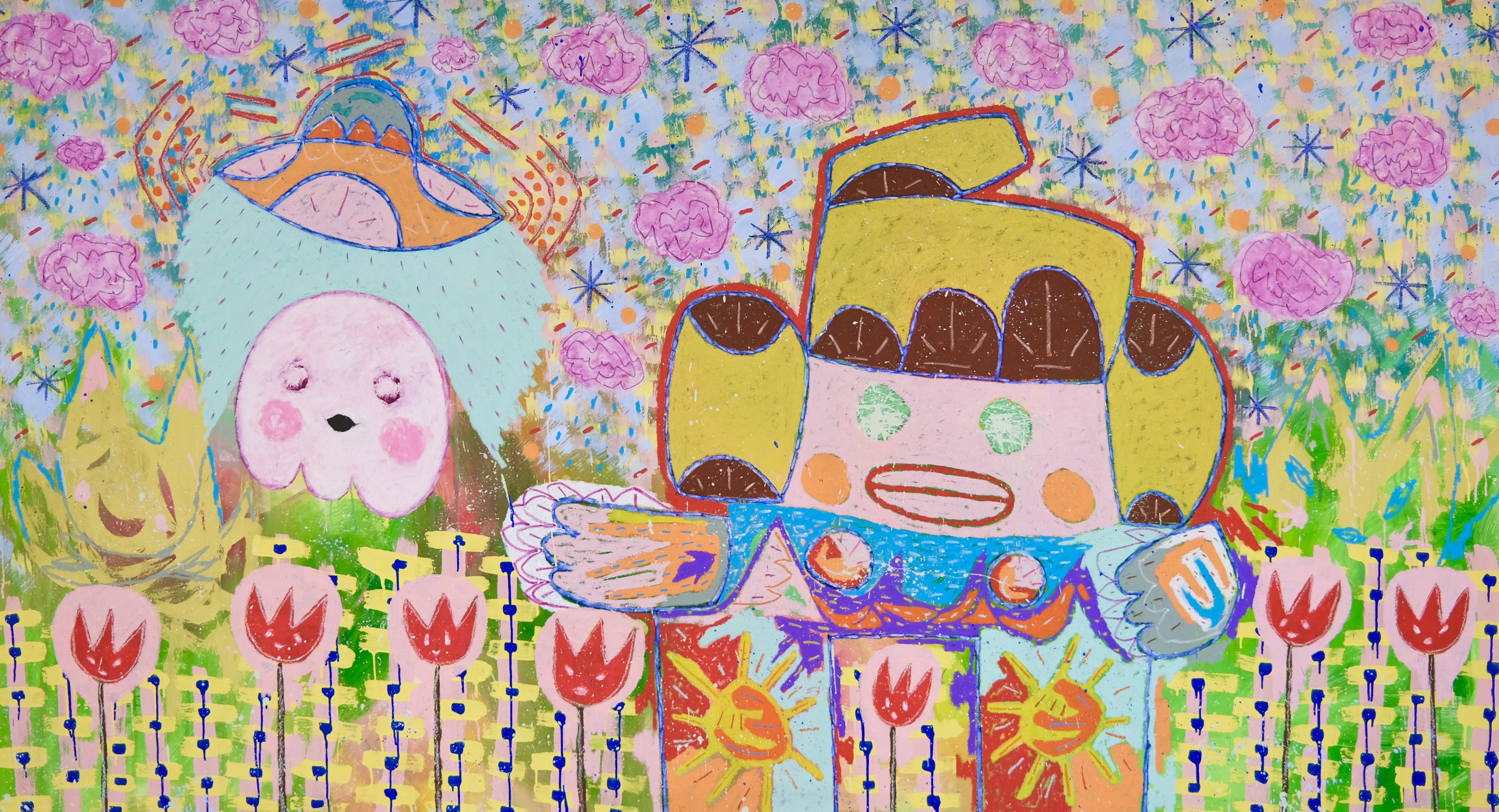
'For You Pajama Girl with Ghost Buddy Abduction' by  Adam Handler.

Yet for years, much of this work unfolded informally: studio critiques, contract negotiations, pricing strategy, introductions to galleries, late-night calls about representation offers — the largely invisible labour that underpins many artistic careers.

Eventually, the volume became unsustainable.

“One month I received around two thousand messages from artists asking for help,” she recalls. “Normally it’s two hundred.”

What had once been mentorship had turned into triage.

The response is StudioToGallery, a curated, mentor-led members’ ecosystem designed to professionalise artists through sustained guidance, strategic positioning, and direct human connection. Borrell resists the language of “platform,” which suggests scale without intimacy. Instead, she describes it as a members’ club — selective, participatory, and built on trust. Artists enter first. Then come curators, collectors, and galleries. Conversations are direct. Introductions are personal. Opportunities circulate through relationships rather than algorithms.

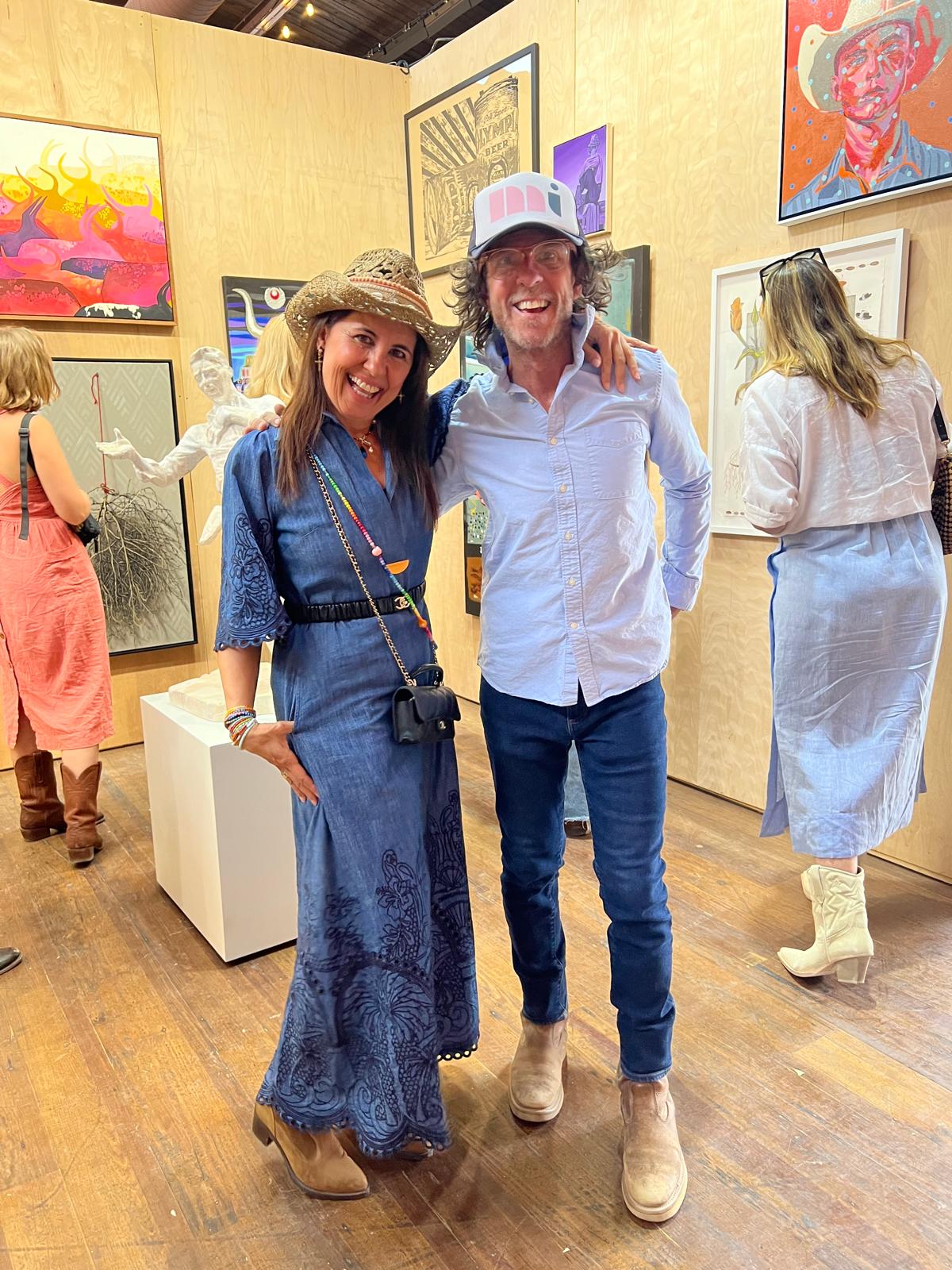
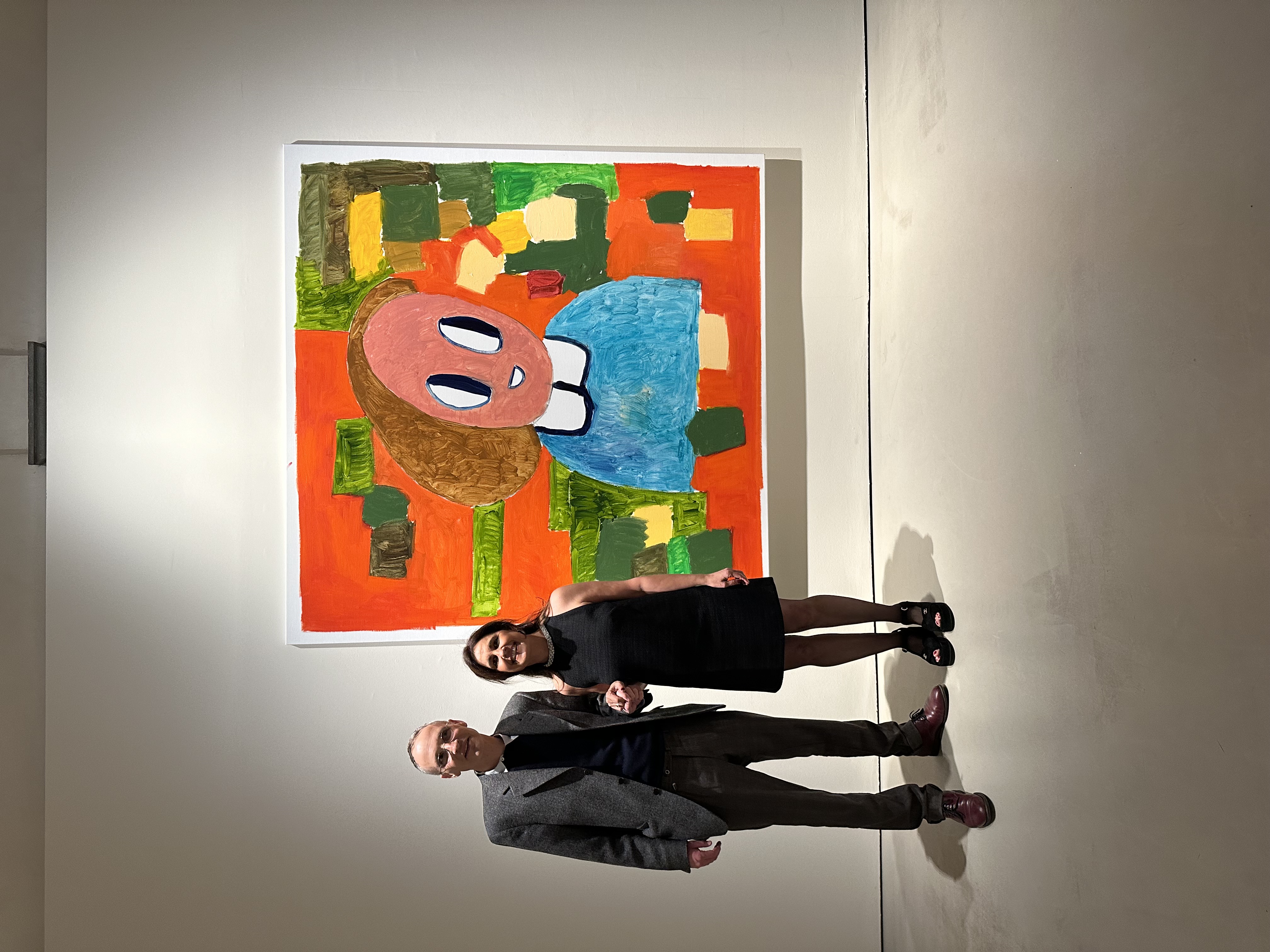
Sonia Borrell and Michael Phelan at Marfa Invitational | Image Courtesy of Tryson Collection

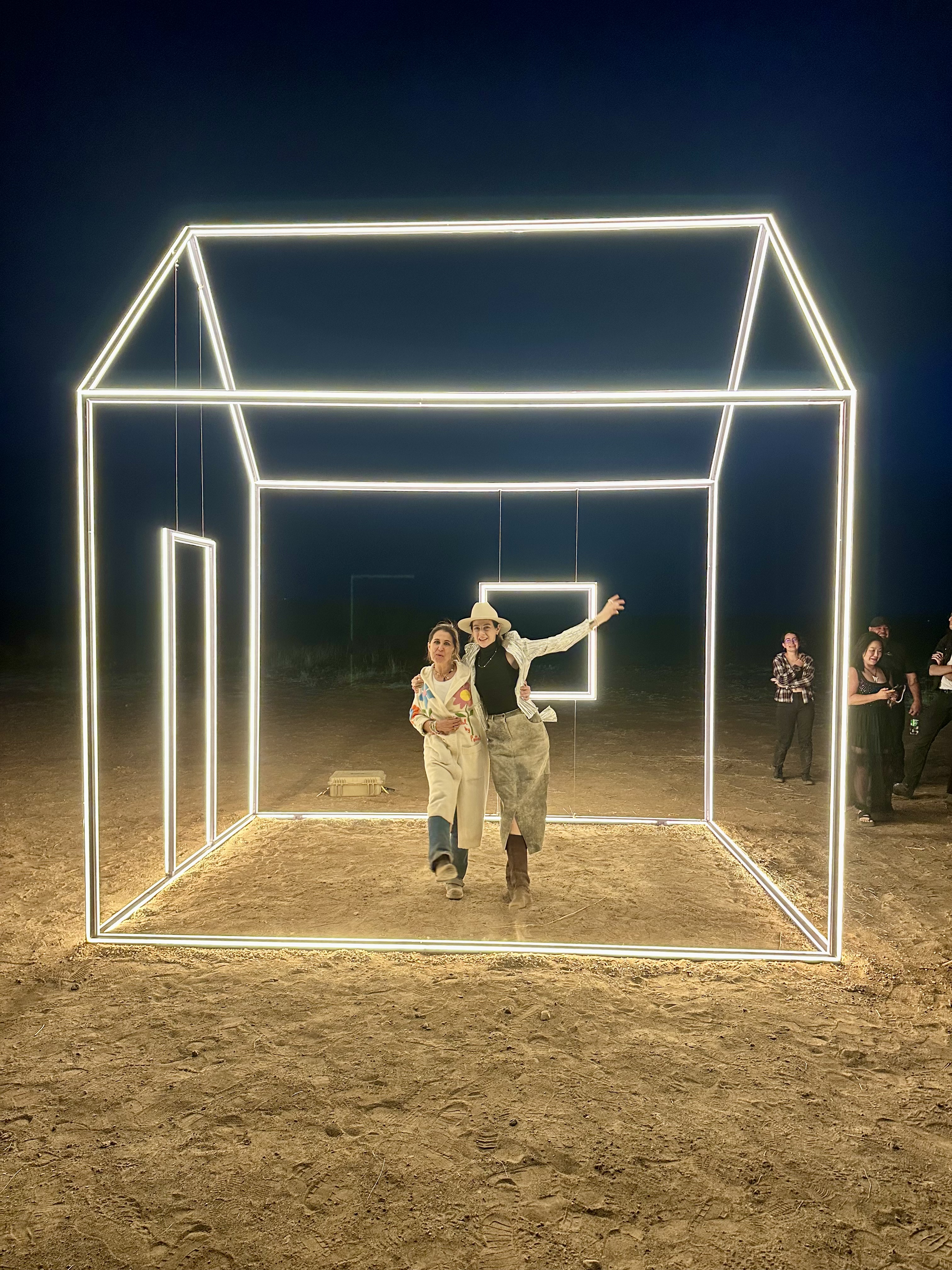
The network continues to grow through carefully aligned collaborators. Among them is Michael Phelan of the Marfa Invitational, whose involvement strengthens StudioToGallery’s connection to research-led, independent curatorial initiatives. The project’s early momentum has also attracted artists of recognised standing, including Adam Handler, signalling that the ecosystem is resonating beyond the emerging sphere and engaging more established voices within the contemporary field.

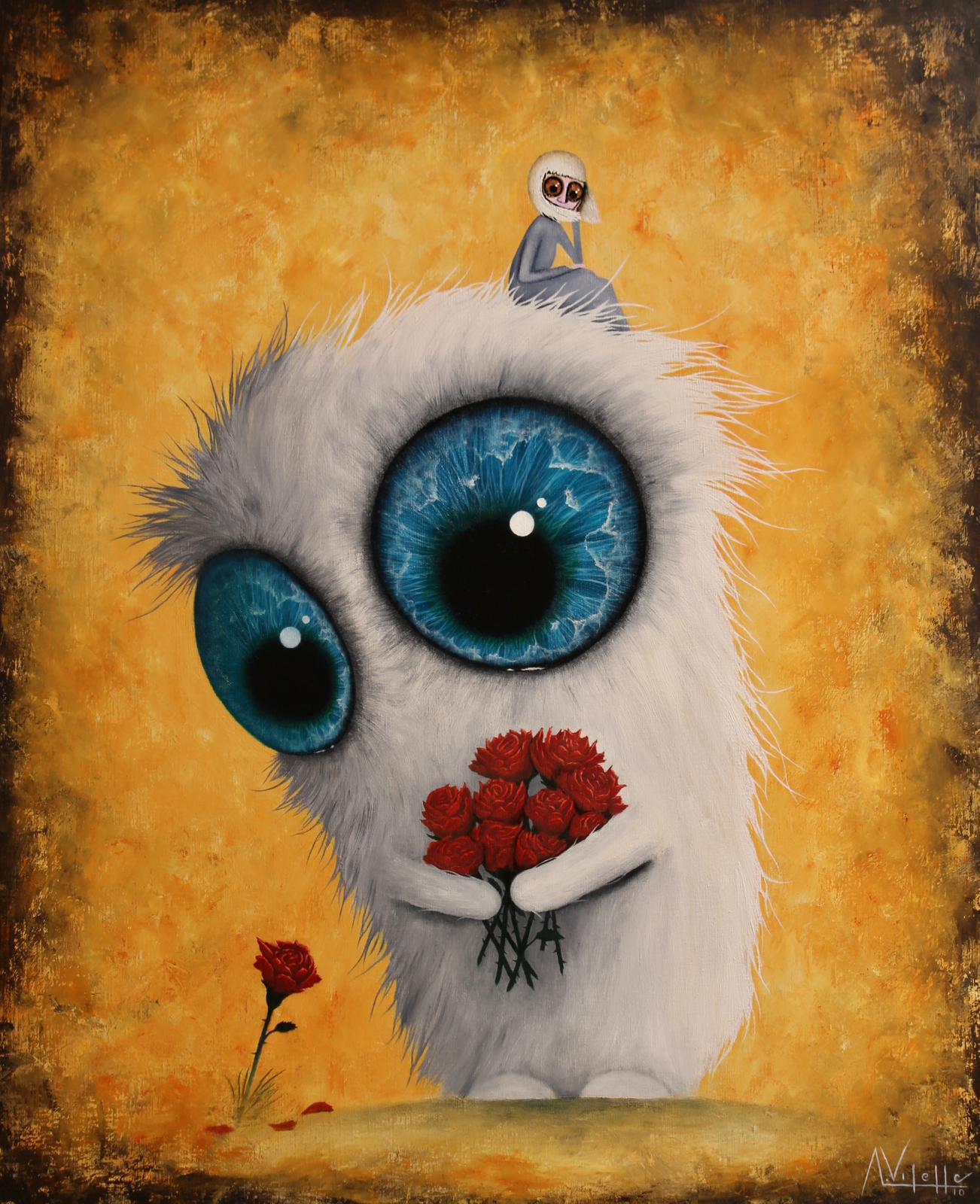
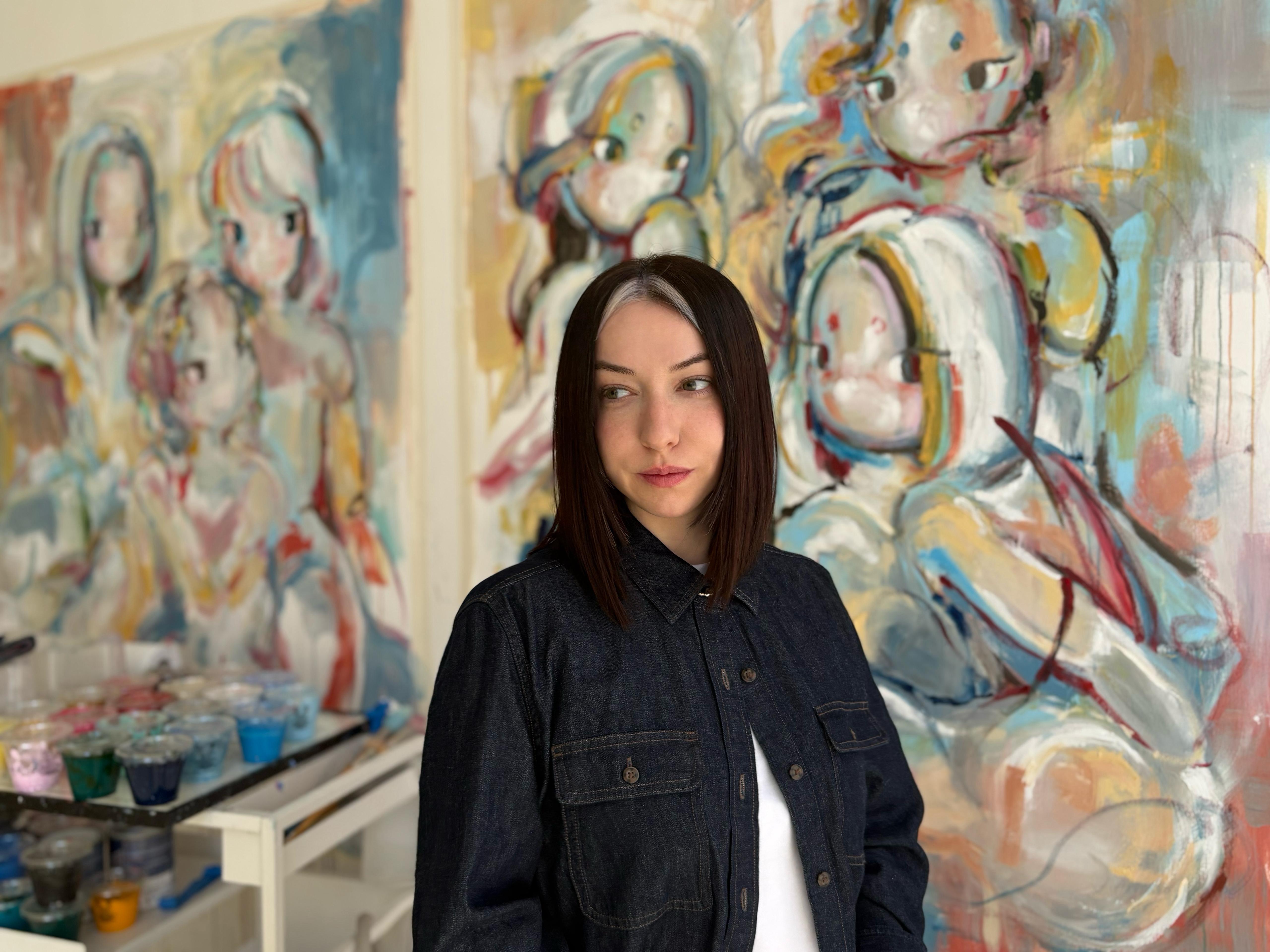
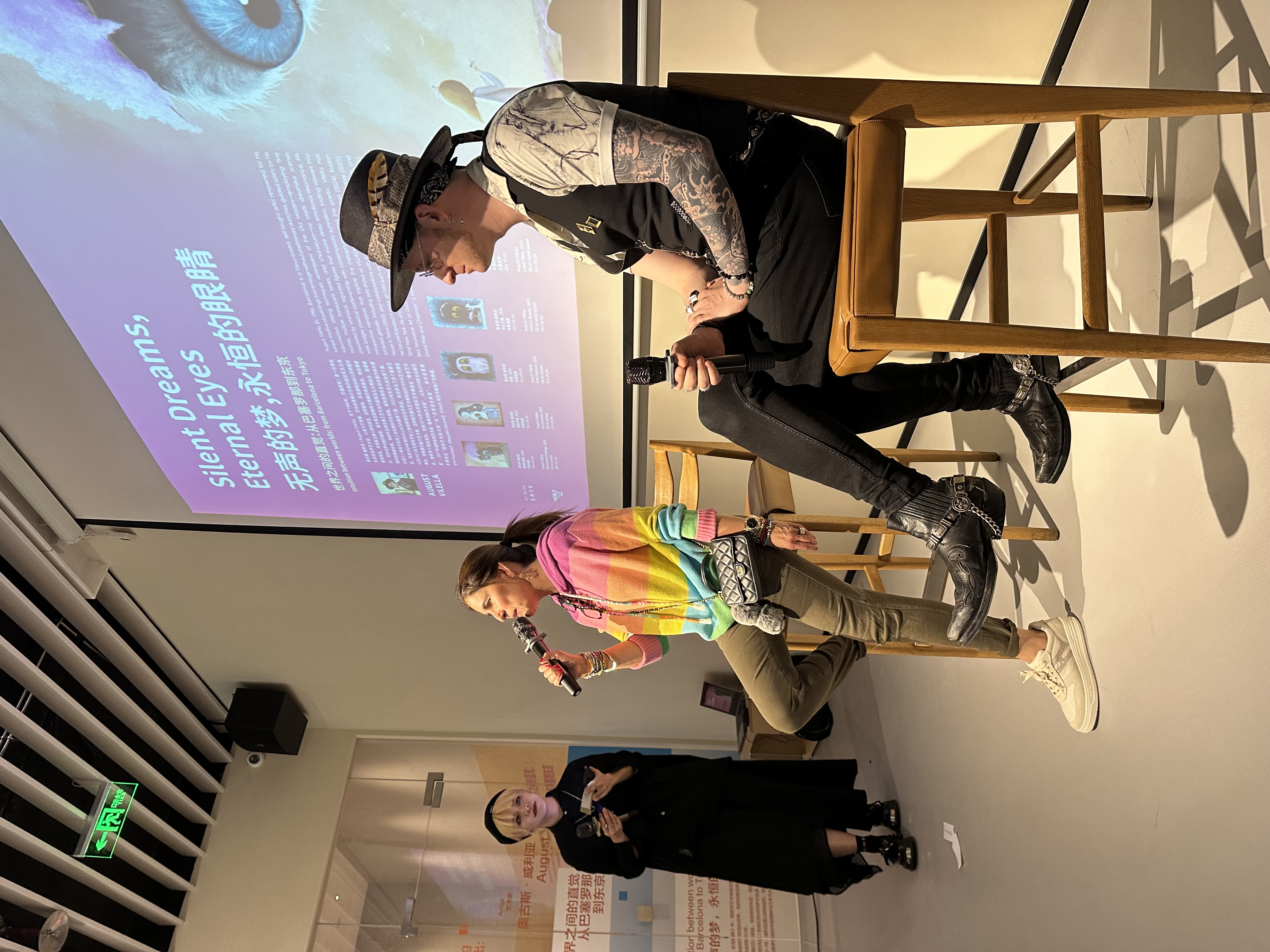
At the same time, Borrell’s curatorial work remains highly active. As StudioToGallery launches, she is overseeing two ambitious solo exhibitions opening from 15 March at The Art Cube, a landmark cultural space in Shenzhen Bay. One marks the tenth anniversary of August Vilella’s practice; the other presents a major solo project by Laura Mas (Okokume). Both exhibitions will occupy an entire building, incorporating large-scale installations, monumental sculpture, and digital screen façades.

The venue reflects the scale of her international reach. The Art Cube is owned by China Resources Group, which operates more than one hundred shopping malls alongside numerous museums and art spaces across China. Located within the MixC World complex — home to luxury houses such as Louis Vuitton, Hermès, Dior, Prada, and Gucci — the site places contemporary art within one of the country’s most visible commercial and cultural environments. A museum shop will also feature additional artists, extending the exhibitions into a broader curatorial platform.

If the art world often equates visibility with success, Borrell’s model is more structural.

Okokume, Artist portrait , Image courtesy of the artist

Where today’s art economy prioritises speed, exposure, and constant presence, StudioToGallery emphasises rigour: fostering a deeper understanding of contracts, value formation, and the strategic judgement to know when to accept — or decline — an opportunity. It is concerned less with fleeting attention than with building lasting, sustainable careers. It is less about access to the market than fluency in how that market actually functions. If the art world has long depended on gatekeepers, Borrell’s approach feels closer to translation — making opaque systems legible and navigable for the artists moving through them. At its core, StudioToGallery does not propose an alternative scene or a parallel market. It offers something quieter and arguably more necessary: a fairer infrastructure.

Below, Borrell speaks with ArtCollectorNews about the origins of the project, her methodology, and why mentorship — not mere exposure — remains the missing link for most artists.

ARTCOLLECTORNEWS: Was there a specific moment when you realised this work needed to become a platform?

Sonia Borrell: Yes, very clearly. One month I received around two thousand messages from artists asking for help. Normally, I receive about two hundred in a month. That difference was impossible to ignore.I realised the need had grown far beyond what I could manage informally. It was no longer about helping one artist at a time. It was about scaling support responsibly, without losing depth or seriousness. That was the moment I decided to create StudioToGallery.

ARTCOLLECTORNEWS: Before that decision, how were you supporting artists?

Sonia Borrell: I had been doing this work for years, but without structure — visiting artists’ studios, mentoring them, helping them understand contracts, connecting them with galleries, curating exhibitions, creating publications, and opening doors where possible.I travel constantly, and that movement has been essential. Being present in different cities and countries allows me to understand how art systems actually function and where artists are most often unsupported.

Lighthouse Sculpture by Anese at Marfa Invitational | Image courtesy of Tryson Collection

ARTCOLLECTORNEWS: Studio visits seem central to your methodology.

Sonia Borrell: They are essential. You cannot mentor an artist properly without being present in their studio, seeing how they work, how they think, and how consistent they are. Studio visits are where trust is built and where meaningful guidance happens. Over the years, I have spent countless hours visiting studios across different countries, following artists’ development closely, sometimes over long periods of time. That proximity allows me to mentor realistically, not theoretically.

ARTCOLLECTORNEWS: What does mentoring involve on a practical level?

Sonia Borrell: It is continuous and very hands-on. I mentor around fifty artists a year. This includes professional positioning, pricing, contracts, representation, and helping artists understand when an opportunity is right and when it is not. A significant part of my work has been connecting artists directly with galleries through personal introductions based on trust. These are not open calls or mass outreach efforts. They are relationships built carefully over time, with responsibility on both sides.

ARTCOLLECTORNEWS: Your work also extends into advisory and institutional contexts.

Sonia Borrell: Yes. I work as an advisor across Saudi Arabia, China, and Spain. That advisory work gives me insight into how institutions, collectors, and cultural ecosystems function at different levels.In addition, I am Editor-at-Large for Bonart Cultural and Disruptors Magazine. Writing and editing keep me close to cultural discourse and allow me to reflect critically on how the art world is evolving. All of this informs how I support artists.

Sonia Borrell | Presenting Artist August Vilella China | Image: Courtesy of Tryson Collection
It is a fair ecosystem where everyone contributes. Members connect with each other, talk openly, and create opportunities together. I curate the community carefully. I am the filter, because I only want serious people — people who add value. Gente que sume.

ARTCOLLECTORNEWS: Over the last two years, your activity expanded significantly on an international scale.

Sonia Borrell: Yes, and that expansion made the need for structure unavoidable. I was involved in the Marfa Invitational and in Redefining the Quadrant in China at the SWCAC Museum, in collaboration with Art Belina. I also collaborated with D Contemporary in London, Gallery Zberro in Paris, and Galería Mayoral in Barcelona.

Alongside these projects, there were constant studio visits, mentoring sessions, and advisory work. Artists from very different contexts were facing the same structural challenges.

ARTCOLLECTORNEWS: StudioToGallery seems to extend far beyond galleries alone.

Sonia Borrell: Very much so. Over the years, I have created and curated art magazines, including Arts to Heart Magazine and Create Magazine, curated open calls and exhibitions, and founded initiatives such as The Overseas Women in Art Prize in London.I have also been involved in podcasts, museum-related programming, mentoring sessions, and educational initiatives connected to member clubs and institutions. This experience feeds directly into StudioToGallery and shapes how the ecosystem operates.

At Novecento Museum lending André Butzer | Image Courtesy: Tryson Collection

ARTCOLLECTORNEWS: How does this translate into opportunities for members?

Sonia Borrell: Artists are the first stage. From there, curators and collectors join the ecosystem to help artists gain visibility and context. There are Q&A sessions and direct exchanges with collectors, curators, gallerists, and museum professionals.Artists connect not only with galleries, but also with art magazines, publications, books, podcasts, and news platforms. We open doors across China, Europe, the United States, the Middle East, and Latin America. This is about circulation and continuity, not isolated exposure.

ARTCOLLECTORNEWS: You describe StudioToGallery as a members’ club.

Sonia Borrell: Because it is based on participation and responsibility. Every member has one voice and one direct, personal channel of communication. This is not anonymous or automated. It is a fair ecosystem where everyone contributes. Members connect with each other, talk openly, and create opportunities together. I curate the community carefully. I am the filter, because I only want serious people — people who add value. Gente que sume.

ARTCOLLECTORNEWS: Education is a recurring theme.

Sonia Borrell: Education is fundamental. Every member receives free access to my book Art in Real Time, because knowledge should not be a privilege. Understanding the art ecosystem changes how artists move within it and how they value their own work.

ARTCOLLECTORNEWS: What does StudioToGallery ultimately represent for you?

Sonia Borrell: It is the structure that connects years of mentoring, studio visits, writing, curating, advisory work, and international collaboration into one living ecosystem. StudioToGallery exists so that artists are not excluded simply because they lack connections, resources, or background. It is about fairness, seriousness, and sustained support built through real human relationships.

Date
Feb 6, 2026
Share

Latest Posts

February 6, 2026
Reviews
Reviews
Building the Bridge: How Sonia Borrell Is Rewriting the Path from Studio to Gallery

Through mentorship, international networks, and her members’ platform StudioToGallery, curator and advisor Sonia BB London is creating a fairer infrastructure for emerging artists — replacing gatekeeping with guidance and access with education.

Icon(oclast) : Artist Interview with Cas Campbell

New Zealand–born, UK-based artist Cas Campbell works across ceramics, handmade paper, sculpture, and installation to explore humanity’s deep connection to nature. Drawing on evolutionary history, queer identity, motherhood, neurodivergence, and overlooked lives, Campbell’s practice weaves the personal with the historical. Their recent ceramic works construct alternative icons inspired by boundary-breaking female and queer figures, reframing ideas of gender, care, and permanence. In this in-depth interview, Campbell reflects on their journey from painting and installation to clay, the impact of becoming a young parent, and the slow development of a research-driven studio practice. The conversation offers an intimate insight into an emerging artist reshaping contemporary ceramics through tenderness, and resilience.

January 21, 2026
Reviews
Reviews
Crossing Into Darkness: Tracey Emin’s Curated Descent into the Human Psyche

At Carl Freedman Gallery, Crossing Into Darkness sees Dame Tracey Emin step into the role of curator with striking emotional authority, assembling a multigenerational constellation of artists — from Goya, Munch, Bourgeois and Kiefer to Danielle McKinney, Lindsey Mendick and Celia Hempton — to explore vulnerability, mortality and psychological depth. Through restrained lighting, careful spatial choreography and an instinctive pairing of historic and contemporary voices, Emin transforms darkness into a space of reflection rather than despair.