
September 29, 2026
Exhibitions
Exhibitions
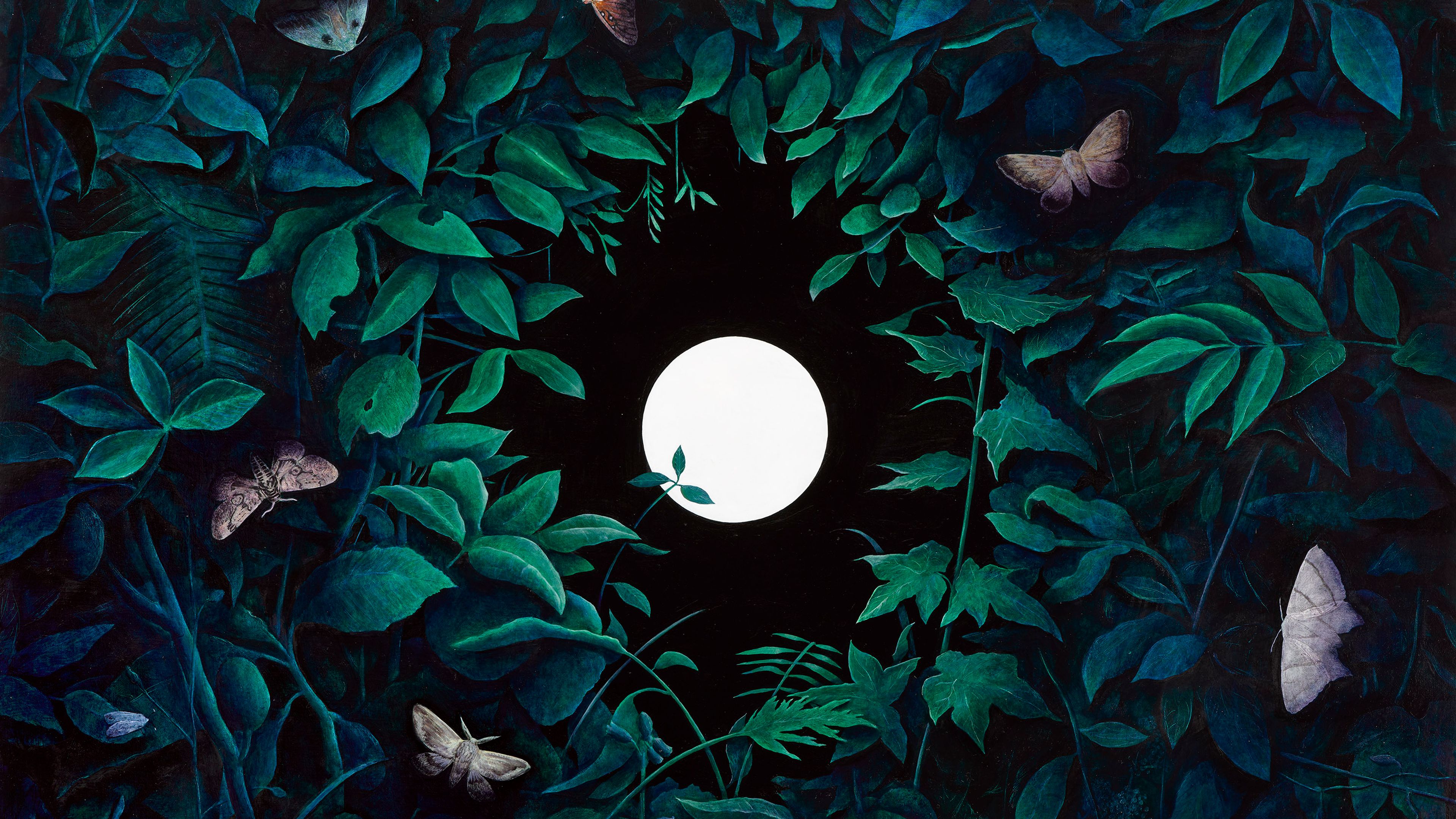
For his first UK solo presentation and first exhibition with David Zwirner, Daichi Takagi turns stones, moonlight, leaves and ancient trees into paintings poised between exact observation and the surreal.
For his first UK solo presentation and first exhibition with David Zwirner, Daichi Takagi turns stones, moonlight, leaves and ancient trees into paintings poised between exact observation and the surreal.
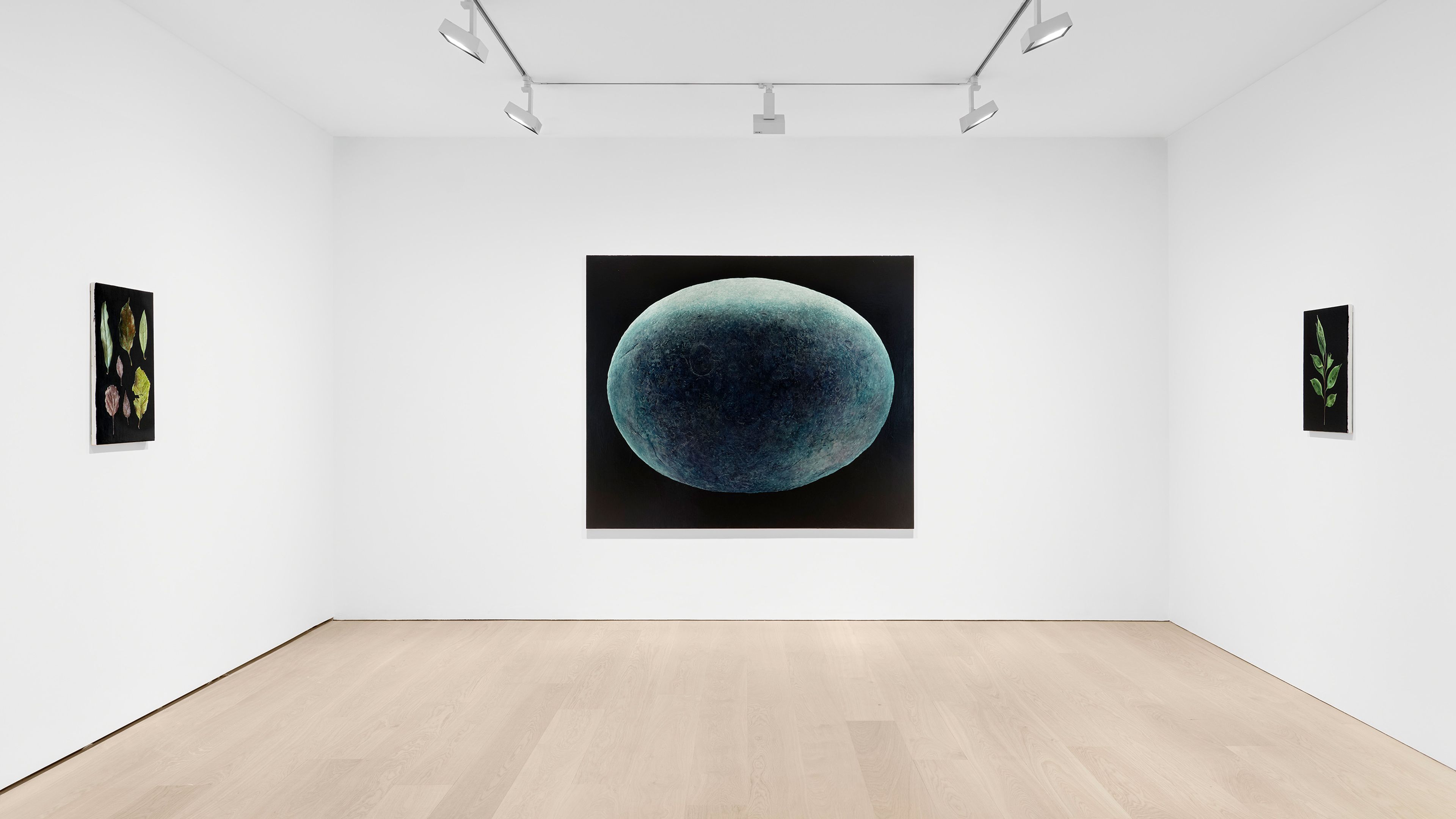
David Zwirner’s decision to introduce Daichi Takagi to London through a compact exhibition in its Upper Room is an unusually effective piece of programming. Suchness, which opened on 24 September, is both Takagi’s first solo presentation in the United Kingdom and his first exhibition with the gallery. That combination gives the show an obvious market significance, but the paintings themselves reward a slower reading than the language of a gallery debut normally permits.
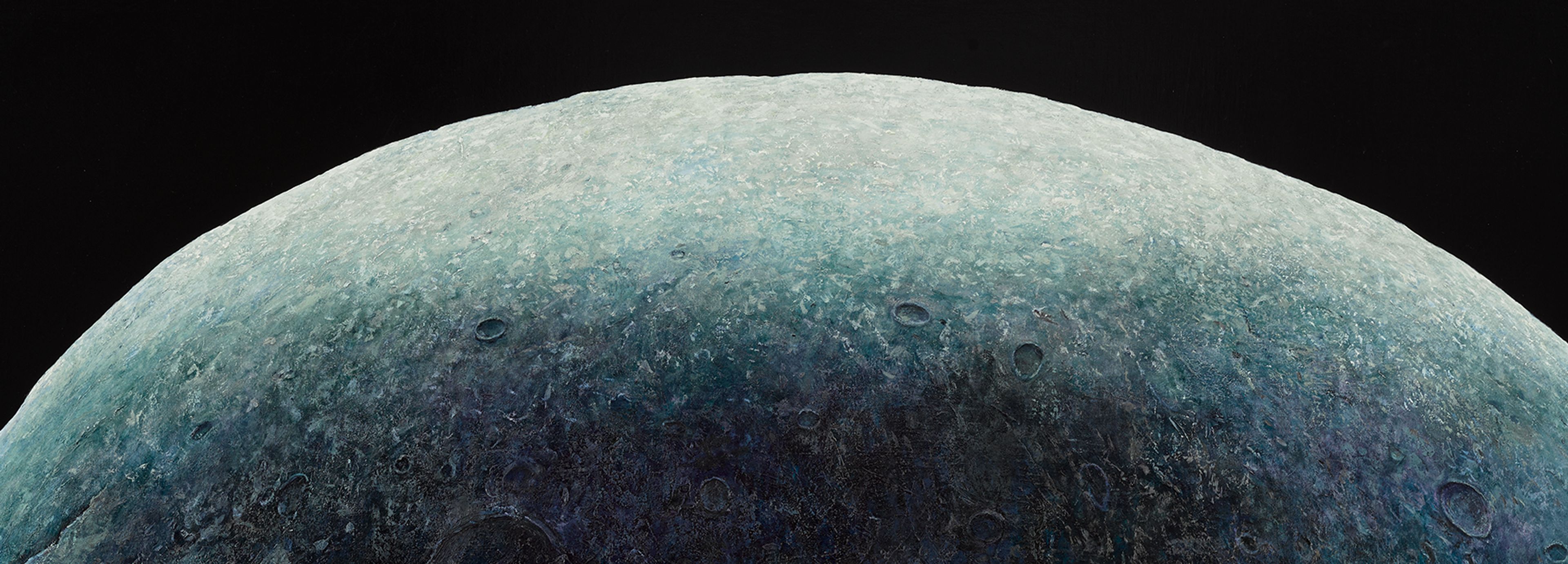
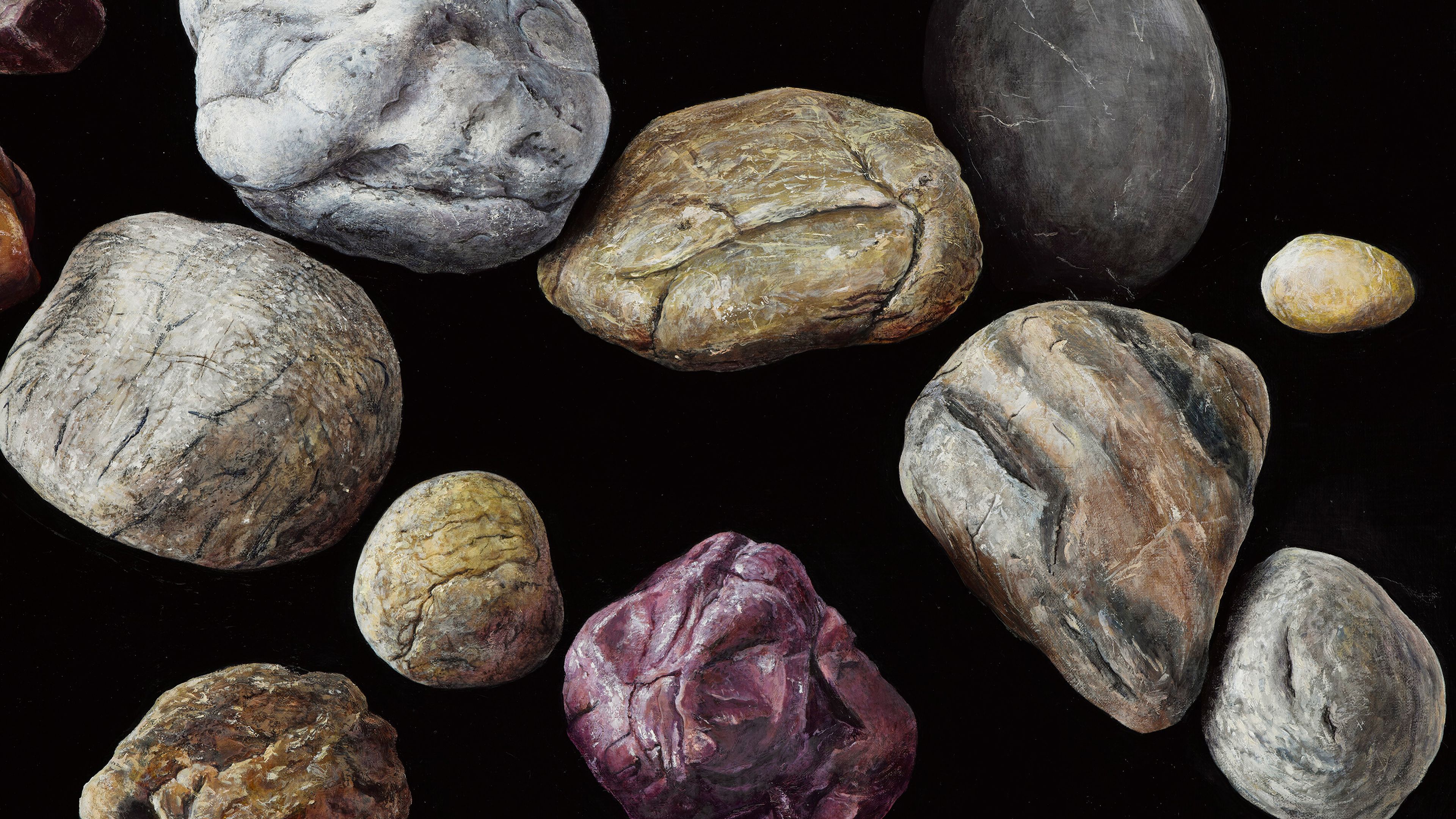
All the works are from 2026. Takagi moves between moonlight, stones, leaves, rain, clouded skies and the scarred surfaces of ancient tree trunks. They are recognisable subjects, sometimes rendered with painstaking precision, but the paintings repeatedly approach abstraction. A stone becomes an accumulation of mineral colour against black. A trunk becomes topography. Leaves surround a pale disc of moon until the image feels simultaneously botanical and cosmic.
The title, Suchness — 真如 — refers to a state in which things are apprehended as they are. Takagi’s paintings make that apparently simple idea complicated. To look closely at something is not necessarily to stabilise it. The longer he attends to an object, the less securely it belongs to a single category.
Takagi has described an affinity with Giorgio Morandi and On Kawara, not primarily because his work resembles theirs, but because of repetition. The same or similar motif can be painted again without becoming the same experience. That proposition is central to the new work. Stones, trees and leaves recur not as symbols with fixed meanings but as opportunities to test what sustained observation can do.
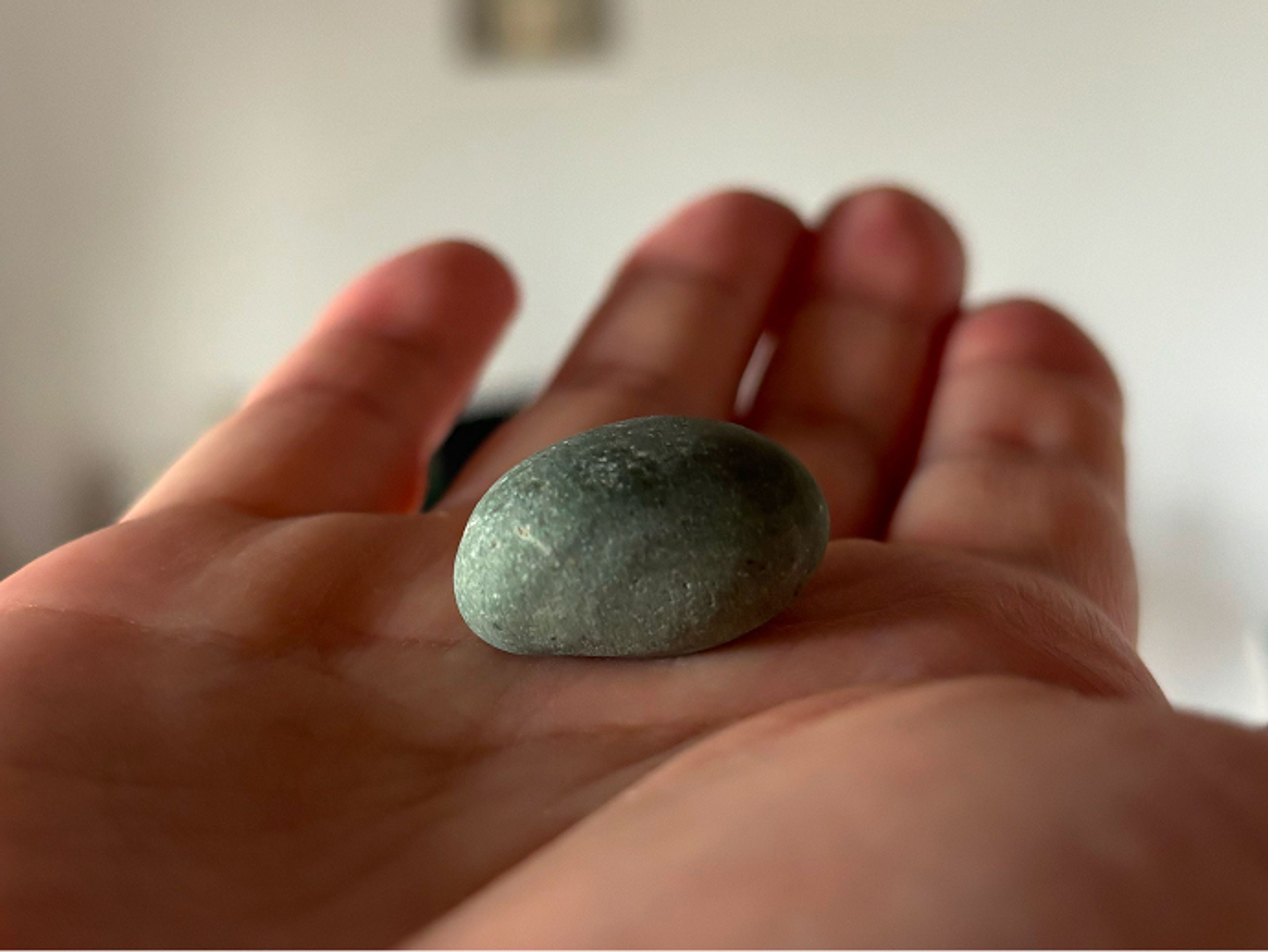
His source material is often gathered through walking. The artist researches forests and parks near his home and elsewhere in Japan, as well as places encountered while travelling. He has described looking for ordinary, unnamed sites rather than conventionally spectacular landscapes. At times he physically collects stones or leaves and brings them back to the studio. The procedure helps explain the unusual tension in the paintings between empirical specificity and dreamlike atmosphere.
This is particularly apparent in Moonlight. The foliage is convincing enough to invite botanical looking, yet the circular moon creates an almost graphic interruption. The work is not a conventional nocturne. It is closer to an image of perception itself: detail emerges from darkness only to return to it.
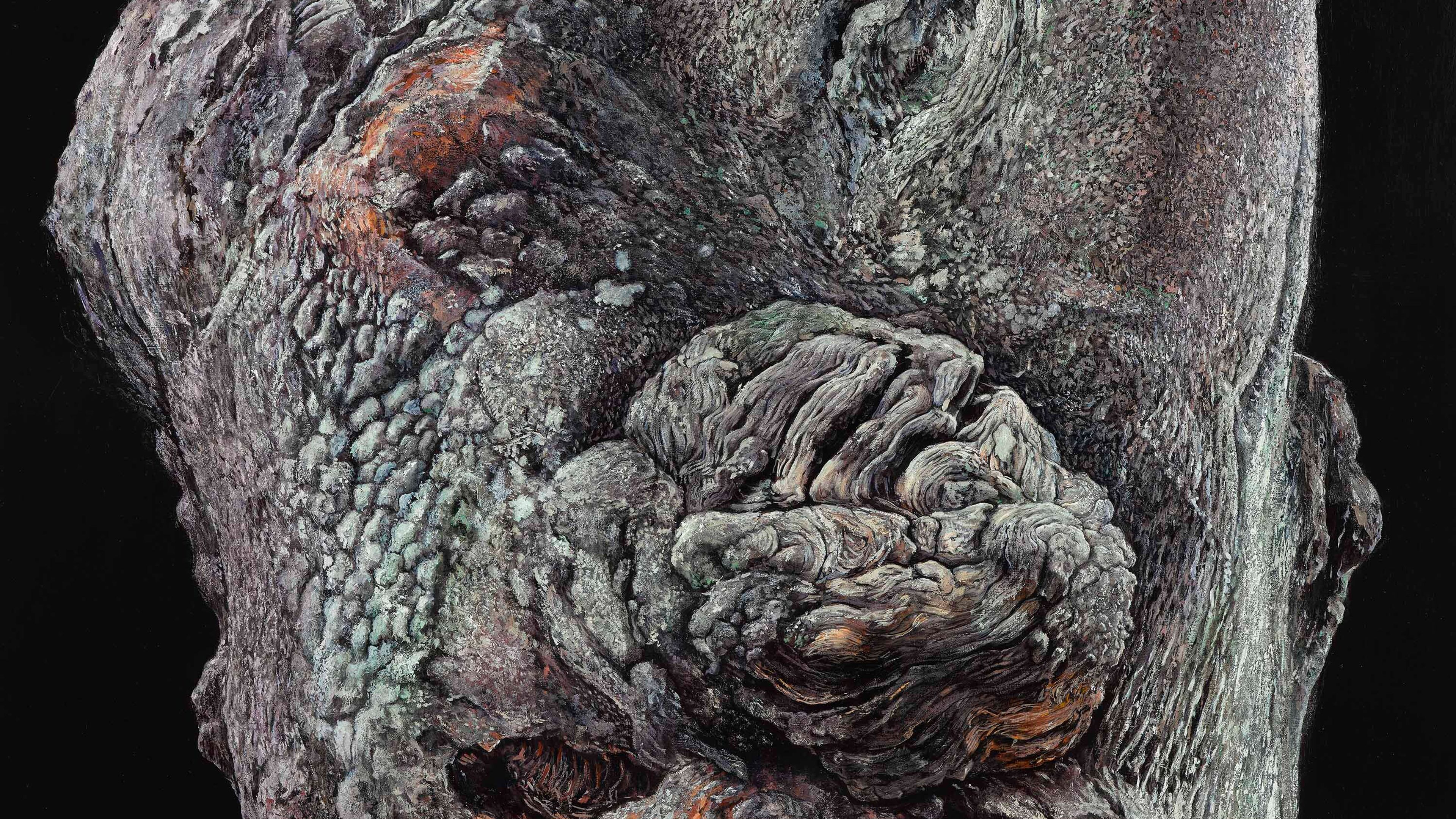
Takagi has spoken about damaged Buddhist sculpture and roadside Jizo figures as important points of reference, particularly objects in which age or loss exposes the underlying wood or stone. That interest helps illuminate the paintings. He is drawn to the unstable point at which material becomes image and image returns to material. Paint can describe bark with great precision while also insisting on its own worked surface.
For collectors encountering Takagi through Zwirner for the first time, this is more useful than treating the exhibition as a discovery narrative alone. The gallery affiliation is significant, but the paintings already possess a developed internal logic. Their restraint is part of their strength. They do not depend on scale, novelty or a single instantly identifiable motif.
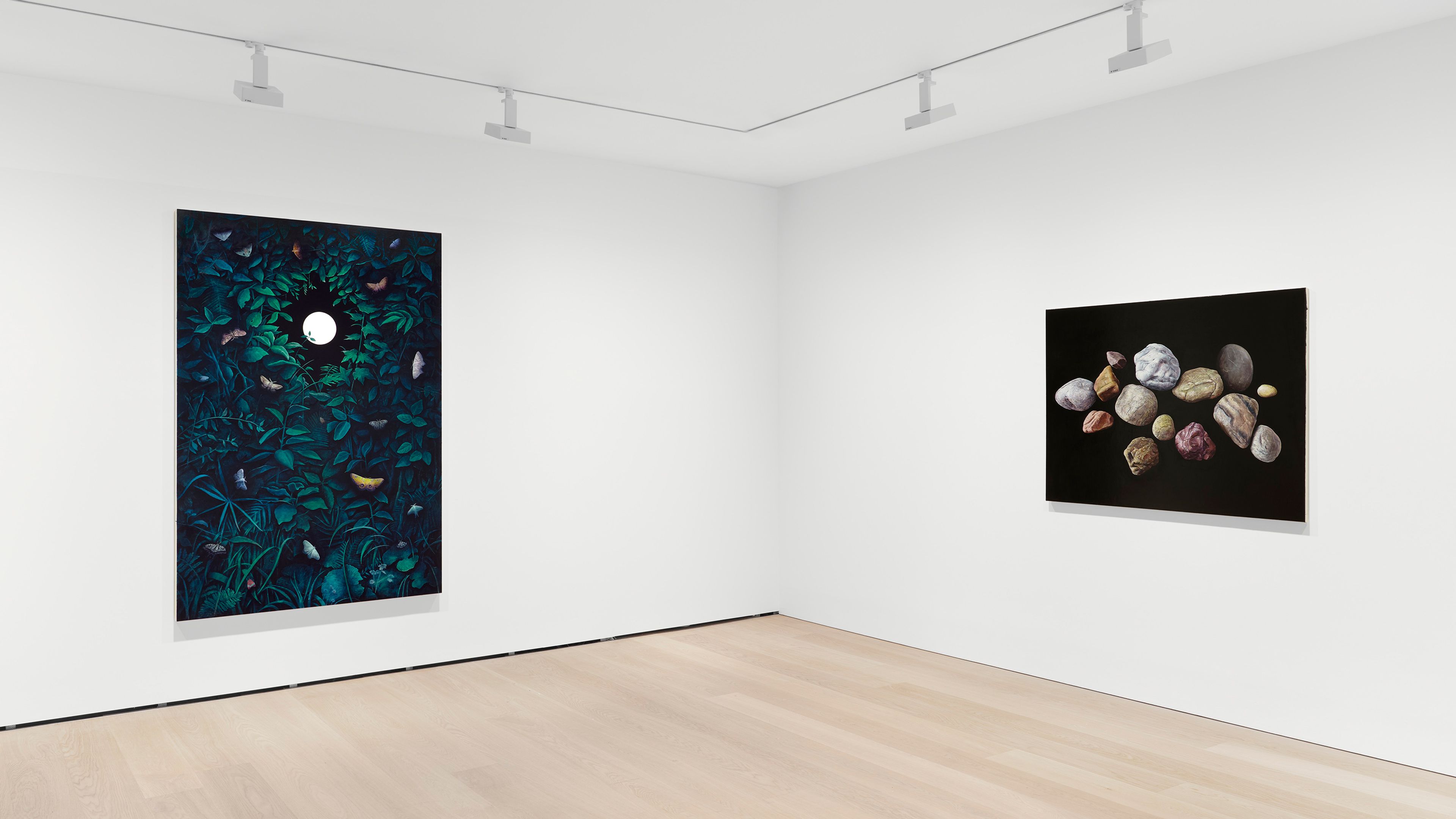
The strongest works reward movement between distance and proximity. From across the room, Stone can appear almost planetary; closer inspection brings the eye back to the granular irregularity of a specific object. The same shift occurs in Trunk, where the surface of wood expands until it resembles geological formation or bodily tissue.
There is an advantage to the modest scale of Suchness. In a season crowded with large institutional and commercial presentations, Takagi’s exhibition does not attempt to overpower its surroundings. Its ambition is concentrated in the act of looking. That makes it an instructive debut for collectors: the work has enough immediate visual clarity to register quickly, but its real character emerges through repetition and comparison.
The paintings also sit productively within a longer contemporary return to nature that has little to do with traditional landscape painting. Here the natural object is not a retreat from contemporary experience. It becomes a way to examine attention, temporality and the instability of perception.
For a first exhibition with a major international gallery, Suchness is notably free of grand declarations. That is precisely why it works. Takagi’s subject is not nature in the abstract but the difficult, repeated act of seeing a thing before habit turns it into a name.
Daichi Takagi: Suchness
David Zwirner, 24 Grafton Street, London
24 September–31 October 2026.
For his first UK solo presentation and first exhibition with David Zwirner, Daichi Takagi turns stones, moonlight, leaves and ancient trees into paintings poised between exact observation and the surreal.
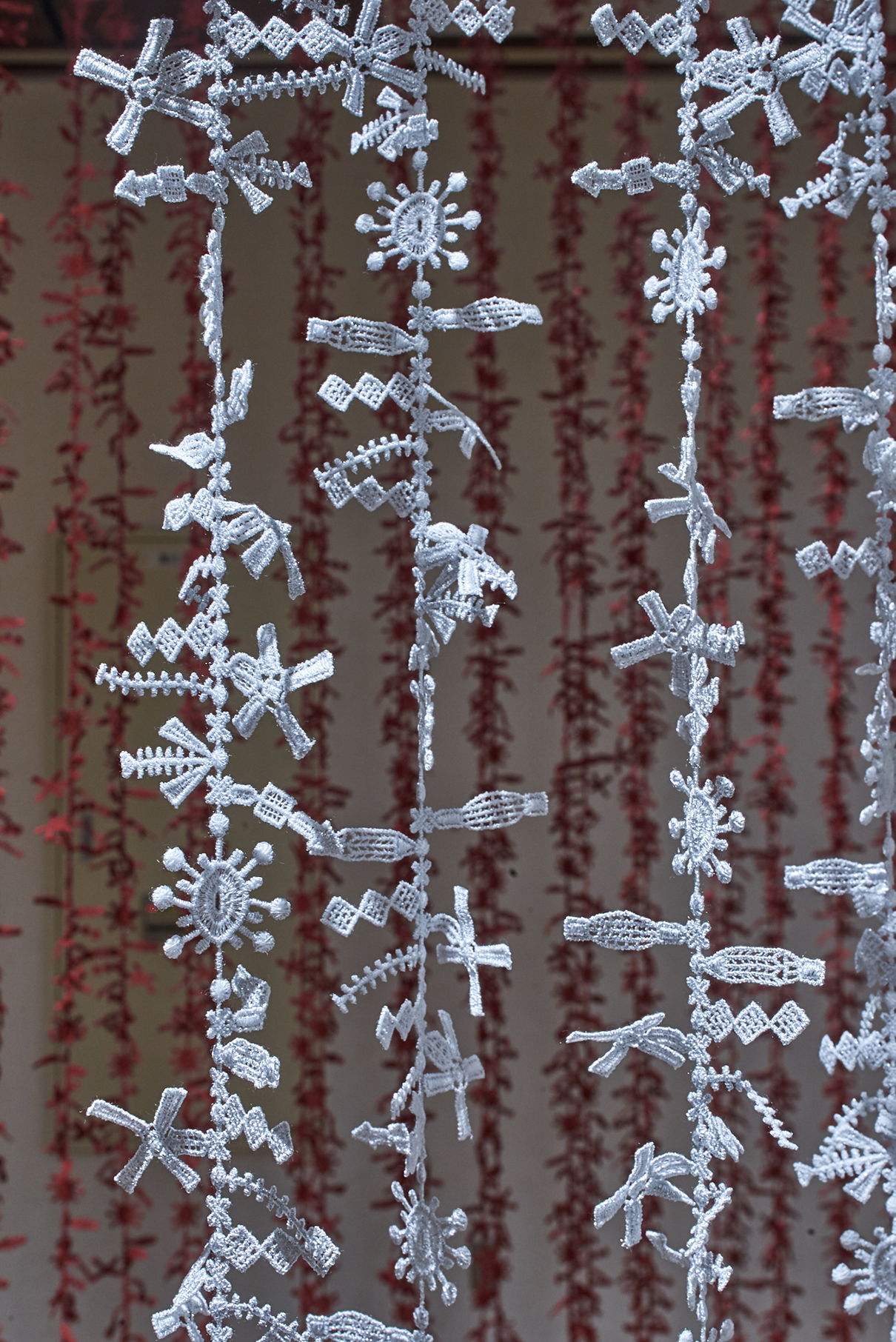
LACMA’s largest survey of Reiko Sudō and NUNO asks a collector’s question hiding in plain sight: when does fabric become an authored, editioned and historically important object of design?
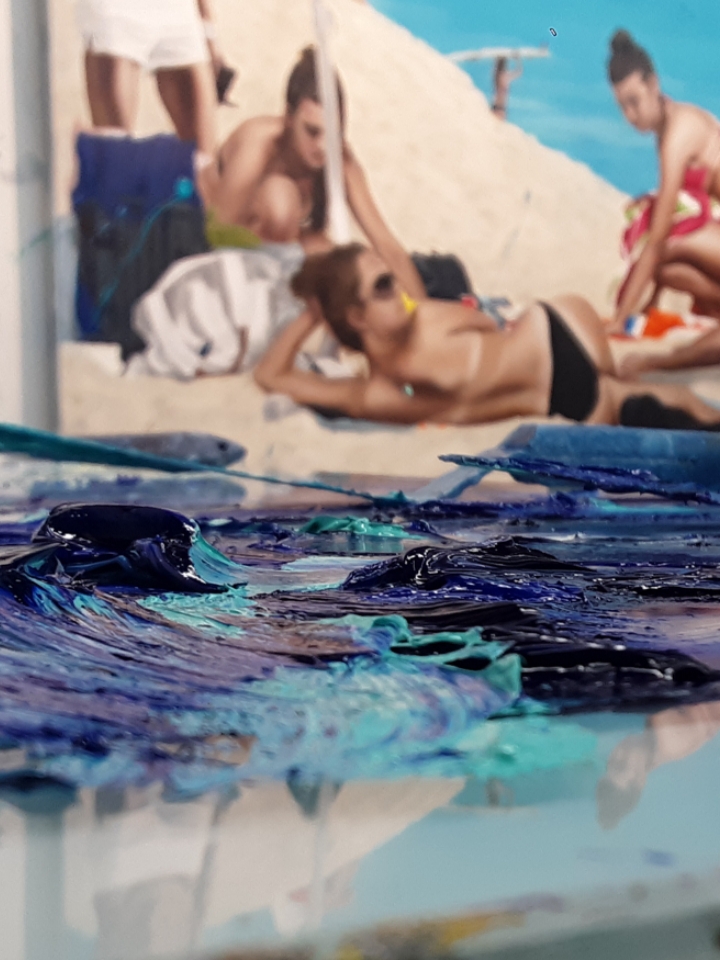
Three years after ARTCOLLECTORNEWS first spoke with Maxwell Stevens about Last Days of Summer, the New York painter has returned to the beach. But in Surfside, the setting has become less a backdrop than a social and psychological stage. The new paintings bring swimmers, surfers, couples, families and groups of friends into close proximity along the North Atlantic coast of Long Island. Stevens renders these figures with an almost portrait-like concentration before disrupting them with broad smears, calligraphic strokes, impasto and flashes of cobalt, turquoise and aqua.