LATEST NEWS:
Jenny Holzer & Andy Goldsworthy win 2026 Praemium Imperiale • €9m Renoir museum heist in France • Dimitris Daskalopoulos donates 51 works to museums in Greece & Scotland • Artist Lucien Smith dies aged 37 • Faro Santander opens with 1,000-work collection • Argentina orders return of Nazi-looted Old Master • Greece rejects Parthenon Marbles loan request • Smithsonian chief Lonnie Bunch announces retirement
Go Back
Magazine

Frieze Sculpture 2026 Reviewed: What Happens When Sculpture Leaves the White Cube

Frieze Sculpture 2026 turns The Regent’s Park into a live test of scale, material, siting and weather. For collectors, the strongest lesson is not which work 'wins' — but what outdoor presentation reveals that the white cube can hide.

Exhibitions
Exhibitions
Frieze Sculpture 2026 Reviewed: What Happens When Sculpture Leaves the White Cube

Outdoor sculpture is one of the more unforgiving tests of contemporary art. A work that appears commanding in a white cube can shrink against a line of mature trees, become decorative on a lawn or lose its internal tension once architecture stops doing the framing. The opposite can happen too: scale, weather, distance and the movement of other people can release qualities that a gallery installation keeps under control.

That is what makes Frieze Sculpture useful beyond its role as the public prelude to Frieze London and Frieze Masters. The 2026 edition opened in the English Gardens of The Regent’s Park on 16 September and remains on view until 1 November. Curated for a fourth year by Fatoş Üstek, the 14th edition brings together 11 international artists. Frieze frames this year’s programme around hybridity and sculpture as a porous, relational ecology — language that can sound abstract until the works are encountered in a park, where they have no choice but to negotiate grass, trees, paths, rain, dogs, runners and the changing London light.

For collectors, that negotiation is not peripheral. It is precisely the point. Sculpture is bought as an object but lived with as an environment. Frieze Sculpture therefore doubles as a field test: how convincingly does a work hold space, and what happens when the conditions around it refuse to stay still?

From object to encounter

Ivana Bašić’s Metanoia, 2025, is a useful starting point because it refuses the easy pleasures of outdoor monumentality. Its bodily, architectural and technological associations never settle into one reading. In a gallery, its surfaces might invite close inspection first; in the park, its silhouette arrives before its details. The work becomes a presence before it becomes an object.

Ramesh Mario Nithiyendran’s Warrior Figure, 2026, takes almost the opposite route. Its vividly articulated, dual-faced figure meets the park with theatrical directness. The work’s visual energy is immediate, but the longer look is more interesting: front and back, idol and contemporary construction, humour and authority are allowed to coexist rather than resolve into a single symbolic role.

Angel Otero, Dreams and Salt, 2025–26, at Frieze Sculpture 2026
Angel Otero, Dreams and Salt, 2025–26, Frieze Sculpture 2026. Presented by Hauser & Wirth. Photo: Linda Nylind. Courtesy Frieze and the presenting gallery.

Angel Otero’s Dreams and Salt, 2025–26, changes the ground itself. A blue architectural threshold appears to lead below the lawn, creating the suggestion of somewhere inaccessible beneath an otherwise familiar landscape. The gesture is simple but effective because the work uses the park’s horizontal continuity as part of its composition. It does not merely occupy a site; it makes the site behave differently.

Scale is not the same as authority

One of the recurring lessons of outdoor sculpture is that large dimensions do not guarantee presence. Carolina Aguirre’s Held, 2026, makes a more measured intervention, its upright forms establishing a relationship between body, support and surrounding landscape without relying on sheer mass. It reminds collectors that scale should be read relationally: a work can dominate through proportion, tension or placement rather than size alone.

Carolina Aguirre, Held, 2026, at Frieze Sculpture 2026
Carolina Aguirre, Held, 2026, Frieze Sculpture 2026. Presented by Ruttkowski;68. Photo: Linda Nylind. Courtesy Frieze and the presenting gallery.

Catriona Robertson’s WYRM, 2026, is especially persuasive in this context. Robertson’s wider practice examines architecture, waste and the layers created by human intervention, and here the work’s rough, arching form appears less like a sculpture placed on the landscape than a fragment excavated from another infrastructure. Its visual language is neither picturesque nor politely park-like. That friction is productive.

Catriona Robertson, WYRM, 2026, at Frieze Sculpture 2026
Catriona Robertson, WYRM, 2026, Frieze Sculpture 2026. Presented by The Muse Gallery. Photo: Linda Nylind. Courtesy Frieze and the presenting gallery.

Conrad Shawcross approaches the park through a different grammar. Eye of the Needle (Time Pebble (E30A13)), 2026, turns geometry into something optically unstable. Its gridded, elliptical construction changes as the viewer moves, making walking around the work part of how it is understood. For a collector, this is a useful reminder that a sculpture’s catalogue image is often the least complete account of it. Some objects only become legible in sequence.

Conrad Shawcross, Eye of the Needle (Time Pebble (E30A13)), 2026, at Frieze Sculpture 2026
Conrad Shawcross, Eye of the Needle (Time Pebble (E30A13)), 2026, Frieze Sculpture 2026. Presented by Victoria Miro. Photo: Linda Nylind. Courtesy Frieze and the presenting gallery.

What collectors should look for outdoors

Public sculpture exhibitions also expose practical questions that private collectors can too easily postpone until after purchase. How does water leave the work? Which surfaces are expected to change and which are meant to remain stable? Is patination intentional? What coatings or maintenance cycles are specified? How is the object anchored? Can it be moved without compromising structure? Does the artist consider weathering part of the work, or damage to it?

Those questions become particularly visible around Douglas White’s Black Palm, 2026. The familiar silhouette of a palm is rendered dark and materially insistent, producing a strange double image against the living vegetation around it. The natural and manufactured do not cancel one another out. They sharpen each other.

Douglas White, Black Palm, 2026, at Frieze Sculpture 2026
Douglas White, Black Palm, 2026, Frieze Sculpture 2026. Presented by Leila Heller Gallery. Photo: Linda Nylind. Courtesy Frieze and the presenting gallery.

For collectors considering outdoor work, documentation matters almost as much as immediate visual impact. A serious acquisition file should establish materials and fabrication, structural requirements, installation instructions, approved finishes, maintenance expectations, replacement protocols for any vulnerable components and a photographic condition record at the point of acquisition. With complex contemporary sculpture, those records are part of stewardship.

A better way to visit Frieze Sculpture

The temptation with a group presentation is to hunt for a winner. Frieze Sculpture is more rewarding if approached as a series of tests. Which works improve when the viewer moves around them? Which depend on distance? Which use the park rather than merely surviving it? Which reveal something at 20 metres that disappears at two?

That approach is also closer to how collectors eventually live with sculpture. Paintings offer a relatively stable frontal encounter. Sculpture reorganises circulation, sightlines and behaviour. It asks where you stand, how you pass it and what else shares its space.

Frieze Sculpture 2026 works best when it makes those relationships difficult to ignore. Its value is not that The Regent’s Park becomes an oversized salesroom. It is that the park removes many of the protections of the salesroom. The strongest works have to earn their space in public, in weather, in movement and at human scale — which is precisely why collectors should look at them there before looking at a price list.

Frieze Sculpture 2026 is on view in the English Gardens, The Regent’s Park, London, through 1 November 2026. Admission is free.

Date
Sep 21, 2026
Share

Latest Posts

September 21, 2026
Exhibitions
Exhibitions
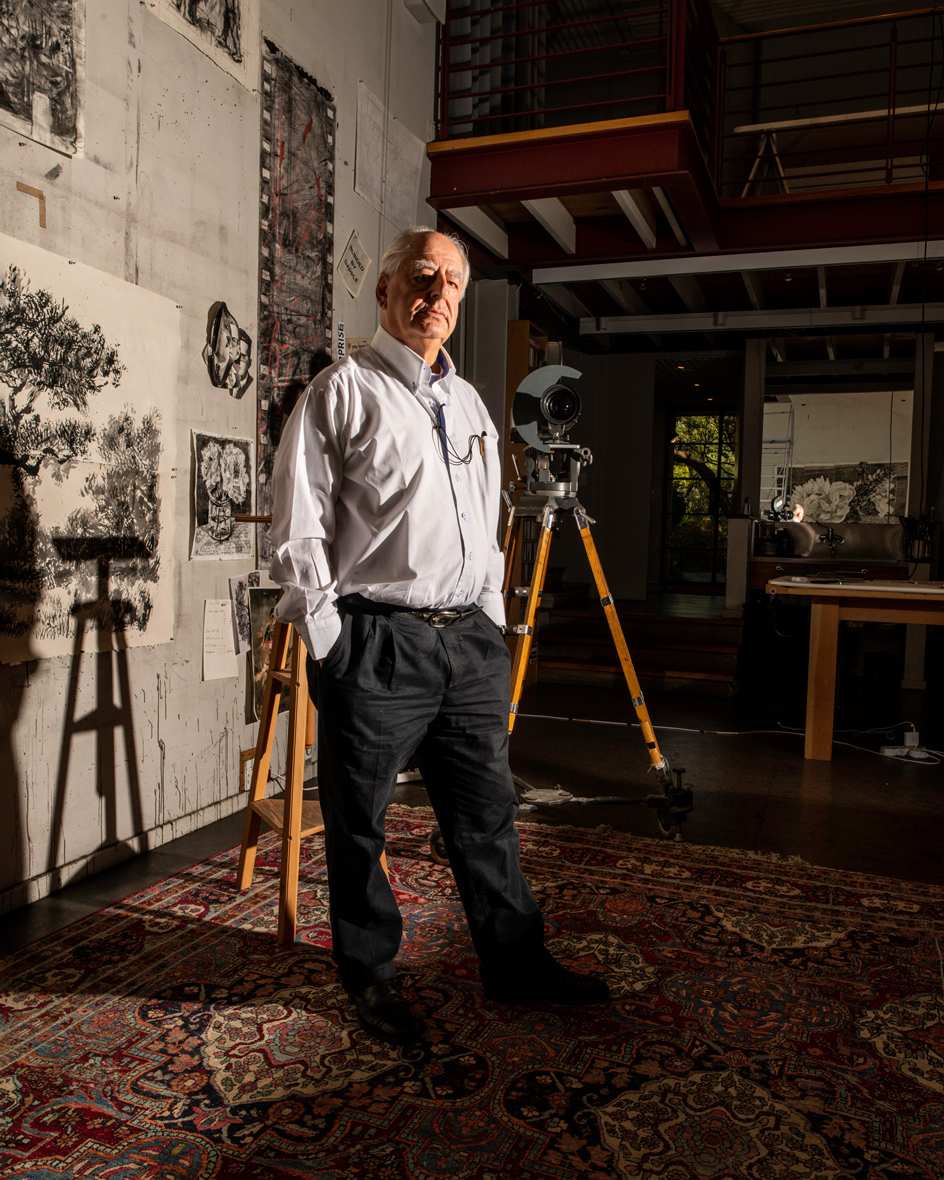
William Kentridge and the City That Cannot Stop Being Erased

Ahead of the global premiere of William Kentridge’s twelfth Drawings for Projection film at Goodman Gallery London, we look at why charcoal, erasure and revision remain central to the artist — and what collectors should understand across drawings, prints, film and sculpture.

September 21, 2026
Exhibitions
Exhibitions
Frieze Sculpture 2026 Reviewed: What Happens When Sculpture Leaves the White Cube

Frieze Sculpture 2026 turns The Regent’s Park into a live test of scale, material, siting and weather. For collectors, the strongest lesson is not which work 'wins' — but what outdoor presentation reveals that the white cube can hide.

September 21, 2026
Exhibitions
Exhibitions
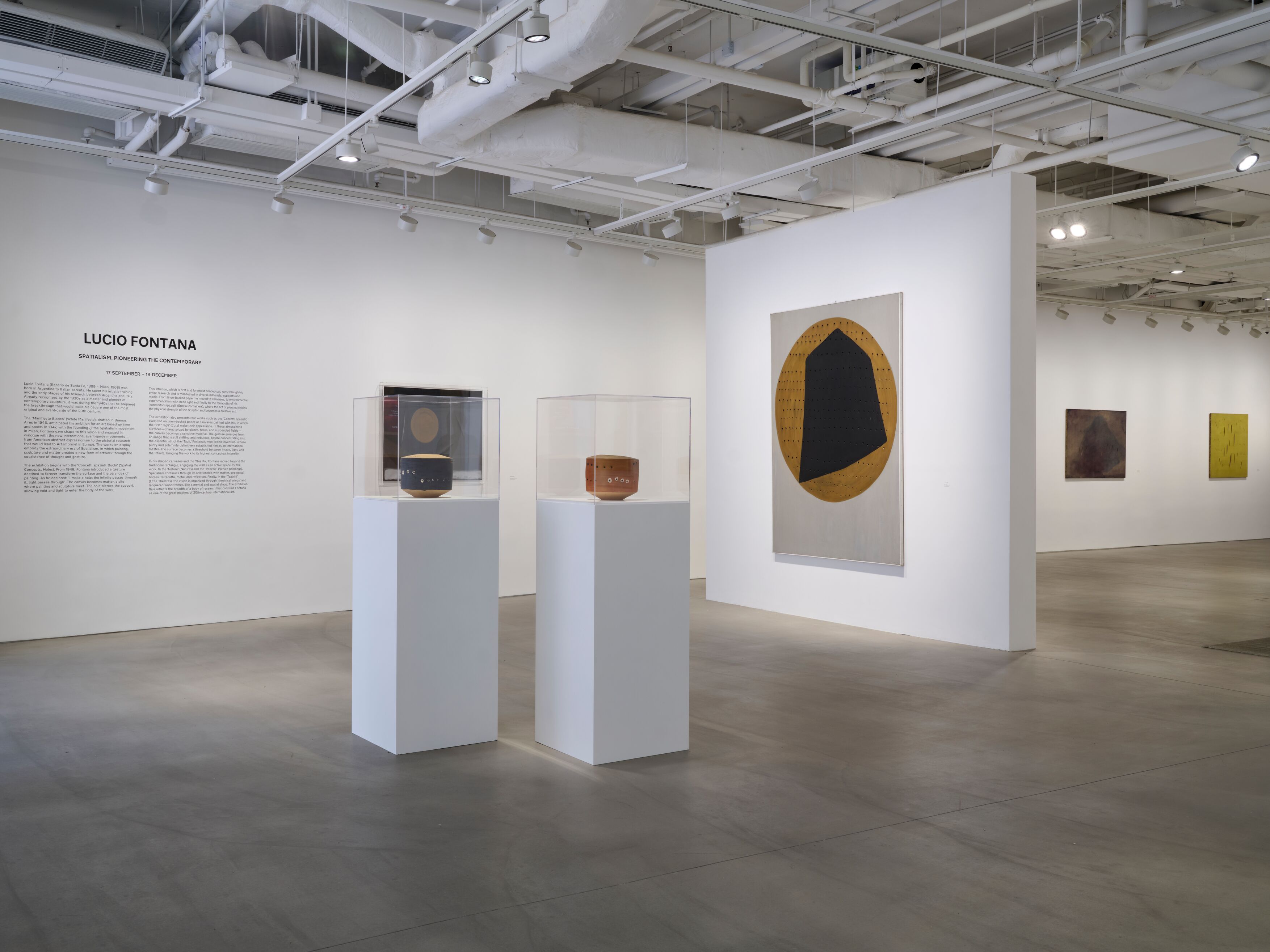
Lucio Fontana in Hong Kong: What Collectors Should See Beyond the Slash

Lucio Fontana’s slash became one of post-war art’s most recognisable gestures. A major Hong Kong exhibition restores the holes, shaped canvases, bronzes and spatial thinking that make one cut very different from another.