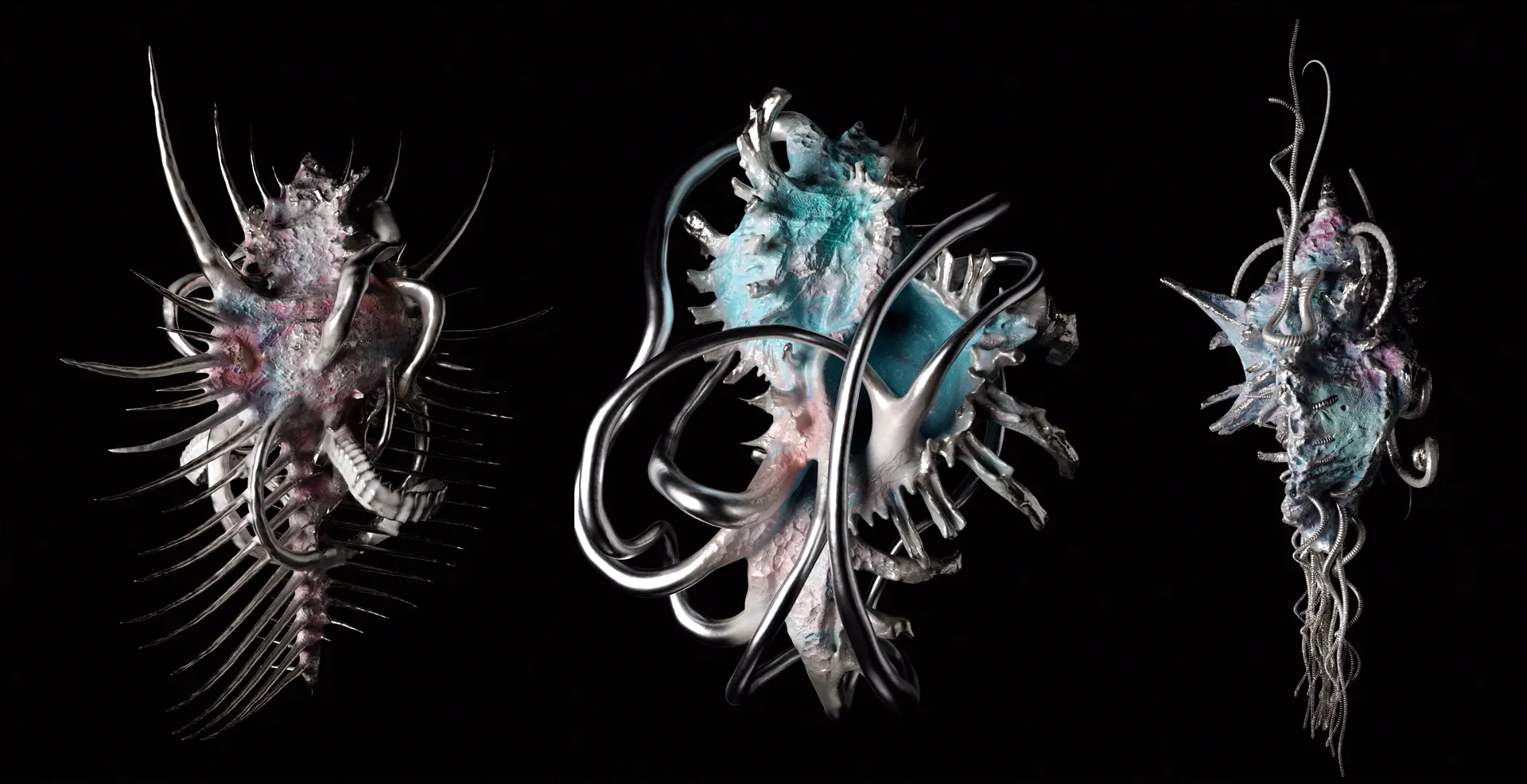
Giusy Amoroso, winner of the fifth Open Call, constructs speculative ecosystems where biology and industry converge. Working across digital and physical realms, her practice examines how organisms adapt within environments shaped by contamination, technological intervention, and ecological instability. Rooted in her upbringing in Southern Italy’s “Land of Fires,” Amoroso’s work moves beyond narratives of destruction to focus on transformation as a condition of survival. Through hybrid anatomies—where metal, synthetic matter, and organic tissue coexist—she proposes new models of life that are both resilient and dependent. This conversation traces the conceptual, technical, and experiential layers that define her evolving practice.
Giusy Amoroso: Hybrid Anatomies and Contaminated Futures
Giusy Amoroso, winner of the fifth Open Call, constructs speculative ecosystems where biology and industry converge. Working across digital and physical realms, her practice examines how organisms adapt within environments shaped by contamination, technological intervention, and ecological instability. Rooted in her upbringing in Southern Italy’s “Land of Fires,” Amoroso’s work moves beyond narratives of destruction to focus on transformation as a condition of survival. Through hybrid anatomies—where metal, synthetic matter, and organic tissue coexist—she proposes new models of life that are both resilient and dependent. This conversation traces the conceptual, technical, and experiential layers that define her evolving practice.
.jpg)
ARTCOLLECTORNEWS: Please tell us a bit about yourself and your artwork?
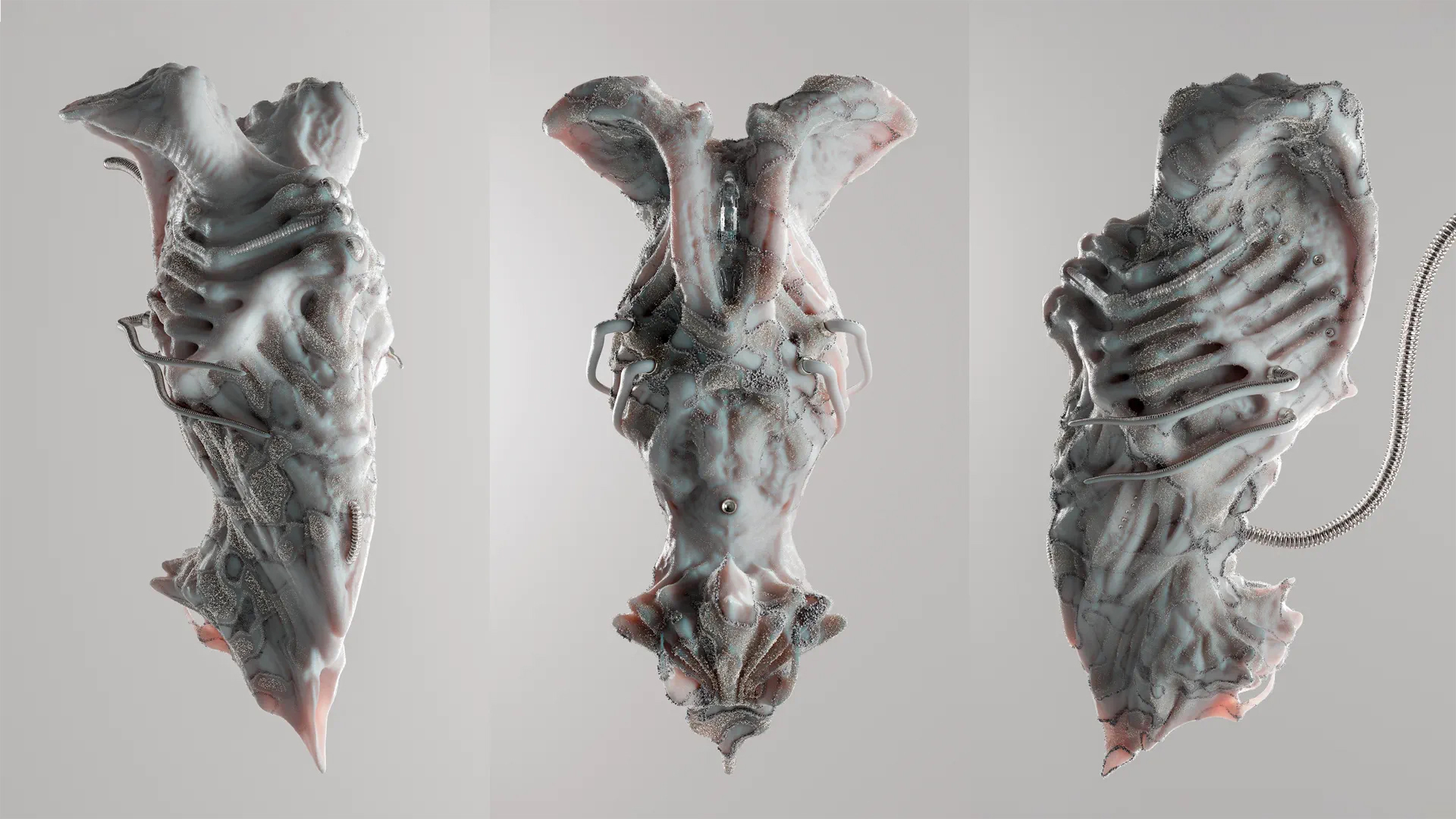
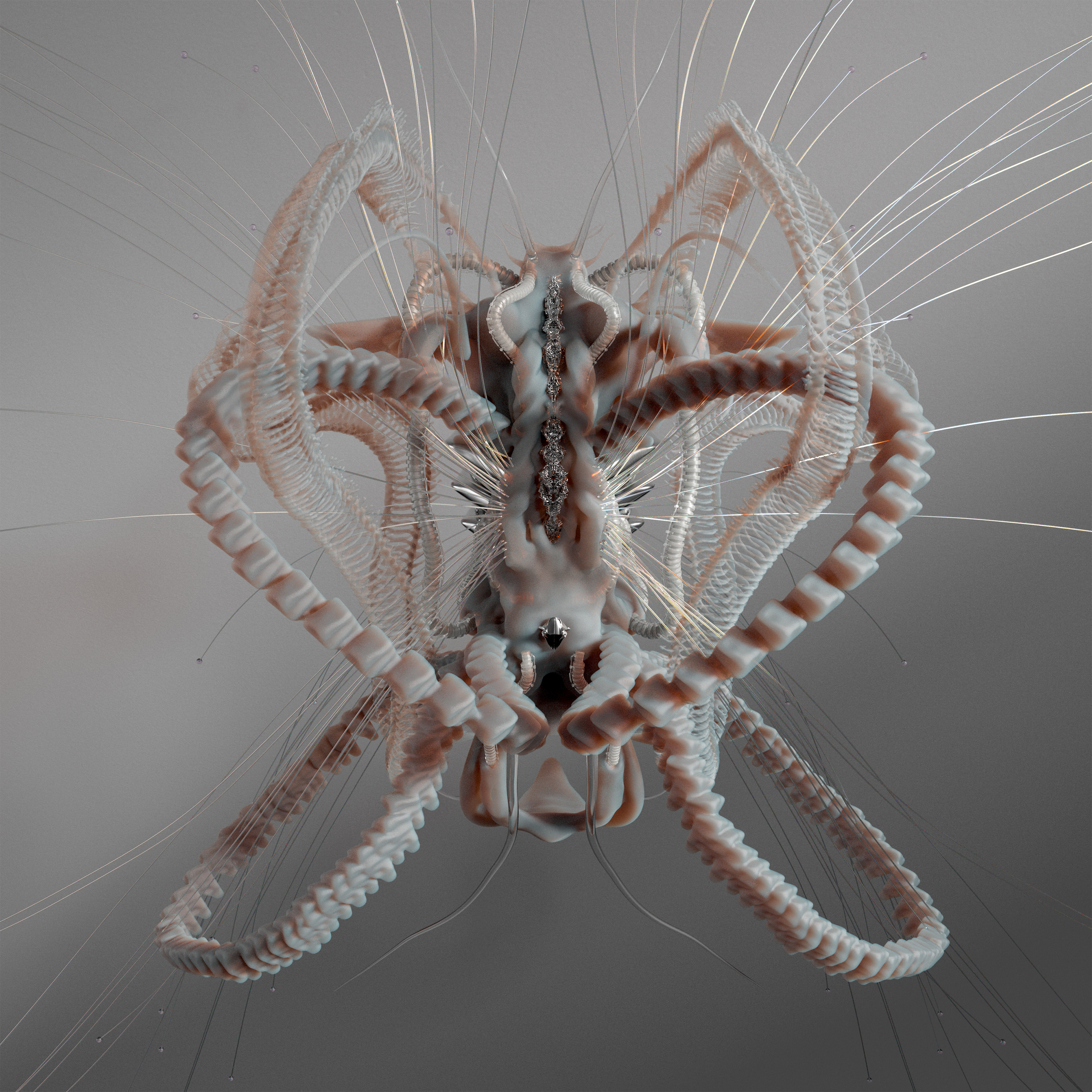
I’m a Berlin based visual artist originally from Italy, working primarily with digital sculpture, moving image, and immersive media,with an expanding focus on translating my work into physical form through digital fabrication processes. My work explores how life responds to synthetic and contaminated environments. At its core is the idea of adaptation through mutation, which I develop through what I define as hybrid anatomies, speculative organisms that merge organic structures with industrial and artificial elements, where materials such as metal, plastic, or digital noise become functional parts of the body. Through this process, I investigate transformation as a survival strategy, focusing on how organisms might evolve by absorbing and integrating the conditions that surround them.

ARTCOLLECTORNEWS: What first inspired you to become an artist?
I grew up near Naples, in an area known as the Terra dei Fuochi (the Land of Fires), which is heavily affected by the illegal dumping and burning of toxic waste. Contamination was part of my everyday life. I could smell burned plastic very often, even inside the house. There was no way to escape it. I remember seeing people swimming near toxic waste or children playing next to burned plastic. It was not perceived as something exceptional, but as part of daily life, something normalized. Growing up in that environment created a kind of conflict. There was a desire to escape it, but at the same time an inability to look away. That tension stayed with me. What I became interested in was not only the destruction, but how life continues to exist within those conditions. I started thinking about biology, about what happens to organisms, including our own bodies, when they are forced to adapt to an environment they cannot escape. That is where my work begins. It developed as a way to make these processes visible, to explore how survival can take shape through transformation.
ARTCOLLECTORNEWS: How has your background shaped your artistic practice?Are there other influences to your work? Literary, artists, travel, autobiographical?
Beyond my personal background, which is rooted in the Mediterranean environment I grew up in, my practice has been strongly shaped by a mixed education that spans sociology, design, and computer graphics for film. This combination has influenced the way I think and work. I approach my practice as a fluid system, moving across different mediums and processes that are in constant interaction with each other. My work is not tied to a single format, but develops through structure, transformation, and experimentation. A significant source of inspiration for me comes from cinema. I have always been deeply influenced by horror and science fiction, particularly films that explore the body as a site of transformation. Directors such as David Cronenberg, as well as Japanese films like Audition or Tetsuo: The Iron Man, have shaped my interest in post-human conditions, mechanical integration, and bodily mutation. At the same time, I have been influenced by scientific and visual references, such as the biological illustrations of Ernst Haeckel and the biomechanical aesthetics of H. R. Giger, which resonates with my exploration of hybrid anatomies and the merging of organic and artificial systems.

ARTCOLLECTORNEWS: How has your creative process and artwork changed over the years?
The core of my practice has remained consistent over time. I have been exploring hybrid anatomies, post human forms, and biomechanical structures for over eight years. What has changed is the way I approach and develop these ideas. My process has evolved through different stages, often influenced by the mediums I was working with and what I learned from each of them. Rather than replacing one approach with another, my work developed through the combination of different ways of thinking, balancing intuitive decisions with more system based and procedural processes. Over time, my work has progressively developed a more controlled and clinical visual language. Elements that were already present in earlier works have become more defined, with a growing focus on clarity, structure, and a more sterile atmosphere. This development is directly connected to the direction of my practice, especially as I begin to translate these forms into physical objects and consider their presence in real space.Living in Berlin has also played a role in this evolution. Being in close contact with a strong contemporary art environment has encouraged me to think more critically about materiality, space, and the physical experience of the work.
ARTCOLLECTORNEWS: How did you arrive at your style? What can you tell us about your individual style and visual language?
My style emerged from a continuous focus on the same question: "How does biology adapt to a hostile environment?” and from working with systems rather than isolated images. What defines my visual language is the way I construct the body. Treating it as a structure under pressure, something that needs to adapt in order to remain functional. Because of this, the elements I introduce are never purely aesthetic. Materials such as metal or synthetic components operate as extensions or replacements of biological systems. There is a recurring use of flesh and metallic elements, which has been central to my work for many years. These materials form the foundation of my visual language, creating a tension between organic tissue and industrial structure. The forms I create follow an internal logic where structure, support, and survival are interconnected. This is why my work often sits between biological and mechanical systems, where the distinction between organism and constructed object becomes unclear. I see my work as a consistent way of building and thinking, where each piece functions as a variation of the same underlying condition.

ARTCOLLECTORNEWS: How do you select your themes or subjects for each artwork or body of work?
The central theme of my work remains consistent, but the subjects emerge from observation and personal experience rather than from a predefined selection. They often originate from specific encounters, such as observing unusual life forms while diving, visiting natural history or anatomical museums, or spending time in natural environments. I’m particularly drawn to spaces where the body is studied, preserved, ordisplayed, as well as to situations where nature reveals unexpected structures or behaviors. Walking through collections of biological specimens, I was struck by a particular feeling. These forms were once alive, yet now remain completely still, and at the same time they feel almost more present than ever. There is something both unsettling and fascinating in that condition. This perception has strongly influenced my work. I am interested in creating forms that carry a similar sense of presence, where the body exists as something tangible and suspended between life and transformation. These impressions stay with me and are later reinterpreted through my work, becoming part of a broader and continuous investigation.
ARTCOLLECTORNEWS: Please tell us about your latest body of work
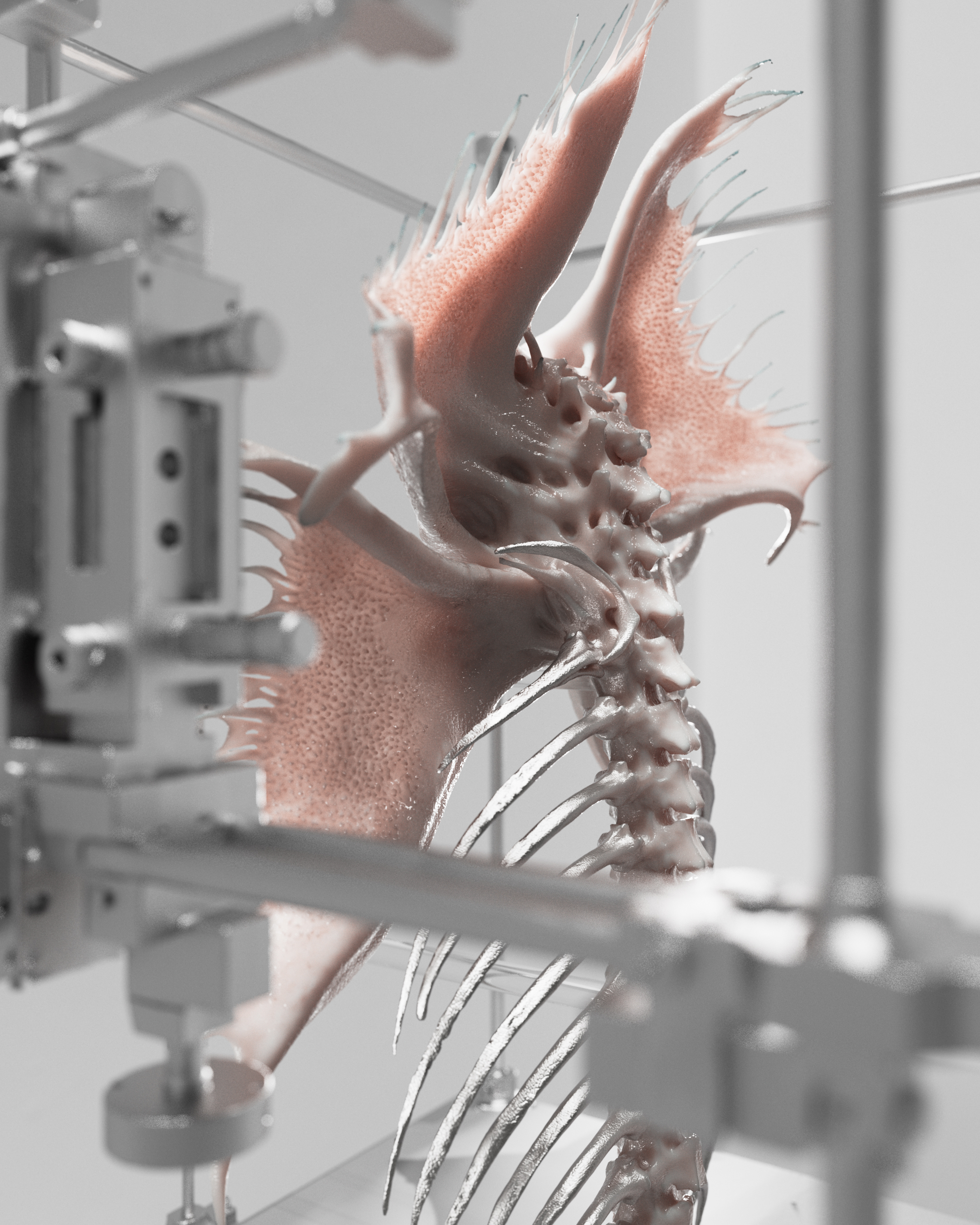
My latest body of work is an ongoing series titled Forme Evolutae, which I initiated in 2023 during the Avaissance Artist in Residence program, with grant support from the Avalanche ecosystem.It focuses on the construction of speculative organisms that exist within fully contaminated ecosystems, where industrial materials become embedded within biological structures. In this series, the organisms are no longer defined by natural structures alone. Their anatomy is reconfigured to incorporate materials such as metal and synthetic polymers, which function as integral components of their survival. These elements are not external additions, but embedded systems that replace or reinforce biological functions. The project unfolds through different phases. The first phase is set in a deep sea environment, where the organisms evolve under extreme pressure and isolation. In this context, their adaptations are primarily structural, with metallic exoskeletons and reinforced anatomies that allow them to withstand hostile conditions. The more recent phase shifts into a clinical setting. Here, the focus moves from autonomous adaptation to biological dependency. The organisms are presented as specimens sustained through external systems, connected to mechanical structures that support respiration and stability. This introduces a different condition, where survival is no longer self contained, but relies on continuous technological intervention. Through this progression, the work explores a shift from resilience to dependence, examining what happens when life can only persist through the integration of artificial systems.

ARTCOLLECTORNEWS: Do you have any upcoming exhibitions or projects that you are excited about?
I have an upcoming animation screening at the Athens Digital Arts Festival, where I will present the digital iteration of the Forme Evolutae clinical phase. At the same time, I’m currently working on my first solo exhibition, which will bring together digital and physical sculptures, animation, and a virtual reality installation. It is a long process and I have been developing it over the past few months, with the goal of completing it by the end of this year. The exhibition is based on Forme Evolutae and will present the different phases of the organisms’ adaptation through a multi medium and hybrid format, combining physical objects, moving images, and immersive environments. In parallel, I’m establishing Marigoldff Lab, my studio and research space dedicated to material experimentation. Currently, I’m translating my digital specimens into physical forms using a hybrid of industrial and organic processes. I’m experimenting with composites, using PLA (a biodegradable plastic derived from corn starch and sugarcane) as a base structure, which I then I’m planning to layering it with silicone to replicate the visceral, organic texture of biological tissue. What excites me most about this research is the inherent fragility of these materials. I like the idea that these sculptures are not static; because the base is biodegradable, the work is subject to an unpredictable metamorphosis. Over time, the base material may degrade or deform, forcing the specimen to shift into a new shape. This physical decay is a deliberate part of the work—it mirrors the vulnerability of life and ensures that the artwork remains in a constant state of becoming, even after it leaves my studio. Alongside this, I’m collaborating with an engineer to integrate robotic mechanisms into the main sculpture of my Forme Evolutae series, introducing movement and responsive elements that further blur the line between the constructed and the living.
ARTCOLLECTORNEWS: Could you please describe your process of creating a new artwork from concept to completion for us?
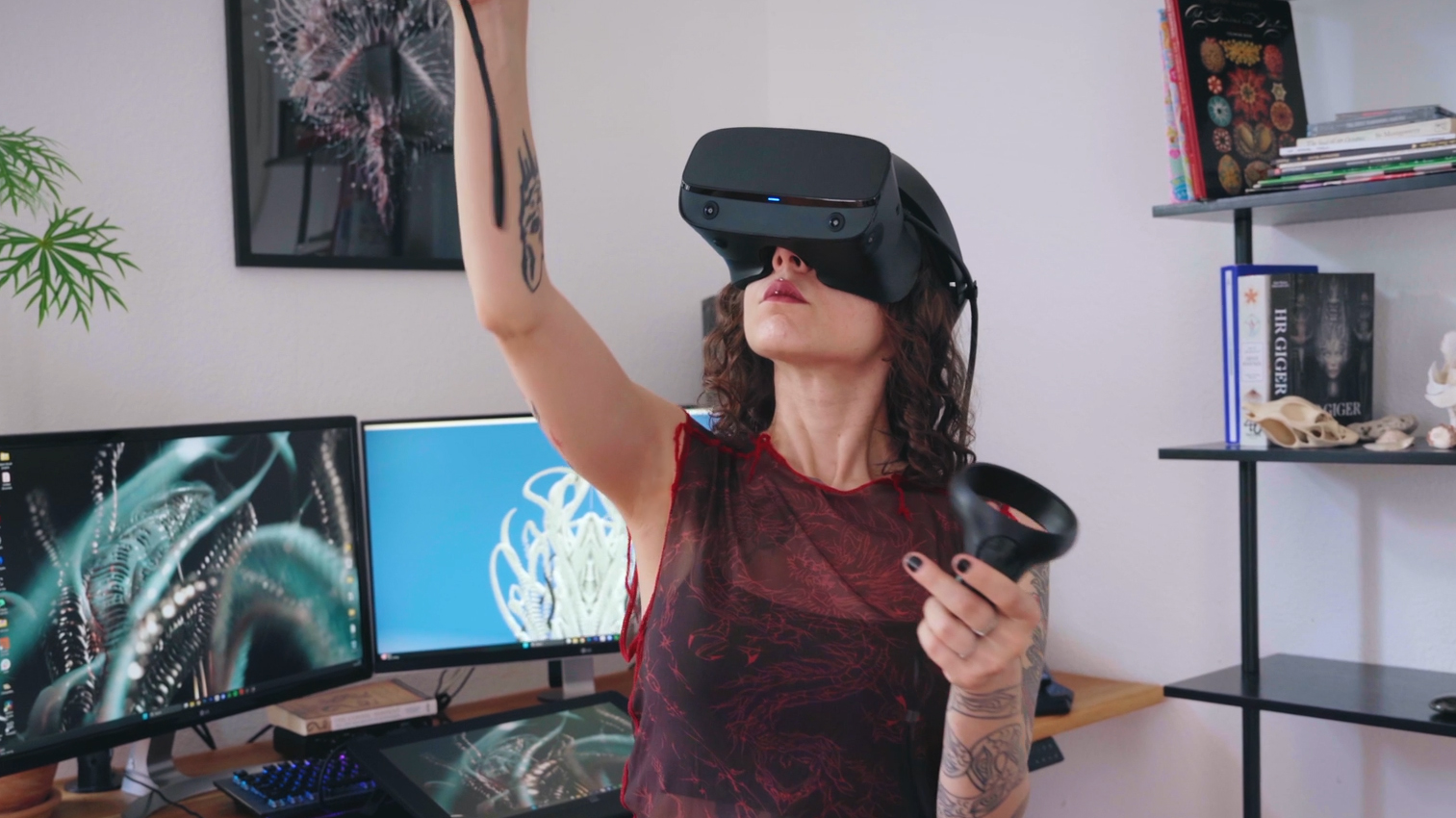
My process is not linear and tends to evolve depending on the work. In many cases, the concept does not come before the form, but develops through it. I often begin by building the initial structure, either through digital sculpting or by working in virtual reality (VR), where I can shape the form directly in space. In other cases, I explore procedural systems, using sets of rules and parameters to generate biological forms that evolve in less predictable ways.Once the main form is established, I move into a phase of refinement, focusing on surface, texture, and material transitions. A key aspect of this stage is developing the relationship between organic elements and synthetic components, particularly the interaction between flesh-like textures and metallic or industrial surfaces. From there, I expand the work by integrating mechanical structures or building environments around the form. In some cases, the sculpture exists as an isolated specimen, while in others it becomes part of a larger system or immersive space that can be explored. The narrative or conceptual framework often emerges during this process rather than being defined at the beginning. The work develops through a continuous interaction between intuition and construction, where each stage informs the next. Overall, my process is hybrid, combining different digital techniques and tools. My background in computer graphics allows me to work across complex systems while maintaining direct control over the form at every stage.

ARTCOLLECTORNEWS: What is your favourite medium to work with? Please tell us a bit about how the medium influences or supports the ideas behind your work.
My primary medium right now is digital sculpting, which forms the foundation of my practice, alongside immersive technologies such as virtual reality. Working digitally introduces a certain level of flexibility, where forms can be continuously modified, extended, or reconfigured. This is essential for my process, which is based on transformation rather than fixed outcomes. Virtual reality adds another dimension. It allows me to experience the work spatially, to move around and within the forms, which changes how I understand and construct them. At the same time, the digital medium creates a distance from physical reality. This is why I have become increasingly interested in translating these forms into physical objects and immersive environments, where constraints such as material, scale, and spatial presence begin to shape the work in different ways. In this sense, digital sculpting remains the foundation of my practice, but also acts as a starting point for expansion into other mediums. For example, I use digital fabrication processes such as 3D printing to translate these forms into physical objects, allowing the digital and material aspects of the work to coexist and inform each other.
Adaptation. Not in terms of subject, but as a mindset. The ability to adjust your way of thinking and working as your ideas evolve is essential.
ARTCOLLECTORNEWS: Can you tell us a bit about a few specific pieces you have created that you are particularly proud of?
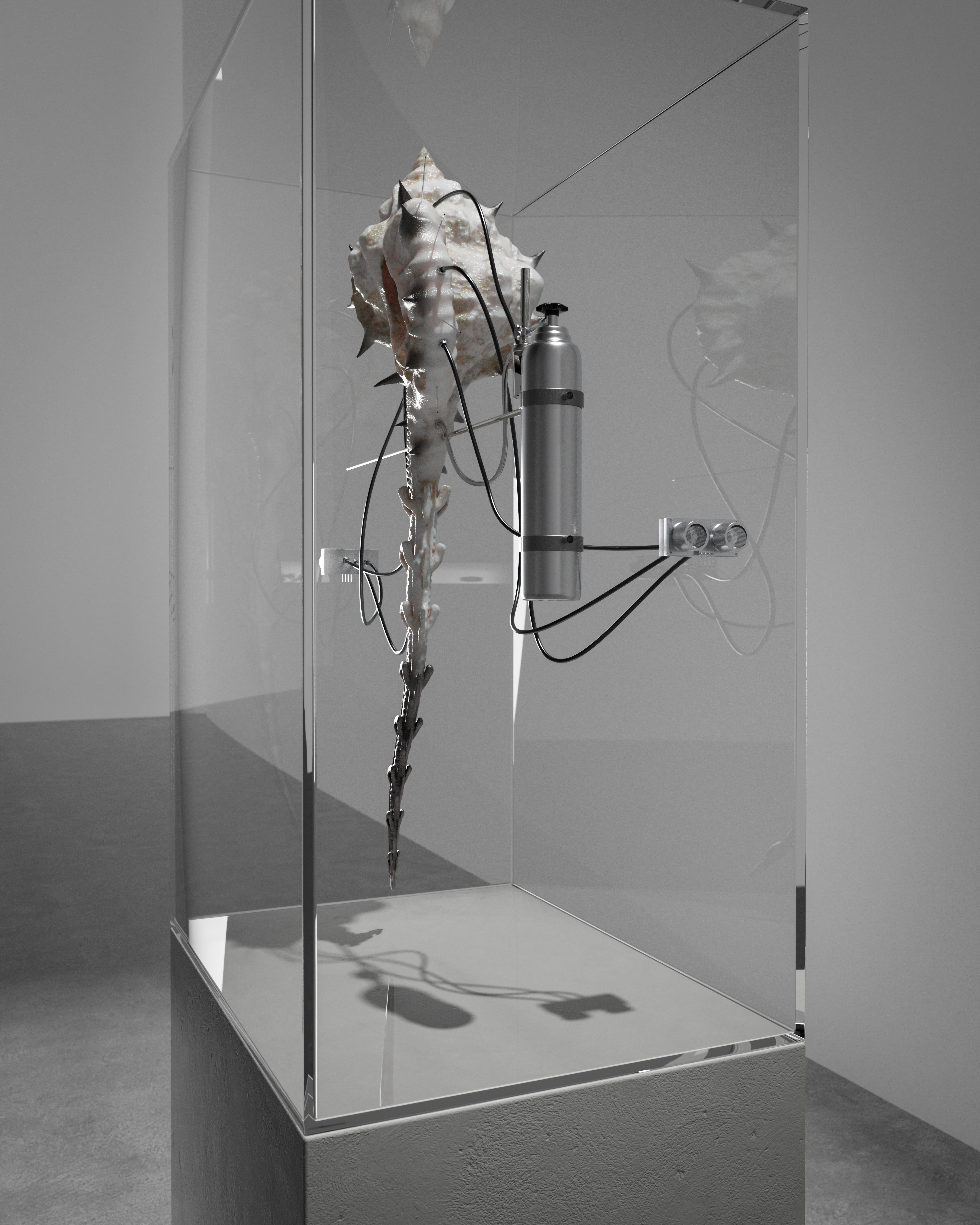
There are many works I could mention, as each piece is connected to a specific moment in my practice and reflects a particular way of thinking or feeling at that time. One project that remains important to me is Xenopunk, developed in 2022 in collaboration with Transmoderna. It is a virtual reality experience and immersive 360 installation exhibited in NXT Museum in Amsterdam, where the viewer enters a post-ecological environment inhabited by hybrid beings. These entities adapt to hostile conditions by integrating technology, debris, and synthetic materials into their bodies. The work explores survival as a functional process, where what appears damaged or unsettling is in fact necessary for existence. Being able to experience these forms from within the environment, rather than observing them from the outside, was a key moment in the development of my work. Another piece is Case Study 01: The Torso, part of my speculative anatomy series. This work focuses on the body as a site of pressure and transformation. The torso is reinforced through metallic grafts and prosthetic structures that both sustain and restrict it. The piece reflects a condition where the systems designed to support the body also impose limitations, creating a tension between endurance and constraint. More recently, I have been developing works within the Forme Evolutae series, particularly the clinical phase. One piece I am currently working on is a seashell specimen presented inside a glass vitrine and connected to an external respiratory system. The work originated from a shell I found while diving, which I then captured digitally through a digital process called photogrammetry and extended into a new form. It is now being developed as a physical installation, marking a shift from digital representation to tangible presence.

ARTCOLLECTORNEWS: Are there any projects or themes you would like to explore in the future?
I’m increasingly interested in exploring extended reality more and developing works that exist simultaneously across physical and digital dimensions. As I begin to translate my digital sculptures into physical objects, I want to expand them into immersive experiences where these forms can be encountered both materially and virtually. The goal is to create environments in which the physical presence of the work is extended through digital layers, allowing the viewer to move between different levels of perception. This direction was reinforced by a recent experience at the Philharmonie de Paris, where I encountered a mixed reality performance that combined a physical object with a fully immersive virtual environment. What I found particularly compelling was how the experience moved beyond representation and created a space that could be entered, where reality and simulation were continuously shifting. This is something I would like to explore further, building works that merge physical sculpture, virtual space, and sensory experience into a single system.
ARTCOLLECTORNEWS: What do you think is the most important skill a studio artist should have?
Adaptation.
Not in terms of subject, but as a mindset. The ability to adjust your way of thinking and working as your ideas evolve is essential. Rather than forcing an idea into a familiar method, it is important to remain open and allow the process itself to change when needed.

ARTCOLLECTORNEWS: What do you think has been the biggest challenge in your creative career? Navigating the limitations of the systems I work within.
As my ideas evolve, they often exceed the medium or tools I’m using at the time. What begins as something that can exist as an image eventually requires space, interaction, or physical presence. This creates a constant tension between the idea and the conditions available to realize it. Rather than resolving this by simplifying the work, I have had to continuously adapt my process, learning new tools, exploring different mediums, and expanding the way I produce the work. Over time, I understood that this is not an obstacle, but a necessary part of the practice. The limitations themselves become the condition that pushes the work to evolve.
ARTCOLLECTORNEWS: What advice would you give to aspiring studio artists?
I would encourage artists not to remain fixed within a single medium, but to allow their ideas to evolve across different forms and to explore how these can intersect. Each medium offers specific possibilities, but it also comes with its own limitations. At a certain point, those limitations become visible, not necessarily as a problem, but as a form of pressure. When that happens, there is a choice to make. You can either reduce the idea to fit within the constraints of the tool, or you can transform the way you work to allow the idea to expand. That decision, in many ways, defines the direction and the nature of the work.
Danish artist Laust Højgaard explores the tension between strength, vulnerability, and identity through paintings and sculptures populated by symbolic characters and surreal situations. Drawing inspiration from classical mythology, architecture, and contemporary pop culture, his work investigates how individuals navigate societal structures while negotiating their own instincts and inner conflicts. Based on the small island of Thurø near Svendborg in southern Denmark, Højgaard works across painting and sculpture, often combining expressive figuration with raw, intuitive processes. His work frequently reflects on humanity’s relationship with nature, control, and the systems that shape modern life.
Frieze Los Angeles 2026 closed with a surge of energy, attracting over 32,000 visitors and strong institutional participation. Blue-chip galleries like David Zwirner, Gagosian, and Hauser & Wirth reported multi-million-dollar sales, while emerging artists in the Focus section sold out their presentations. The fair combined high-profile acquisitions, site-specific installations, and performances, reinforcing Los Angeles as a global hub for contemporary art and collector engagement.

.jpg)