Go Back
Magazine

Process, Not Product: Slawn’s Live Format at Saatchi Yates

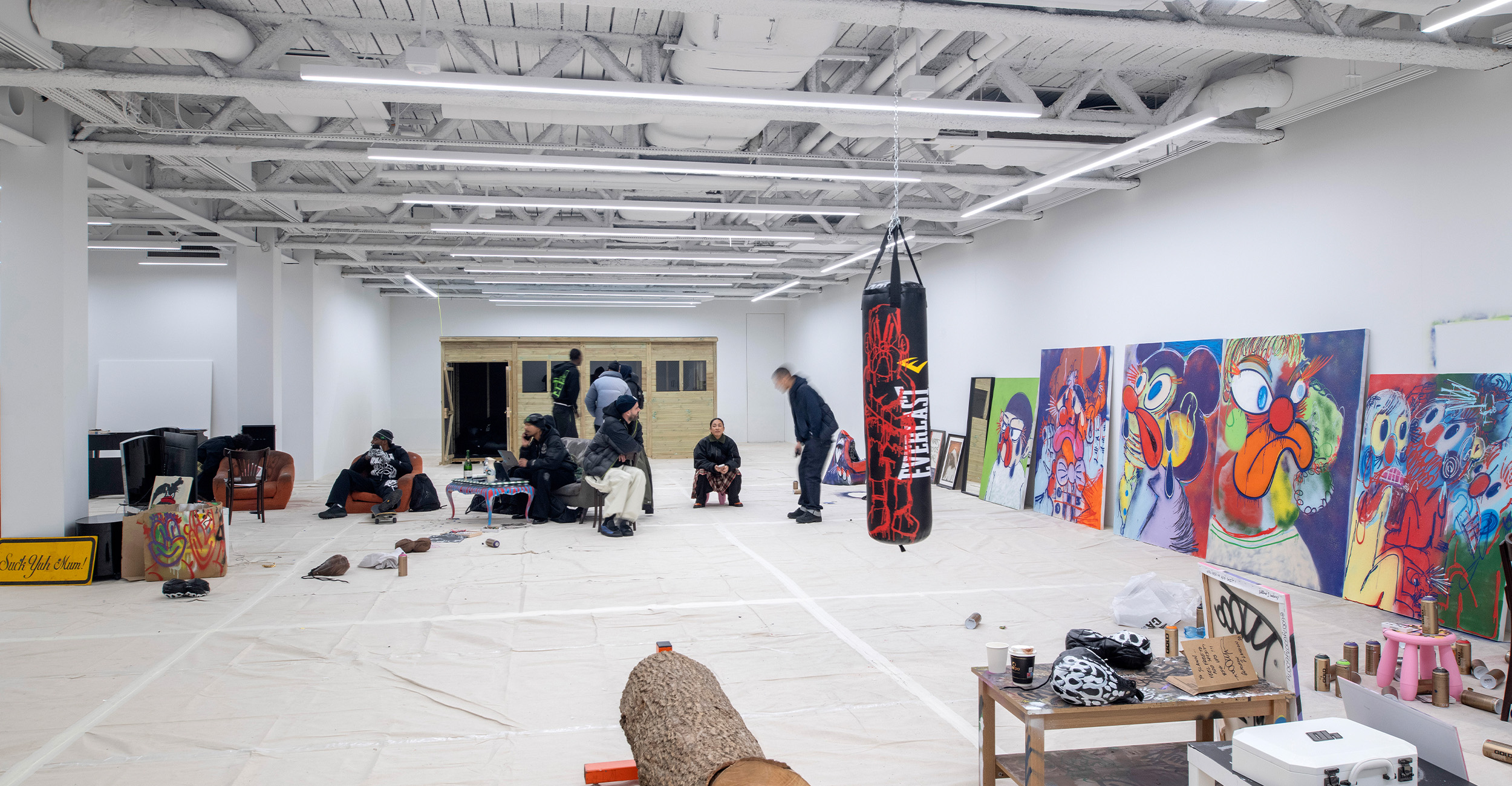
At Saatchi Yates, Slawn redefined the conventional exhibition model by transforming the gallery into a functioning studio environment. Rather than presenting a static display of completed works, Slawn’s Studio invited audiences into the active process of art-making — where paintings evolved in real time and the boundaries between production, performance, and presentation dissolved.

Reviews
Reviews
Process, Not Product: Slawn’s Live Format at Saatchi Yates

At Saatchi Yates, Slawn’s recent exhibition Slawn’s Studio offered something increasingly rare within the commercial gallery ecosystem: a deliberate departure from the finished object as endpoint. Rather than presenting a sequence of resolved works against the predictable neutrality of white walls, the exhibition repositioned the gallery itself as an unfolding site of production — unstable, social, and resolutely alive.

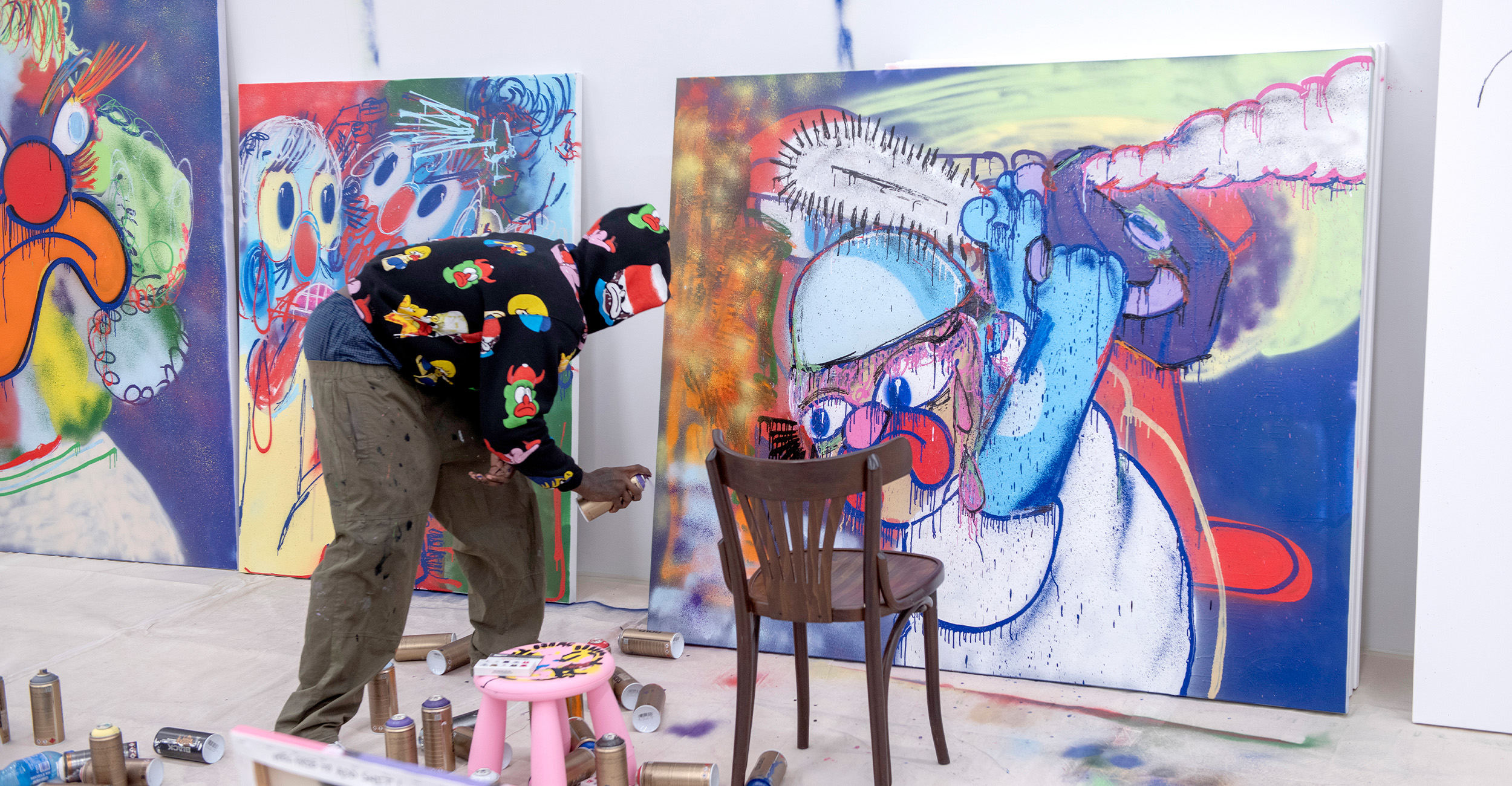
Slawn's Studio at Saatchi Yates Image rights: Saatchi Yates

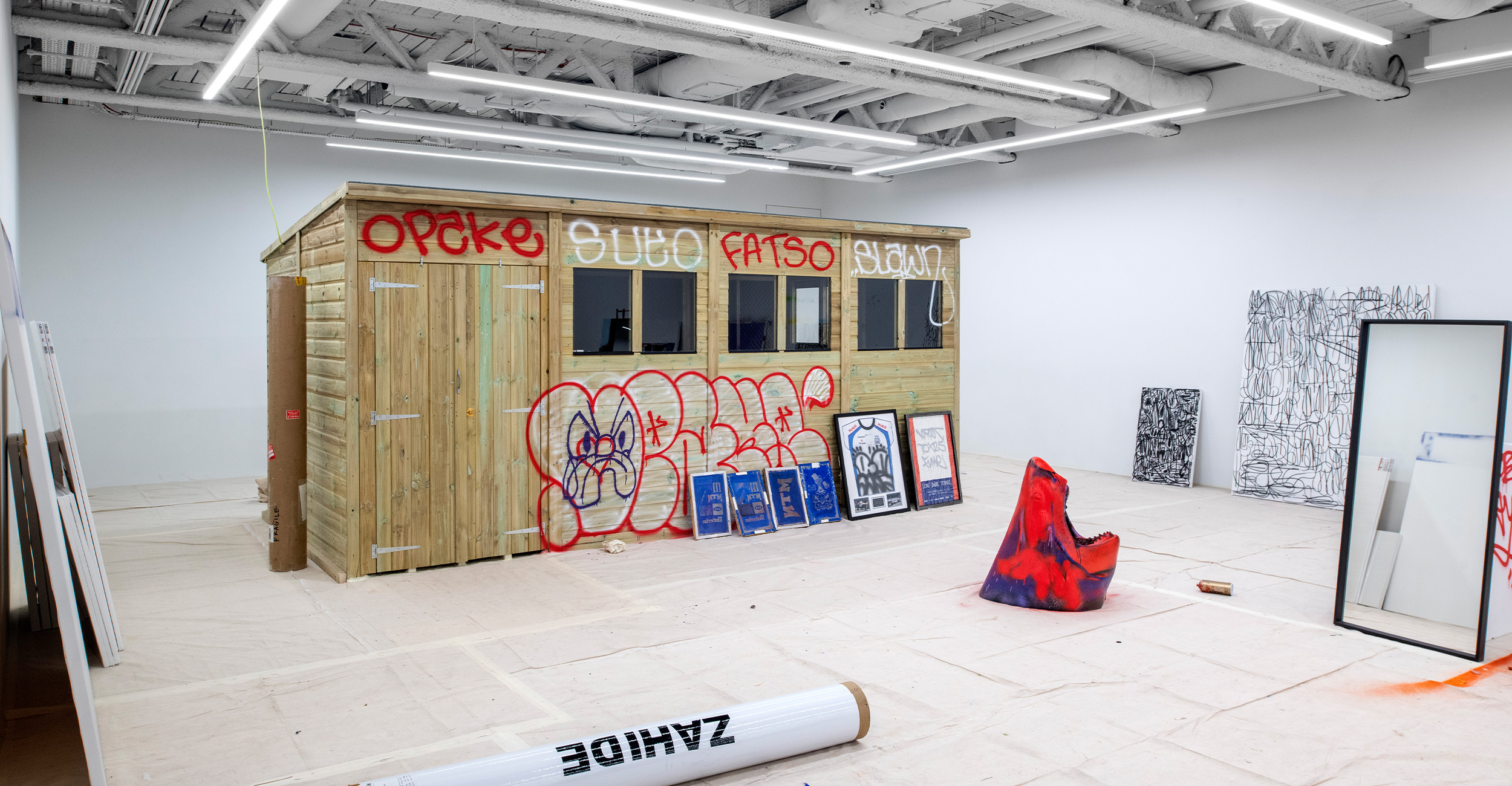
Visitors entering the space encountered not a conventional hang but a working studio environment, complete with active painting zones, materials in circulation, and an embedded music-making area that functioned less as scenography and more as an extension of Slawn’s practice. Canvases appeared mid-thought, surfaces accumulated gestures over days, and the architecture of the exhibition shifted incrementally as works were added, moved, or reconsidered. The result was a temporally elastic display in which completion was neither fixed nor particularly important.

This format — part installation, part performance, part studio visit — positioned the viewer not as passive spectator but as proximal witness to artistic decision-making. The exhibition’s most compelling proposition lay precisely in this recalibration of access. The public was invited into the normally private oscillation between impulse and revision, a space where missteps, pauses, and bursts of productivity coexisted without curatorial sanitisation. In doing so, Slawn’s Studio quietly questioned the entrenched expectation that galleries must present art only once it has been stabilised into market-ready form.

Slawn's studio at Saatchi Yates, Image Rights: Saatchi Yates

Equally significant was the social dimension embedded throughout the project. Friends, collaborators, and musicians circulated within the environment, activating the studio as a communal node rather than an isolated authorial chamber. Conversations, background sound, and moments of collective presence became part of the exhibition’s texture, suggesting that artistic production is rarely singular but instead shaped through networks of exchange. The inclusion of a functioning music studio reinforced this premise, foregrounding rhythm, improvisation, and collaboration as structural analogues to the painterly process unfolding nearby.

Such permeability between art-making and social life has historical precedent, yet within the contemporary commercial gallery context it retains a quietly disruptive quality. Slawn’s approach resisted the aura of preciousness that can accompany object-based exhibitions, substituting immediacy for polish and atmosphere for resolution. The gesture was not anti-object — paintings did emerge and circulate — but anti-finality, privileging process as both content and spectacle.

Slawn's Studio at Saatchi Yates Image rights: Saatchi Yates

Critically, the exhibition succeeded because the performative framework never felt contrived. The studio environment did not operate as theatrical backdrop but as credible working infrastructure, preserving the friction, disorder, and energy that characterise genuine creative spaces. This authenticity allowed viewers to perceive Slawn’s visual language — with its graphic figuration, layered spray applications, and playful iconography — as something continually negotiated rather than stylistically predetermined.

If the white cube traditionally offers clarity through distance, Slawn’s Studio proposed understanding through proximity.

The exhibition replaced the clinical calm of display with a living ecology of making, where artworks functioned as moments within a broader continuum of activity. In doing so, it highlighted a growing appetite for formats that collapse boundaries between production, exhibition, and social encounter.

For audiences and collectors alike, the project served as a reminder that contemporary art’s value does not reside solely in objects but also in the conditions from which they emerge. Slawn’s intervention at Saatchi Yates thus stands as an engaging and thoughtfully executed experiment — one that expanded the experiential possibilities of the gallery while reaffirming the studio as a fertile site of communal imagination.

Slawn's Studio at Saatchi Yates Image rights: Saatchi Yates
Date
Feb 25, 2026
Share

Latest Posts

March 3, 2026
Articles
Articles
Frieze Los Angeles 2026: A Market Reboot — Blue‑Chip Sales, Institutional Confidence, and Cultural Momentum

Frieze Los Angeles 2026 closed with a surge of energy, attracting over 32,000 visitors and strong institutional participation. Blue-chip galleries like David Zwirner, Gagosian, and Hauser & Wirth reported multi-million-dollar sales, while emerging artists in the Focus section sold out their presentations. The fair combined high-profile acquisitions, site-specific installations, and performances, reinforcing Los Angeles as a global hub for contemporary art and collector engagement.

February 25, 2026
Reviews
Reviews
Process, Not Product: Slawn’s Live Format at Saatchi Yates

At Saatchi Yates, Slawn redefined the conventional exhibition model by transforming the gallery into a functioning studio environment. Rather than presenting a static display of completed works, Slawn’s Studio invited audiences into the active process of art-making — where paintings evolved in real time and the boundaries between production, performance, and presentation dissolved.

Underdog Collection: Building an Art Collection Outside the System

Formed by four friends outside the traditional art system, Underdog Collection champions emerging artists through slow looking, studio visits, and personal dialogue. Collecting instinctively and independently, they build meaningful, long-term relationships and acquisitions that resist hype and prioritize lasting resonance.