A floating zeppelin, mother-of-pearl surfaces and futuristic ruins make Lee Bul’s first Hauser & Wirth New York exhibition one of September’s strongest shows — and a timely moment to reassess a four-decade practice.
Lee Bul’s Beautiful Failures: Why Utopia Keeps Returning to Contemporary Art
A floating zeppelin, mother-of-pearl surfaces and futuristic ruins make Lee Bul’s first Hauser & Wirth New York exhibition one of September’s strongest shows — and a timely moment to reassess a four-decade practice.

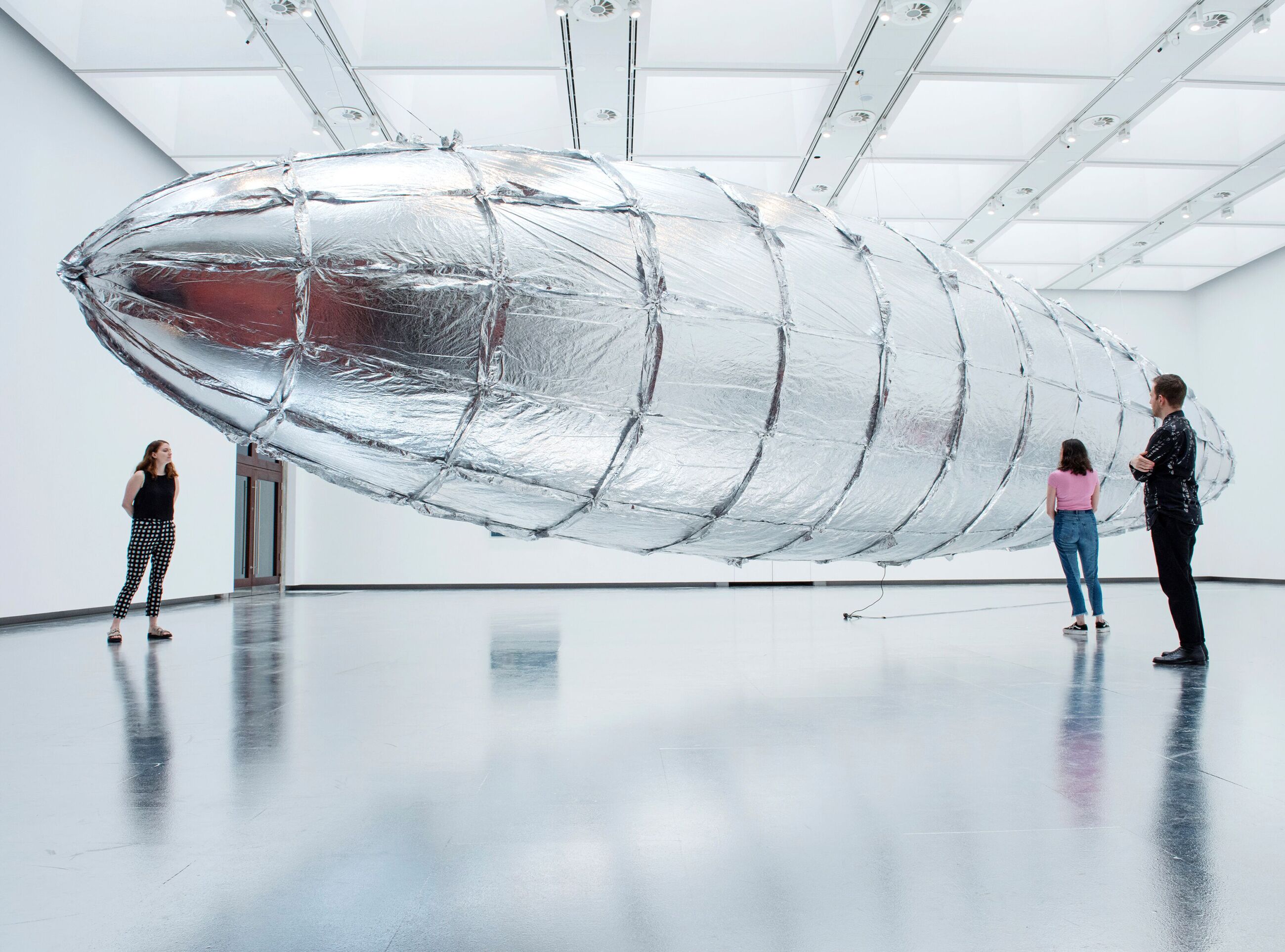
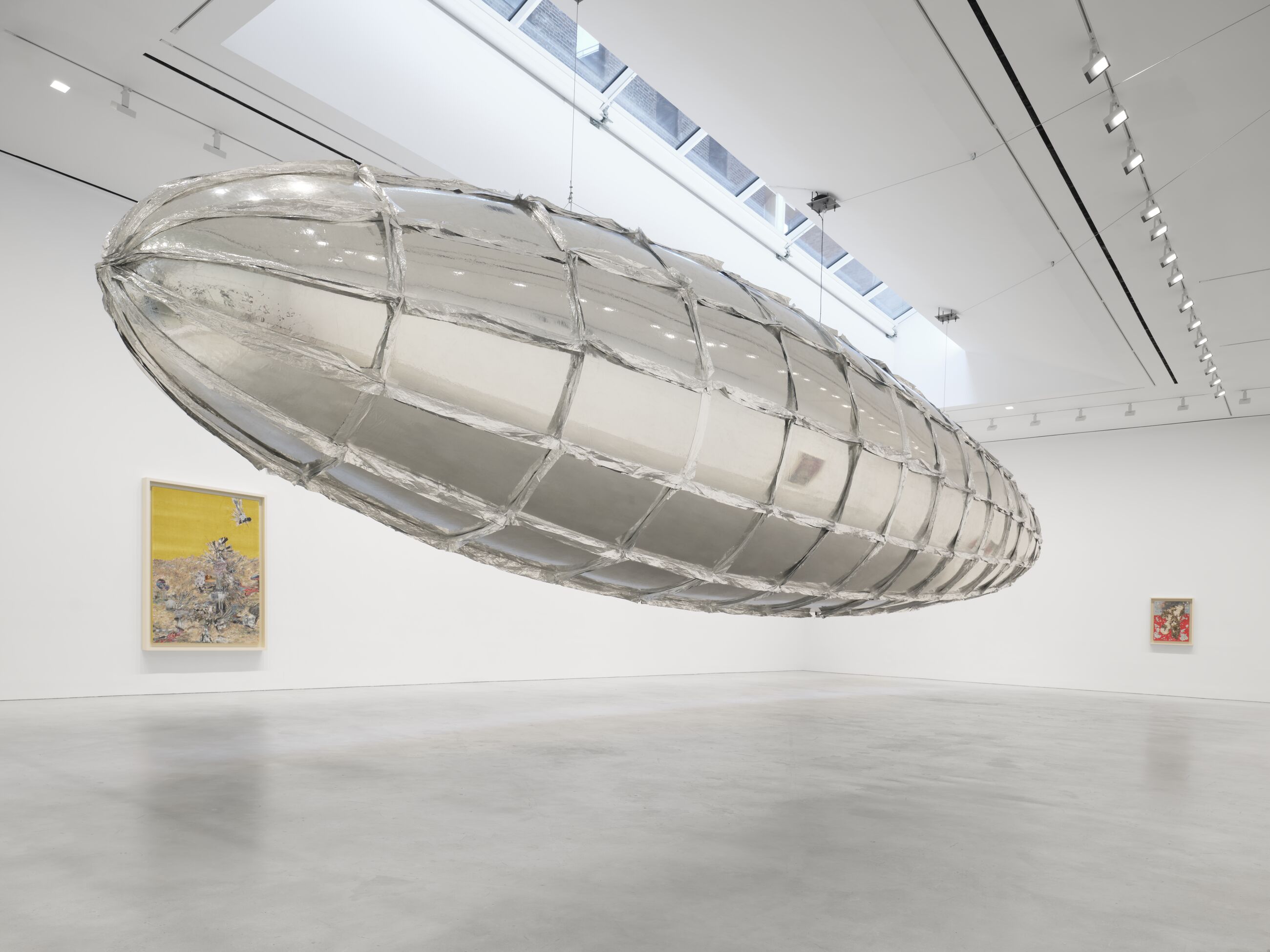
A zeppelin floats inside Hauser & Wirth’s West Chelsea gallery like the fossil of a future that never arrived. Lee Bul’s Willing To Be Vulnerable—Metalized Balloon carries the streamlined optimism of twentieth-century technological progress, but its lightweight mirrored skin makes the monument look precarious. It is simultaneously triumphant and one puncture away from collapse.
That tension defines The Anatomy of Every Setting Sun, Lee Bul’s first exhibition with Hauser & Wirth in New York, open from 10 September to 24 October 2026. The timing is unusually significant. Lee’s major touring survey, From 1998 to Now, has already been seen at Leeum Museum of Art and M+ and travels to M HKA in Antwerp in November. Her 2024 Metropolitan Museum of Art façade commission placed her work in one of New York’s most public institutional settings. Now the commercial gallery cycle catches up with the museum one.
For collectors, that convergence deserves attention — not as a simplistic buy signal, but as a moment when a four-decade practice is becoming easier to read in full.

The future as a ruin
Lee Bul has spent much of her career examining utopian promises: technological perfection, bodily enhancement, architectural rationalism and the political fantasy that society can be engineered into an ideal form. Her work rarely rejects those ambitions outright. It is more interested in why they remain seductive even after history reveals their failures.
The zeppelin is an ideal object for that inquiry. It belongs to an era when technology could still appear visibly sublime. Airships promised speed, modernity and transformed travel; their fragility became equally iconic. Lee suspends that contradiction inside the gallery.
Her work repeatedly occupies this interval between dream and wreckage. Structures look futuristic but incomplete. Surfaces seduce while forms remain unstable. The viewer is allowed to desire the utopian image while recognising its structural weakness.

The Perdu works: painting after sculpture
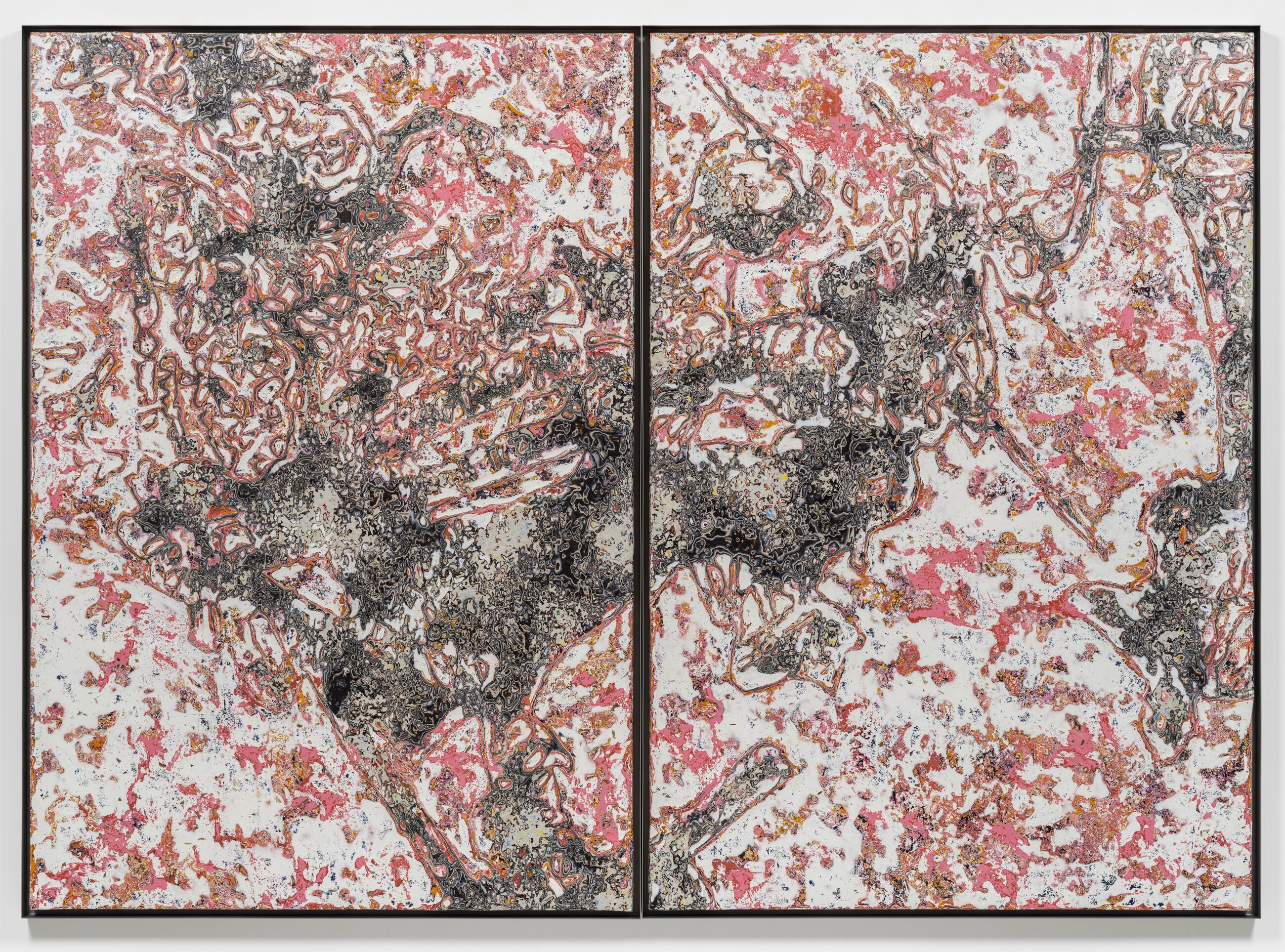
The exhibition includes new works from Lee’s ongoing Perdu series, in which mother-of-pearl is embedded within layers of acrylic that are repeatedly applied and sanded. They exist somewhere between painting, relief and manufactured skin.
For collectors, material is not incidental here. Mother-of-pearl shifts with light and viewpoint, meaning the work resists a single photographic representation. The surface can appear architectural, bodily or mineral depending on distance. This is precisely the kind of object that should be seen physically before acquisition if possible.
The works also reveal how Lee’s sculptural language feeds back into two dimensions. Earlier biomorphic and cyborg forms reappear as fragments and spatial cues. The painting becomes a compressed environment rather than a window.

Why the Cyborgs still matter
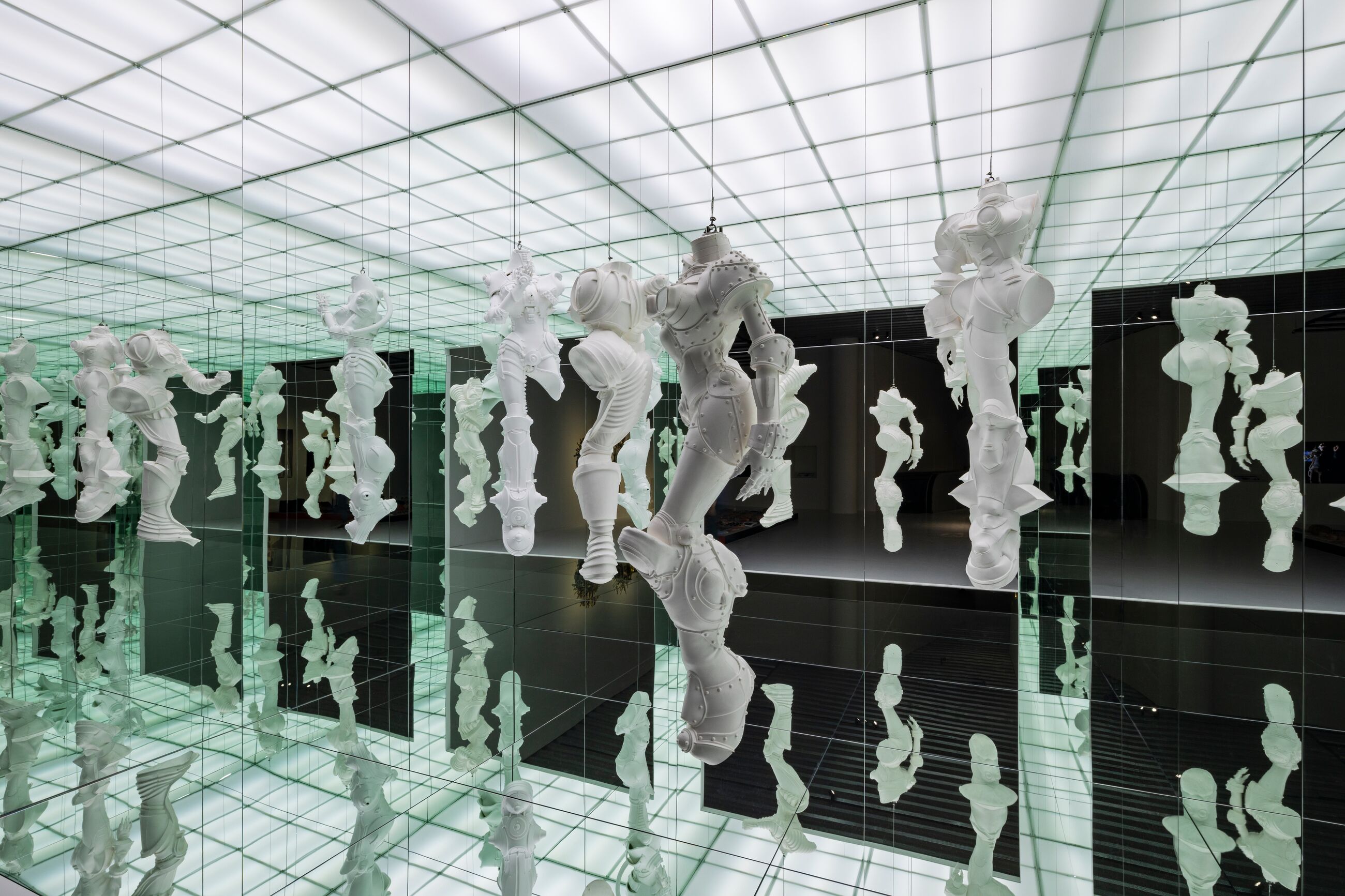
Lee gained international recognition in the 1990s through performance, soft sculpture and the Cyborg works — bodies that seemed both technologically enhanced and violently incomplete. They arrived at a moment when cyberculture often imagined technology as liberation from bodily limits.
Three decades later, those sculptures look prescient for a different reason. Contemporary life is saturated with technological extensions of the body, from image filters and biometric tracking to artificial intelligence and prosthetic systems. The fantasy of perfectibility has become ordinary infrastructure.
Collectors looking at Lee’s market should therefore understand the early bodily works not simply as historical curiosities but as the conceptual foundation for later architecture, mirrored environments and hybrid monuments.

A major-gallery moment after institutional consolidation
Lee joined Hauser & Wirth in collaboration with BB&M in 2025. The move came after decades of museum visibility rather than before it, which makes this a different kind of gallery transition from the rapid representation changes surrounding younger artists.
The new exhibition demonstrates what a major international gallery can do for an already established artist: place recent bodies of work into a coherent commercial context, support large-scale production and connect the practice with a global collector network at precisely the moment a museum survey is circulating.
This sequence matters because gallery representation and institutional recognition are often mistakenly treated as interchangeable forms of validation. They are not. Museums produce scholarship and public context; galleries create market access and production support. Lee’s current moment is powerful because both systems are reinforcing a practice that already has historical depth.

The new Velvet paintings
New works from the Untitled (Willing To Be Vulnerable—Velvet) series push Lee’s interest in the organic and synthetic into increasingly architectural territory. The works begin with photographs of her own sculptures and installations, then accumulate fragments of studio material, imagery and cut mother-of-pearl on silk velvet.
The process can take months or years. That duration is visible in the density of the surfaces. These are not digital-looking images produced quickly; they are physically layered environments that happen to borrow the visual grammar of speculative technology.
For collectors, they offer a useful bridge across the practice. They carry the imagery of Lee’s installations but are materially self-contained, making them easier to live with than monumental sculpture while remaining conceptually linked to it.
Collecting Lee Bul across categories
Lee’s market spans works on paper, editioned pieces, photographs, paintings, sculpture and major installation. The first question should therefore be which aspect of the practice a collector wants represented. A minor example chosen simply because it is more affordable can be less satisfying than a strong work from a medium that genuinely contains her core concerns.
Documentation is especially important for complex sculpture. Confirm materials, fabrication date, edition status, studio involvement, replacement protocols and conservation requirements. Mirrored surfaces, resin, mother-of-pearl, plastics and mixed industrial materials can age differently and may require specialist care.
For paintings and relief-like works, condition and surface integrity remain central. For editioned work, clarify edition size, artist proofs and whether variants exist.
The collector’s moment
The most persuasive reason to pay attention to Lee Bul in September is not that she is suddenly fashionable. It is the opposite. The current visibility allows collectors to see the continuity of a practice that has spent decades worrying at the same difficult question: why do humans keep constructing perfect futures when history keeps demonstrating how unstable perfection is?
The Anatomy of Every Setting Sun makes that question seductive enough to live with. The sculptures glitter, float and glow. The paintings produce impossible environments. The materials promise transcendence before showing their seams.
That is Lee Bul’s real achievement. She does not illustrate failed utopia from a safe historical distance. She lets us want the future again — and then makes us notice how fragile the structure holding it up has always been.
On 200 acres at Snowmass, Jorge M. Pérez is approaching one hundred outdoor sculptures. The deeper story is how landscape, public access, philanthropy and weather change what a private collection can become.
White Cube presents the first UK solo exhibition of Emma Reyes, bringing six decades of intensely patterned painting into a market that is only beginning to catch up with her work. The real story is scholarship, not hype.