
October 10, 2026
Exhibitions
Exhibitions
From Robert Ryman and Lorna Simpson to Mary Ramsden, Martine Syms and Nicola Turner, the strongest London route during Frieze week begins outside the fair.
From Robert Ryman and Lorna Simpson to Mary Ramsden, Martine Syms and Nicola Turner, the strongest London route during Frieze week begins outside the fair.
Frieze week can make London feel as though the whole art world has been compressed into Regent’s Park. The better strategy is to resist that compression. Some of October’s most consequential exhibitions are outside the fair, where artists have the time, space and curatorial attention that a booth cannot provide. This year the strongest route moves between a major historical reassessment at the Barbican, ambitious gallery exhibitions by Lorna Simpson and Gabriel Orozco, and smaller-scale presentations where the intimacy of painting, moving image and material experimentation becomes the point.
The list below is deliberately not a ranking and not a substitute for the fair. It is a way of seeing London as an ecosystem. The city’s institutional programme gives historical depth; its established contemporary galleries provide serious mid-career and blue-chip presentations; and smaller or more focused programmes often supply the sharper discoveries. For collectors, moving between those levels is one of the most useful things Frieze week can offer.
Opening on 8 October, Robert Ryman: The Real Thing is the obvious historical anchor. Bringing together more than sixty works from the mid-1950s to the early 2010s, the exhibition is the first substantial UK presentation of Ryman in more than three decades. That matters because Ryman’s reputation has often suffered from the shorthand used to describe him: “white paintings” makes the work sound like a single idea repeated indefinitely, when in fact the practice is about support, edge, scale, paint, fastening, light and the physical behaviour of a painting on a wall.
Collectors should use the exhibition comparatively. Look at how paint sits on linen, aluminium, fibreglass, paper or other supports; how exposed fasteners and edges become part of the composition; and how small changes in scale affect the sensation of weight. Ryman is especially useful in a week dominated by image-rich contemporary art because he sharpens the eye for material decisions that can otherwise be drowned out by subject matter.
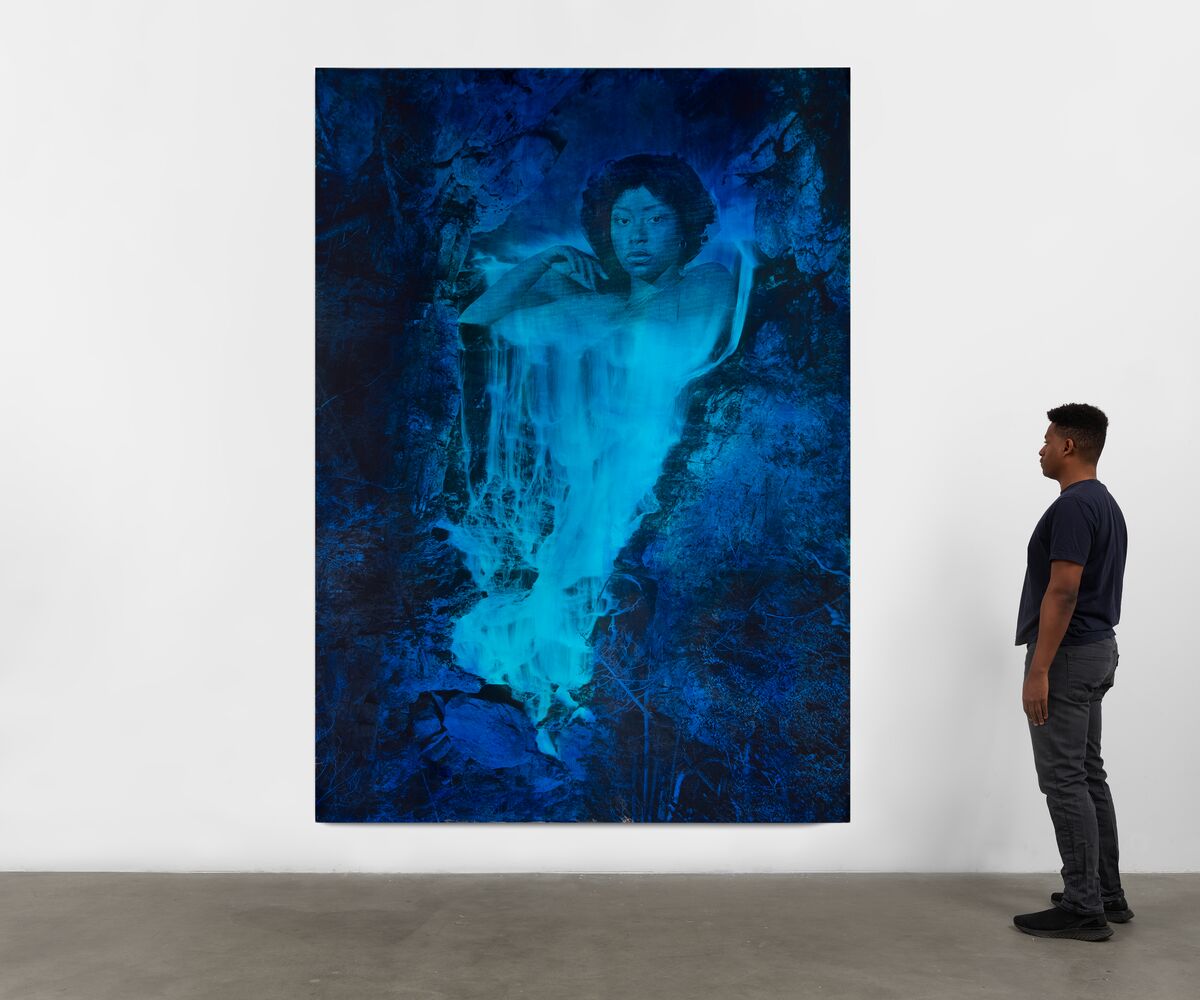
Lorna Simpson returns to the UK with her first London presentation in eight years, opening on 13 October. The exhibition draws together new paintings and collages with the longer visual archive that has shaped her practice. Simpson’s work is particularly rewarding now because the apparent divide between her earlier photographic language and the painting she has developed since 2014 has become increasingly unhelpful. Both depend on montage, interruption and the instability of the image.
Her long engagement with archival Black imagery, including pictures drawn from magazines such as Ebony, gives the work historical density without turning the archive into illustration. In the paintings, heads, landscapes, weather systems and fragments of representation seem to dissolve into one another. A face can become atmosphere; a body can become geology. For collectors, the exhibition is an opportunity to understand how Simpson’s media relate rather than treating photography, collage and painting as separate market categories.
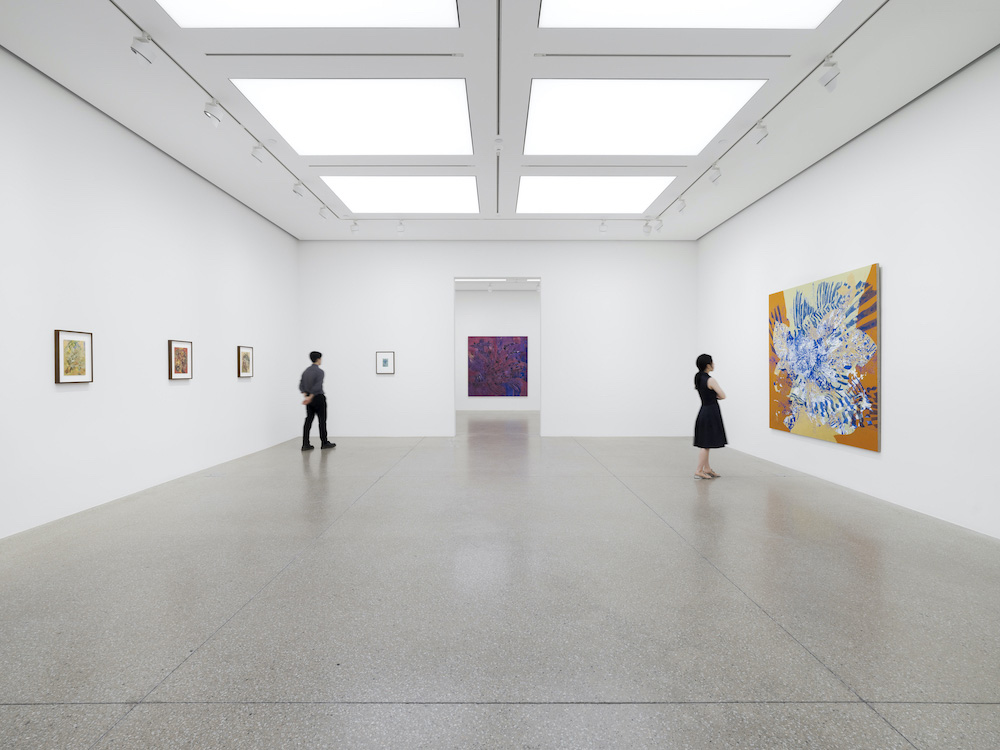
Gabriel Orozco’s Chronotopic, on view through 8 November, is the exhibition to give real time. Curated by Briony Fer and bringing together around two hundred new and existing works, it is structured less as a conventional retrospective than as an expanded map of the artist’s thinking. Sculpture, painting, photography, assemblage and works on paper are allowed to operate as a network.
Orozco has always been strongest when the distinction between discovery and fabrication becomes unstable. A found object, a game, a geometric intervention or a photograph of an accidental arrangement can all become ways of testing how attention works. At Bermondsey, the scale allows these recurring procedures to become visible. For collectors, that makes the show especially useful: rather than asking which medium is “most important”, look for the continuity of method across different categories and price points.
Mary Ramsden’s seventh solo exhibition with Pilar Corrias is quieter than many of the week’s headline shows, which is precisely why it deserves attention. The title, The Feeling of What Happens, points toward consciousness and bodily knowledge, but Ramsden does not turn those subjects into diagrams. The paintings remain committed to the physical event of painting itself: pressure, drag, density, interruption and the sense that a surface can register an action without explaining it.
For collectors who see large quantities of painting during Frieze week, Ramsden offers a useful test. The works do not depend on immediate recognisability. Their intelligence appears through pace and revision. Spend enough time to notice where a gesture has been stopped, buried or allowed to remain awkward. That resistance to instant legibility is part of the value.
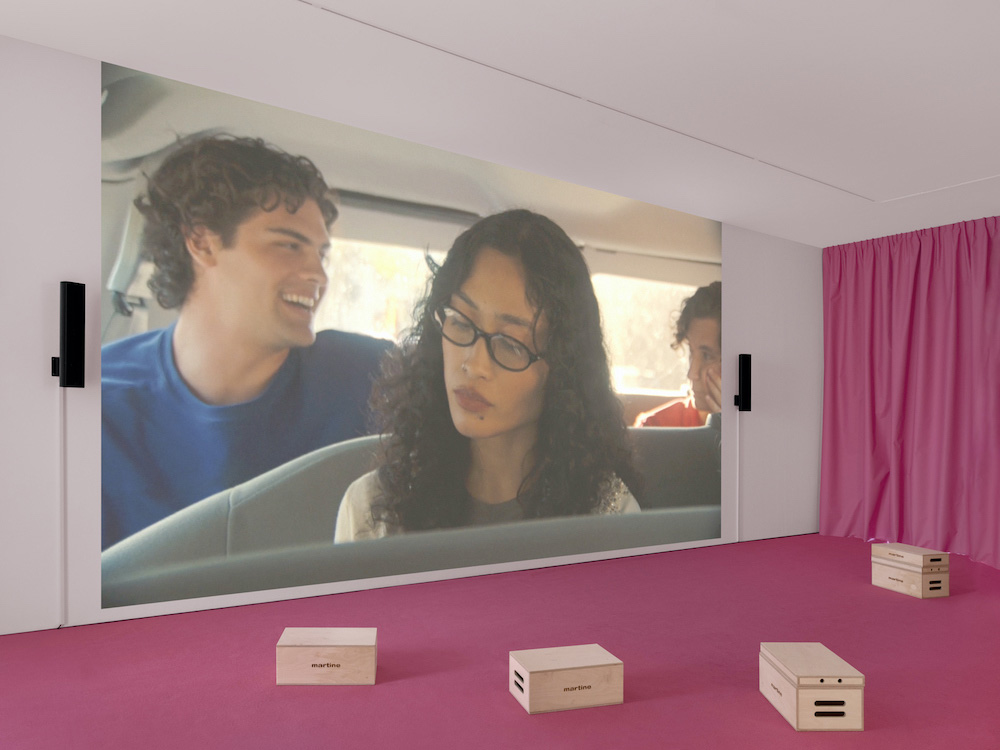
At Kingly Street, Martine Syms turns the gallery into a more unstable relationship between moving image, retail, performance and self-presentation. Knot Eye includes two new films, among them RW-LO, and a concept-store element that deliberately complicates the boundary between artwork and commodity environment.
Syms has long understood that contemporary identity is performed through systems that are both intimate and commercial: screens, platforms, fashion, language, entertainment and the expectation that the self should remain continuously available for display. The exhibition is strongest when it does not simply criticise that condition but reproduces its seductions. The visitor is never entirely outside the system being examined.
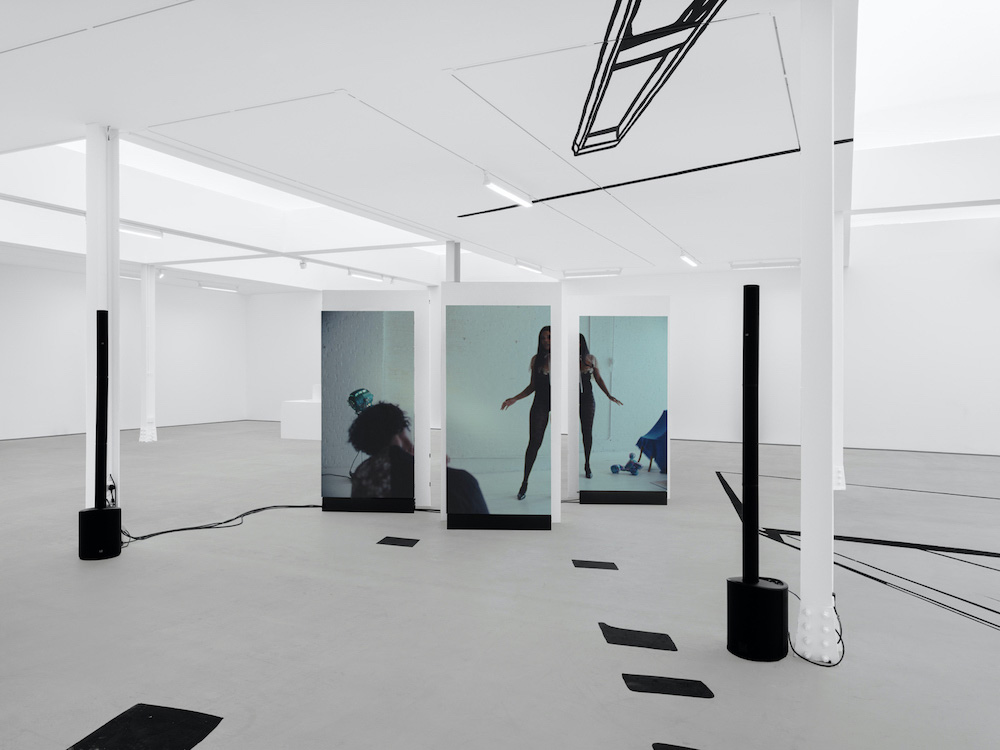
For collectors of time-based work, it is worth asking about edition structure, display specifications and the relationship between film and installation. For everyone else, Syms is a reminder that one of the most interesting directions in contemporary practice is not the abandonment of objects but the construction of environments in which objects, media and behaviour become inseparable.
Nicola Turner’s first solo exhibition with Annely Juda deserves its own full review—also included in this batch—but it belongs on any London route. A site-responsive installation of dark wool and reclaimed horsehair fills the ground floor at 16 Hanover Square and rises twelve metres up the Georgian façade. The work draws on the building’s histories of chemistry, dye, dressmaking, secrecy and female experience without becoming a heritage display.
Turner is especially interesting for collectors because her work sits between sculpture, installation, textile and found-object practice. Horsehair from old mattresses, wool, furniture fragments, dressmaker’s shears and scientific instruments carry prior lives into the new work. The best forms seem simultaneously bodily, animal, domestic and architectural.
Also make room for Nicole Eisenman’s London presentation, on view into November. Eisenman’s importance is no longer in question, but that institutional recognition can make it easy to stop looking closely. What remains compelling is the way painting and sculpture can be funny, socially observant and formally serious at the same time. During a week when contemporary figuration is everywhere, Eisenman provides a useful benchmark for what sustained pictorial intelligence looks like.
The practical lesson is not to attempt all of London in one day. Pair the Barbican with one or two central galleries; give Bermondsey its own block of time; use Mayfair and Soho for concentrated gallery visits. Most importantly, do not let fair urgency determine the pace outside it. A gallery exhibition can be revisited. A film can be watched from beginning to end. A painting can be seen without three people waiting behind you.
The best Frieze-week collecting is often done when the fair temporarily drops out of view. London’s advantage is that it allows a collector to move from Ryman’s radical economy to Simpson’s archival painting, Orozco’s systems, Ramsden’s concentrated surfaces, Syms’s media environments and Turner’s materially charged sculpture in the same week. The city is not the backdrop to Frieze. It is the larger argument.
Selected dates
Robert Ryman: The Real Thing, Barbican Art Gallery, 8 October 2026–28 February 2027.
Lorna Simpson: Previous & Ongoing, Hauser & Wirth London, 13 October–23 December 2026.
Gabriel Orozco: Chronotopic, White Cube Bermondsey, 16 September–8 November 2026.
Mary Ramsden: The Feeling of What Happens, Pilar Corrias, 10 September–7 November 2026.
Martine Syms: Knot Eye, Sadie Coles HQ, 17 September–7 November 2026.
Nicola Turner: I Tear Secrets From Your Yielding Flesh, Annely Juda Fine Art, 1 October–7 November 2026.
From Robert Ryman and Lorna Simpson to Mary Ramsden, Martine Syms and Nicola Turner, the strongest London route during Frieze week begins outside the fair.
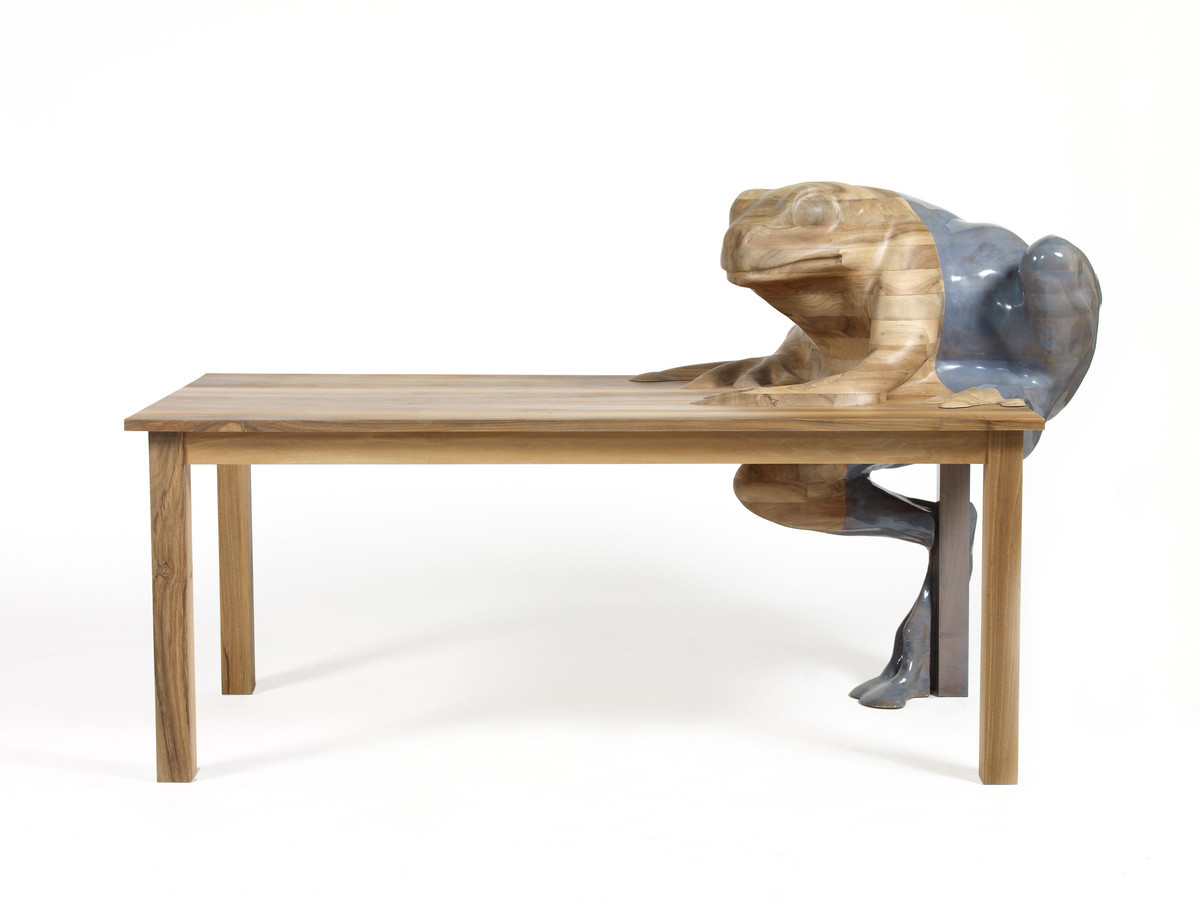
From the Polder Sofa to Frog Table and 300 coloured vases, Hella Jongerius has spent three decades proving that industrial design can retain craft, variation and material intelligence.
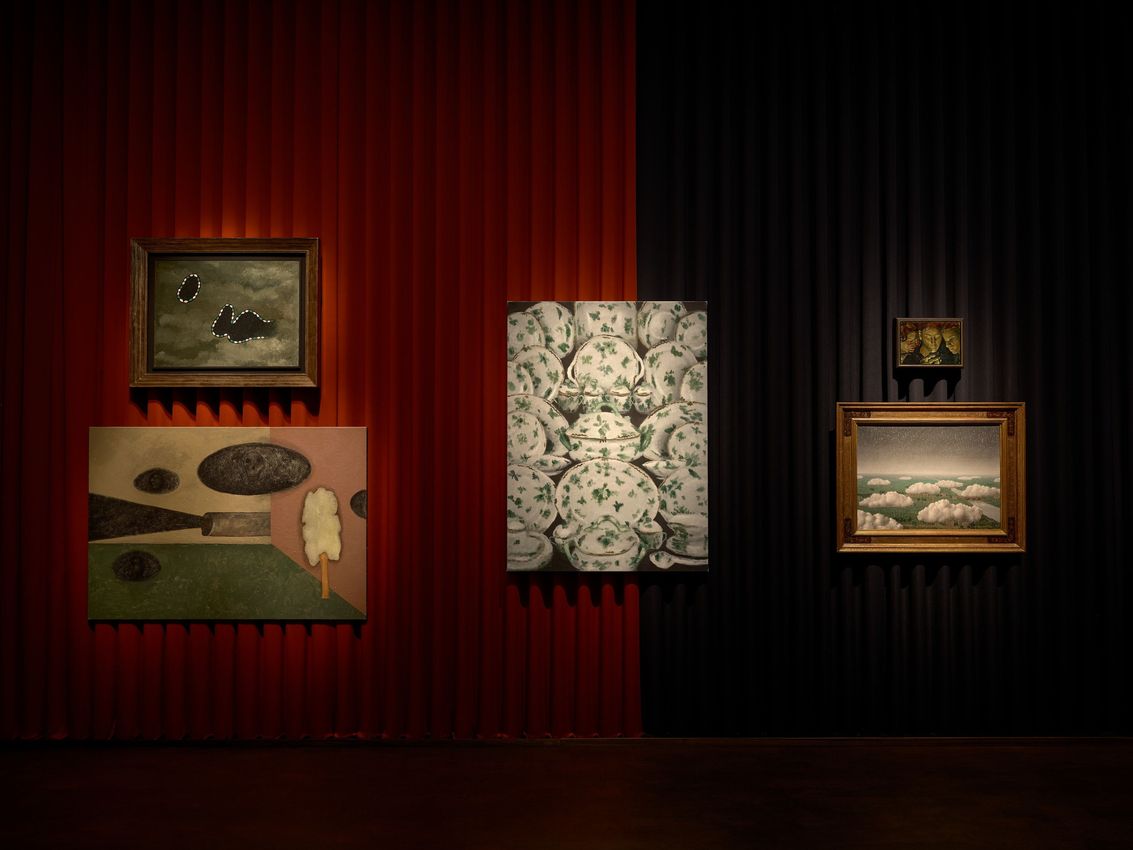
Gagosian’s ambitious London exhibition places René Magritte beside more than forty artists. For collectors, its real value lies in separating meaningful artistic inheritance from superficial resemblance — and in seeing why Magritte’s central problem, the unstable relationship between image and reality, feels newly urgent.