
October 20, 2026
Exhibitions
Exhibitions

Paris Internationale returns with 56 galleries, a new Canal Saint-Martin venue and a model built around discovery. Here is how collectors should use it.
Formed by four friends outside the traditional art system, Underdog Collection champions emerging artists through slow looking, studio visits, and personal dialogue. Collecting instinctively and independently, they build meaningful, long-term relationships and acquisitions that resist hype and prioritize lasting resonance.

ARTCOLLECTORNEWS: Please tell us a bit about yourselves and your background? Who is the Underdog Collection and what is it about?
Underdog Collection: Underdog Collection is a shared collection born out of friendship and ongoing dialogue between four collectors with very different professional backgrounds, none of whom come from the art system or from collector families. This has allowed us to develop an independent perspective, free from expectations and preconceived hierarchies. The collection focuses on emerging and ultra-contemporary art, with the idea of building over time a coherent path made of research, visions and dialogues that reflect the present.

ARTCOLLECTORNEWS: What inspired you to start this collection together?
Underdog Collection: At the beginning we were collecting individually, but we realized that constantly discussing our choices helped us better understand what we were looking for. Bringing together resources and different points of view felt like a natural step and made collecting a more shared and stimulating experience.
ARTCOLLECTORNEWS: Looking back, what was your first experience with art? How did it shape your interest in collecting?
Underdog Collection: Our first experiences with art came through fairs, exhibitions and artists’ studios. Meeting young artists directly and realizing that it was possible to acquire and support their work even with limited resources shaped our interest in collecting and oriented our choices toward emerging art from the very beginning.

ARTCOLLECTORNEWS: What was the first / were the first pieces you collected?
Underdog Collection: The first work acquired together as Underdog Collection was a sculpture by South African artist Bronwyn Katz, connected to the theme of diamond mines in South Africa. The work is made using found materials and minimally worked iron, reflecting on the exploitation of territory and on collective memory. This acquisition was fundamental because it marked the beginning of the collective project.
ARTCOLLECTORNEWS: How has your collection or type of work you collect evolved over time?
Underdog Collection: At the beginning our approach was more instinctive; today it is much more tied to discussion and time. We talk more, study more and buy less, but in a more conscious way. Over time we have also learned to avoid urgency, hype and choices dictated by context and fashion, preferring works and artists that continue to convince us even after months and years.
ARTCOLLECTORNEWS: What artists or types of art do you gravitate towards?
Underdog Collection: We gravitate toward artists who show a clear and coherent approach over time, regardless of the medium. We are interested in work where we perceive a real necessity behind formal choices, rather than a recognizable style or a trend of the moment. That said, in terms of language we are naturally more oriented toward painting, without excluding other media.
When an authentic dialogue is established, the work itself takes on a special value for us.
ARTCOLLECTORNEWS: Please tell us a bit about a few of your favourite or recent acquisitions/additions to your collection?
Underdog Collection: The first work acquired together as Underdog Collection, as mentioned, was a sculpture by Bronwyn Katz, which marked the beginning of the collective project. It is a work we are particularly attached to and consider one of the most important acquisitions in the collection. We stayed in contact with the artist over time and continued to support her path, eventually making a further acquisition.
In recent years, among our latest acquisitions, we have paid increasing attention to Italian artists, with works by Giuditta Branconi and Emilio Gola. More generally, many of the works we consider among our favourite acquisitions are linked to artists with whom a relationship has developed over time. When an authentic dialogue is established, the work itself takes on a special value for us. This is the case, for example, with artists such as Wang Xiao or Lydia Ourahmane.
ARTCOLLECTORNEWS: What drives you to collect / makes you passionate about collecting art?
Underdog Collection: What drives us is the possibility of entering into a relationship with artists’ work and following their paths over time. For us, collecting means making choices we truly believe in, without chasing trends or market dynamics, and building a group of works that makes sense to us first and foremost. Added to this is the pleasure of studio visits and of meeting artists, gallerists and people with whom real human relationships are created.
ARTCOLLECTORNEWS: What are your criteria for selecting a work of art? What do you consider to be the most important factors when selecting or evaluating an artwork?
Underdog Collection: The first criterion is always the immediate reaction to the work. If a piece strikes us, we talk about it and come back to it to see whether that initial feeling holds up after discussion and time. Since we often work with emerging artists at the beginning of their careers, we do not start from a structured analysis of their trajectory. We buy what we truly like, without trying to impose a predetermined narrative on the collection.
ARTCOLLECTORNEWS: Do you collect with a theme or particular goal in mind?
Underdog Collection: No, we do not collect following a specific theme or predetermined goal. Our choices come from discussion and personal taste. That said, over time a natural attention toward Italian artists and a strong interest in African and Brazilian scenes has emerged, always as a consequence of encounters rather than as a planned choice.

ARTCOLLECTORNEWS: Is an artist’s professional trajectory or career an important factor or would you collect a piece simply because you love it?
Underdog Collection: No. We mainly collect emerging artists, often at the very beginning of their path. In many cases we meet them during studio visits, before they are represented by a gallery, or while they are still studying, during MFA programs or at university. As a result, it is clear that an artist’s professional trajectory does not influence our acquisitions in any way: we buy a work because it truly convinces us at that moment.
ARTCOLLECTORNEWS: Do you work with art advisors or other art professionals to help select or source artwork? Do you think that is important?
Underdog Collection: No, we have never worked with art advisors to select or source works. For us, research is one of the most enjoyable parts of collecting: we like discovering artists when they are still at the beginning of their journey. That said, we believe working with art advisors is important and often advisable when building a collection, especially for those starting from scratch. In our case, direct and personal research is a fundamental part of the project.

ARTCOLLECTORNEWS: Do you buy art in auctions, or follow auction results? How influential is that to your collecting, if at all?
Underdog Collection: We do not usually buy at auction. We follow auction results mainly to understand what is happening in the market, rather than to guide our choices. Auctions do not influence our way of collecting, which remains tied to direct and personal research.
ARTCOLLECTORNEWS: What about art fairs, do you go often? Which do you prefer? Do you browse there more or are you active buyers at art fairs?
Underdog Collection: Yes, we regularly attend art fairs. For us they are primarily moments of observation, study and exchange, rather than opportunities for immediate purchases. We follow fairs such as Art Basel, Art Basel Paris and Frieze, but we also enjoy attending Italian fairs like Artissima and Miart. During Art Basel, for example, we are particularly interested in visiting Liste, as it is a space where it is easier to discover young artists.
.jpg)
ARTCOLLECTORNEWS: Are there any artists whose work you have collected multiple pieces of? If so, why?
Underdog Collection: Yes, there are several artists of whom we have collected multiple works. This happens when the dialogue with the artist works and the work continues to convince us over time. This is the case, for example, with artists such as Clarissa Baldassarri, Maxwell Alexandre and Yuri Yamagata, all present in the collection with multiple works.

ARTCOLLECTORNEWS: How did you first become aware of the artists whose work you’ve collected? / Where do you discover artists?
Underdog Collection: Many of the artists we collect are first discovered through Instagram, which for us is an important research tool. If a work really interests us, the next step is almost always a studio visit.
ARTCOLLECTORNEWS: What challenges have you faced when collecting artwork?
Underdog Collection: One of the challenges we encounter most often is organizing shipments: transport, timing, costs and insurance, especially when working with very young artists or in international contexts. Added to this is the need to take the right amount of time to decide, avoiding urgency and external pressure.
ARTCOLLECTORNEWS: What has been the most rewarding experience from collecting art?
Underdog Collection: The most rewarding experience is seeing artists we collected early on grow over time. Another very meaningful moment was being able to lend works to museums and institutions. In particular, last year we lent a work by Yuri Yamagata to Museo Madre in Naples, one of our hometowns.
ARTCOLLECTORNEWS: What do you look for when viewing an artist’s portfolio?
Underdog Collection: When viewing a portfolio, we look above all for sincerity and clarity. For this reason, we often combine portfolio reviews with studio visits, which are fundamental for us to truly understand an artist’s work and process.
ARTCOLLECTORNEWS: Are there any specific techniques or mediums that you are drawn to when collecting art?
Underdog Collection: We do not have a rigid preference for a specific medium. We are perhaps more naturally oriented toward painting, but for us the medium is always a consequence of the idea and the artist’s work.

ARTCOLLECTORNEWS: What kind of relationship do you have with the artists whose work you collect?
Underdog Collection: The relationship with artists is often direct and informal. It grows out of meetings, studio visits and conversations that continue over time and go beyond the simple act of purchasing.
ARTCOLLECTORNEWS: Who are some of the artists that you have your eye on, and looking forward to seeing more work from? Or perhaps looking to collect in the near future?
Underdog Collection: At the moment we are considering both the acquisition of a second work by an artist already present in the collection and the purchase of a first work by an artist we are beginning to follow now. Among these is Michael Alexander Campbell, whose work we recently saw in a solo exhibition at Luce Gallery in Turin.
ARTCOLLECTORNEWS: What advice would you give to someone who is just starting or thinking about starting an art collection?
Underdog Collection: Look a lot, take time and do not rush into buying. Visit studios, talk to artists, ask questions and trust your own taste. At the beginning it is important not to look for shortcuts and to accept that making mistakes is part of the process.
Paris Internationale returns with 56 galleries, a new Canal Saint-Martin venue and a model built around discovery. Here is how collectors should use it.
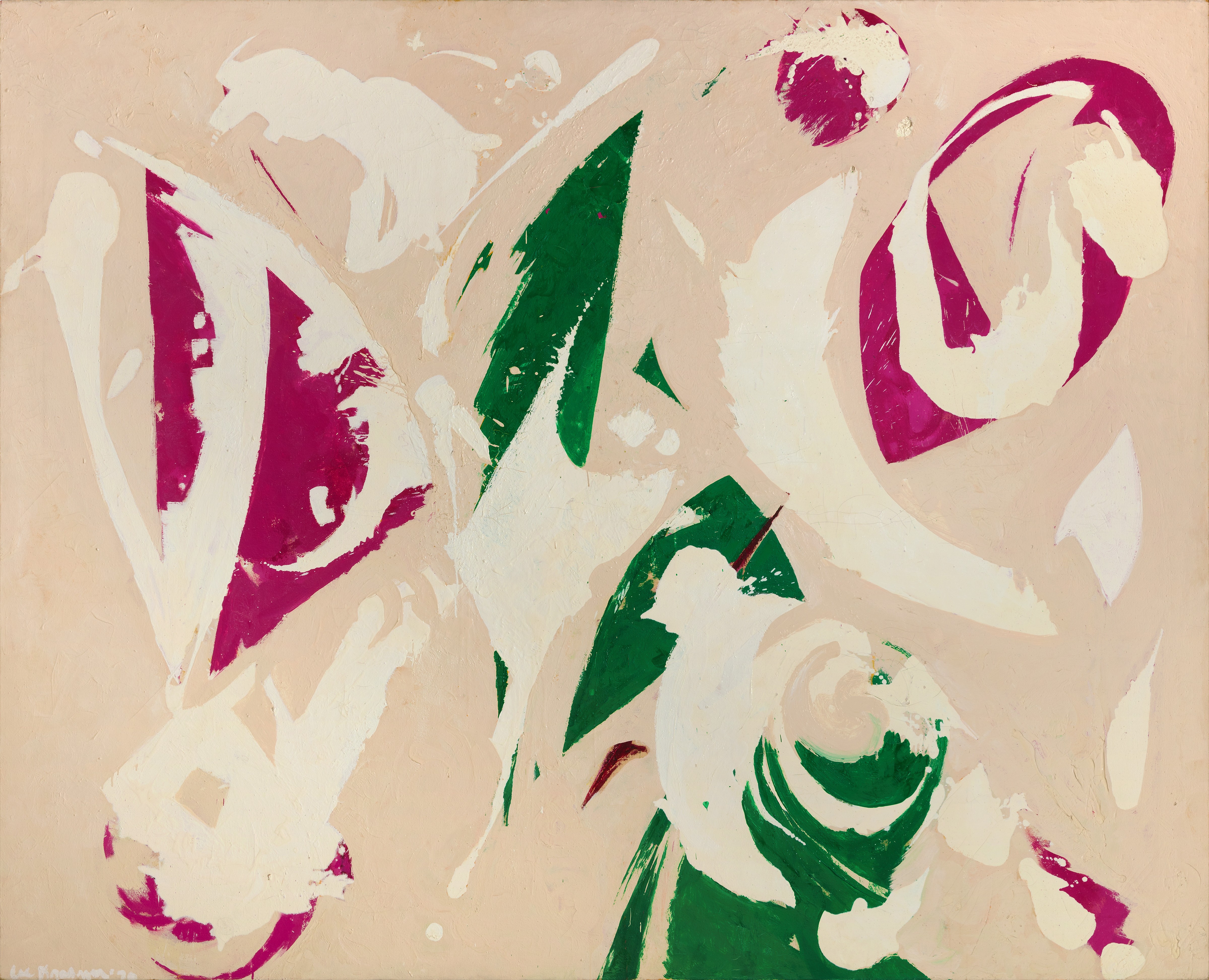
Ibrahim Mahama, Lee Krasner, Oscar Murillo, Tracey Emin and more: the exhibitions that turn Art Basel Paris week into something larger than a fair.

From a £5 million Brueghel and three major Alice Neel sales to George Rickey, global modernism and a £675,000 Triceratops skull, Frieze Masters rewarded collectors who looked beyond categories.