
October 12, 2026
Articles
Articles
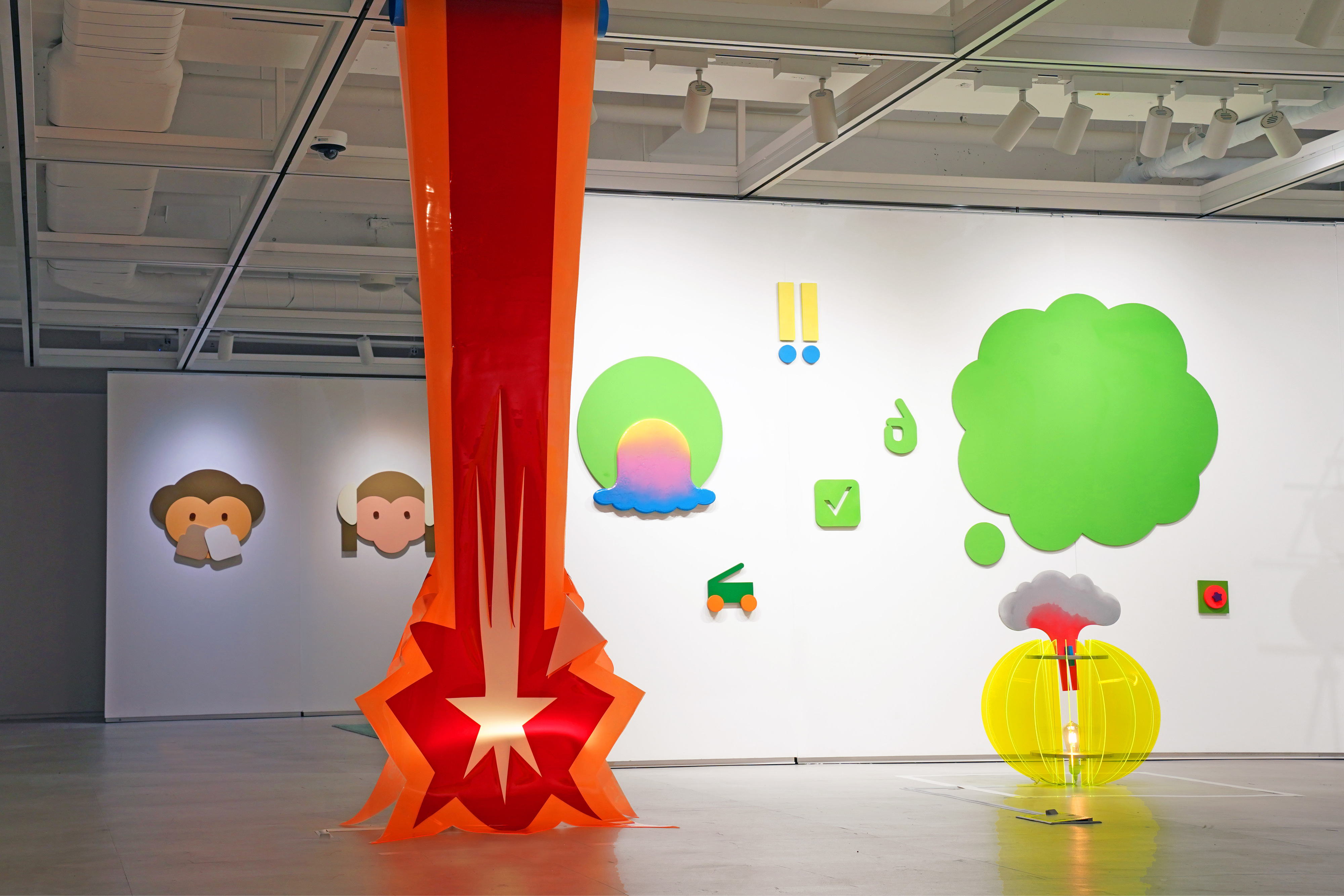
Yelin Lee's Ghost Play transforms emojis into sculpture, uses chroma-key screens and a two-minute delay, and turns visitors into their own fleeting afterimages.
Yelin Lee's Ghost Play transforms emojis into sculpture, uses chroma-key screens and a two-minute delay, and turns visitors into their own fleeting afterimages.
The emoji is a small object of extraordinary speed. A face, a gesture or a fragment of punctuation can cross a screen in an instant, carrying an emotion that might otherwise require a sentence. Yet its apparent simplicity is precarious. Removed from its interface, the symbol is little more than a shape; enlarged beyond the dimensions of a phone, it begins to look oddly unfamiliar. Yelin Lee’s work takes that change of scale and context seriously. What happens when the fleeting signs of digital communication are asked to occupy actual space?
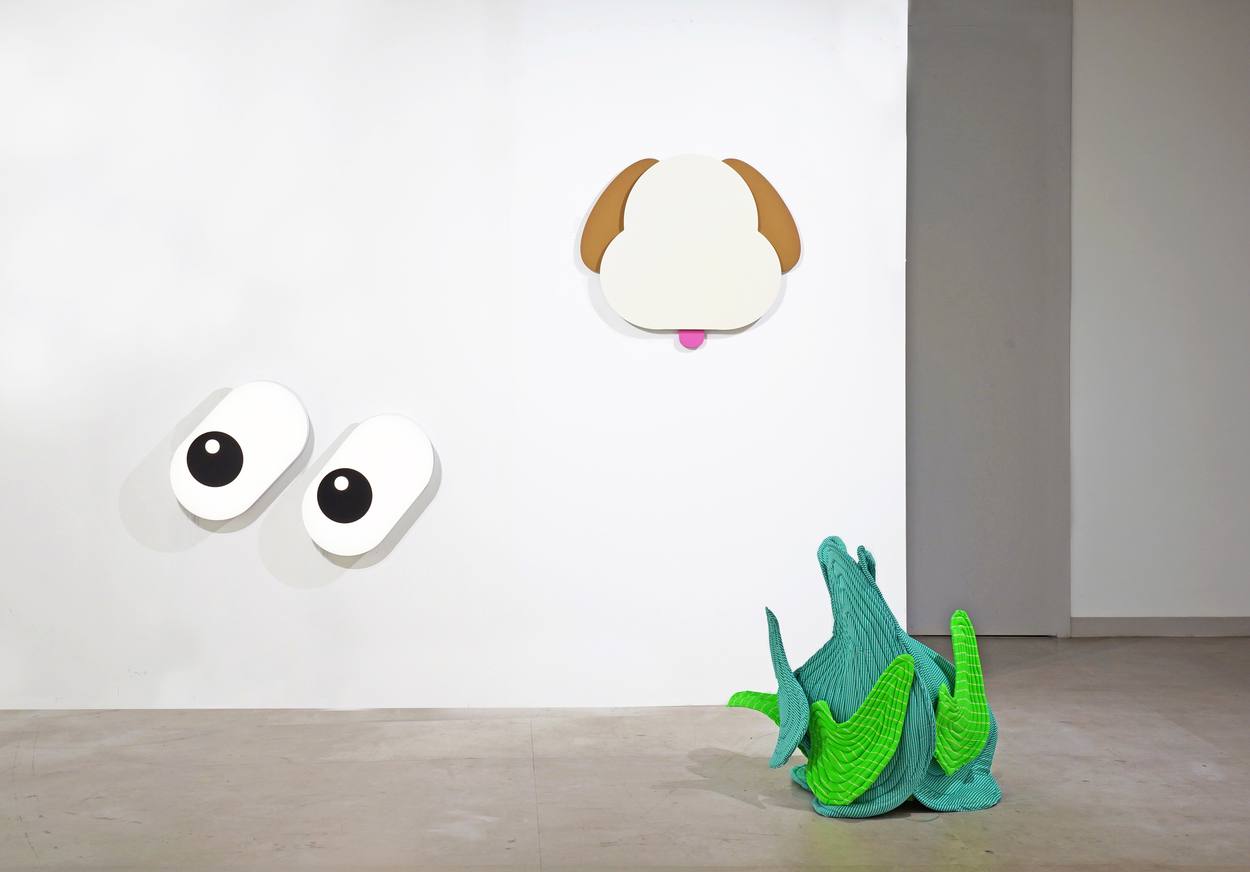
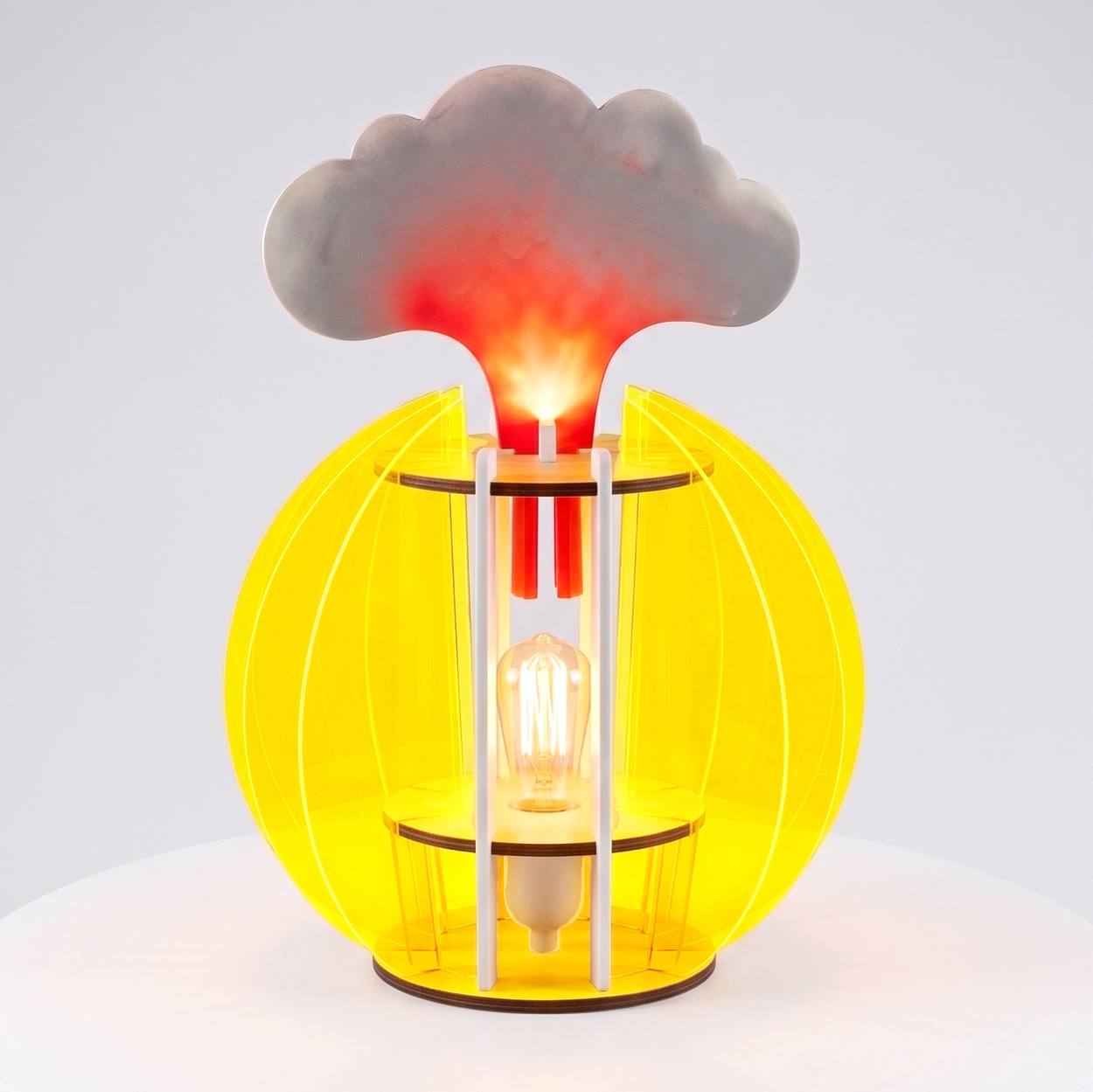
In Ghost Play, Lee gives an unexpectedly material answer. Flat icons, emojis and elusive, sometimes unreadable characters become three-dimensional constructions in wood, painted MDF, resin, fabric, aluminium and other materials. These are not straightforward reproductions or nostalgic souvenirs of the internet. They are translations: a digital vocabulary recast as forms with thickness, edges, texture and weight. Then comes a second transformation. Chroma-key green surfaces are captured by cameras and electronically replaced with other colours and forms. Screens present the transformed scene on a deliberate two-minute delay, sending the physical sculptures back into a digital image that belongs, quite literally, to the recent past.
Presented at NC Cultural Foundation's White Gallery in Seoul from 1 to 13 August 2026 as part of its STUDIO 0 programme, Ghost Play proposes a playful but unusually precise account of the space between an object, its image and the person looking at it. The exhibition's trick is not simply to make the digital tangible. It makes the viewer's own presence subject to the same process of translation.
The first move is deceptively simple. A digital mark is drawn out of the screen and given volume. But changing the medium changes its behaviour. On a device, an icon is encountered as a piece of information, instantly recognised and just as quickly passed over. In sculpture, it becomes a thing to be negotiated from different positions. Its silhouette may still suggest a familiar character, but its surfaces cast shadows; its thickness complicates the graphic outline; its meaning is slowed down by the necessity of looking.
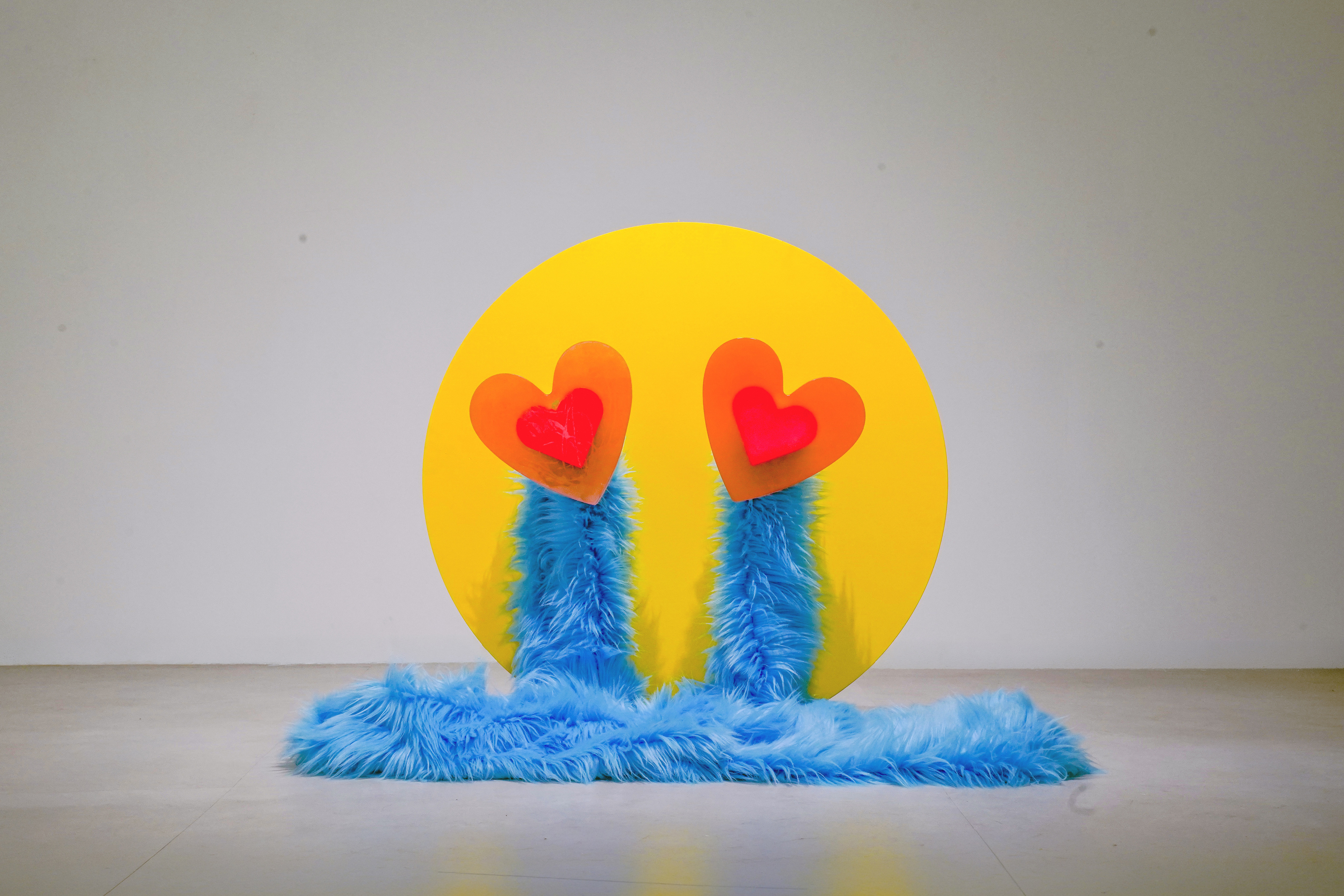
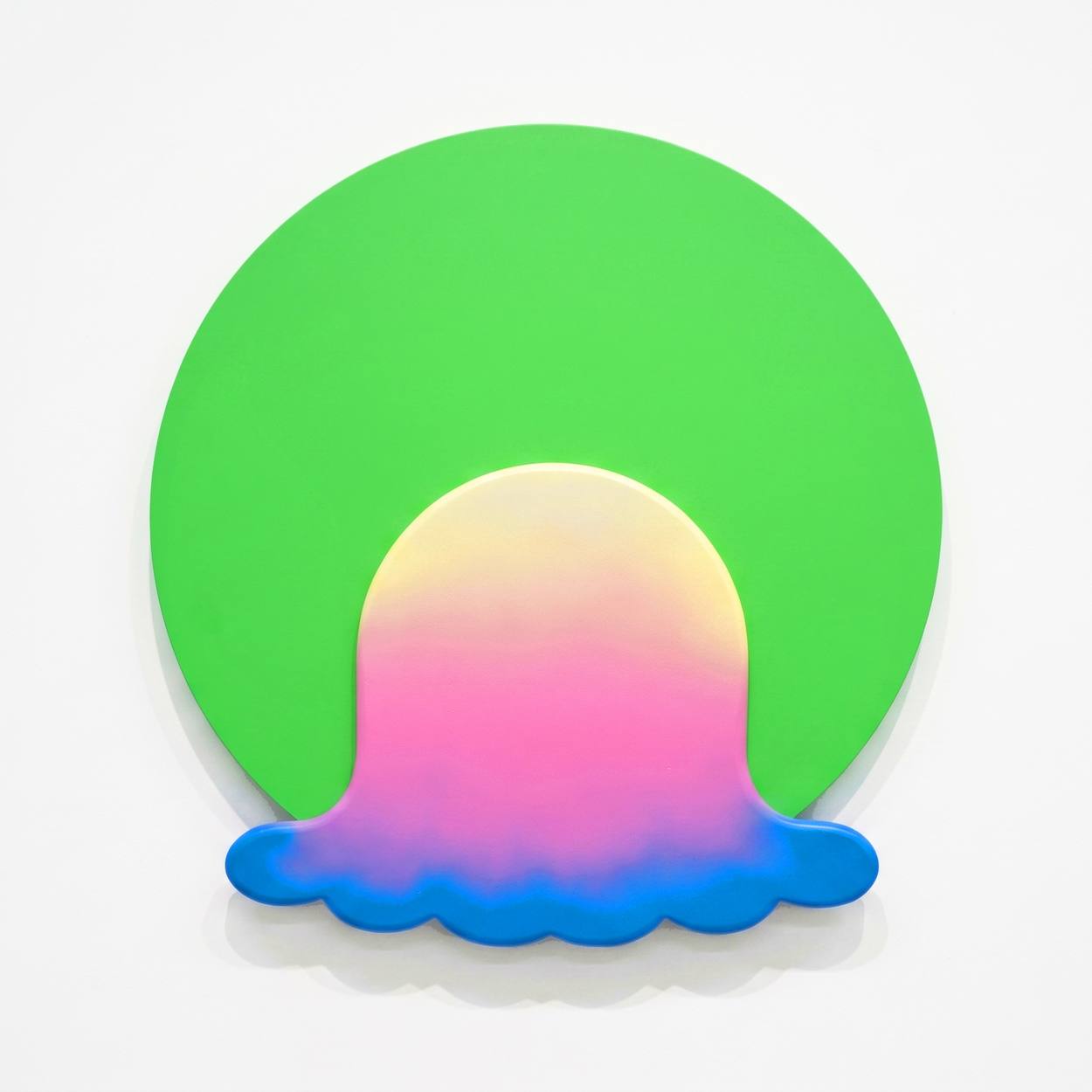
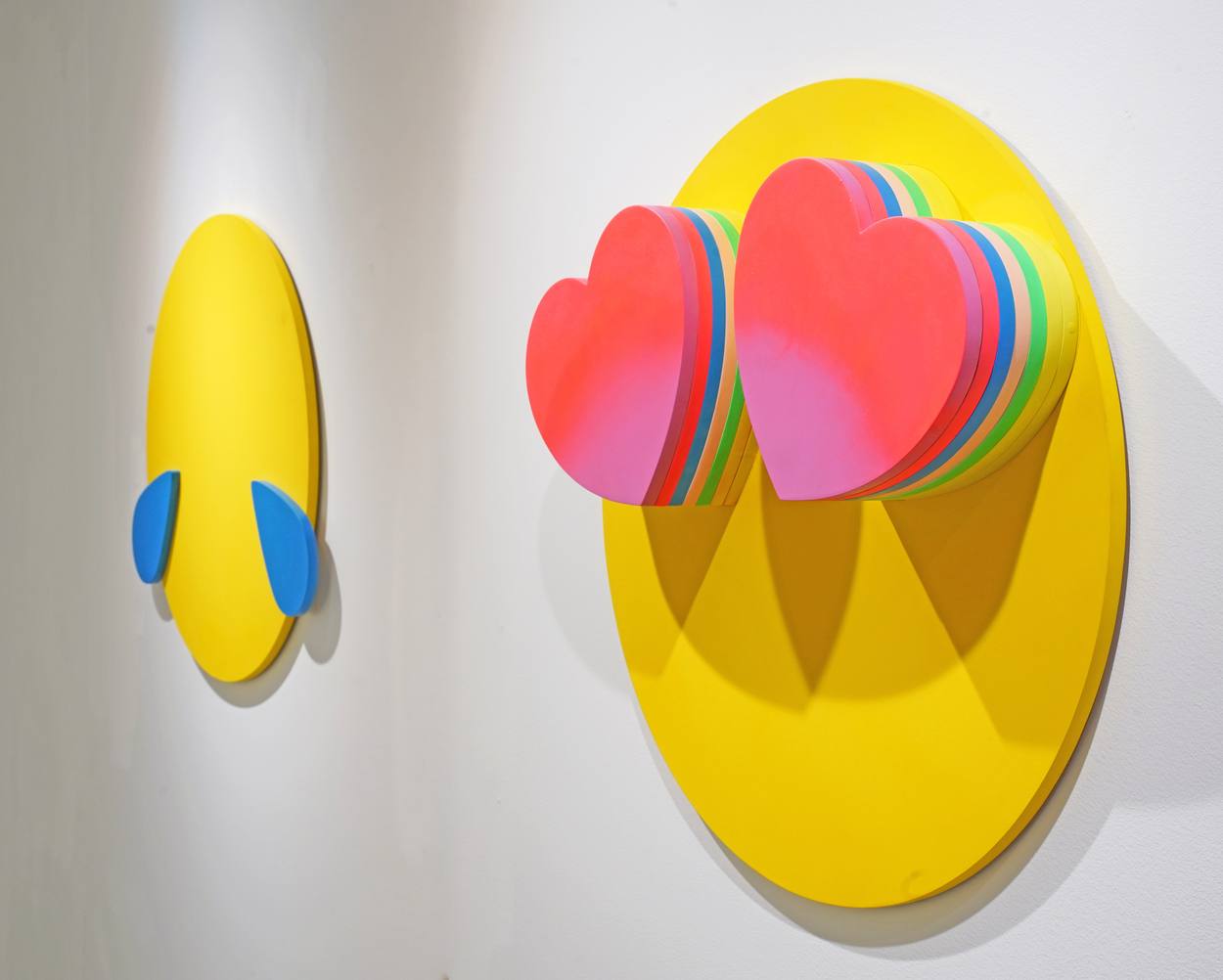
The details of Lee's sculptures reveal how broad that material vocabulary can be. Crying Smiling Face with Heart-Eyes (2026) is made with MDF, resin, fabric and aluminium. Its oversized yellow face and richly textured blue tears are simultaneously recognisable as a familiar screen expression and stubbornly unlike a screen. Pleading Face (2026), described by the artist as paint on wood, offers a different translation of a graphic icon into painted forms and supports. These surfaces are not incidental to the effect: they introduce craft, texture and physical resistance into an idiom devised for immediacy.
The choice of signs matters as much as the choice of material. Emojis appear universal, yet their implications change across platforms, languages and social settings. More cryptic characters expose that instability even more clearly: something can seem to belong to a system of communication without yielding a legible message. Once these signs become sculptural, their informational purpose is loosened. A mark that previously delivered a reaction may instead register as an abstract contour, a comic figure or an unresolved presence. The viewer is allowed to recognise without necessarily decoding.
That productive uncertainty is one of Lee’s strengths. She resists the temptation to turn every form into a neat metaphor for life online. Instead, the work preserves a degree of opacity. Humour and strangeness can inhabit the same object, and the sculptures remain compelling even when the exact source of a sign is not immediately apparent. They speak to a culture in which being constantly surrounded by images does not always make those images easier to understand.
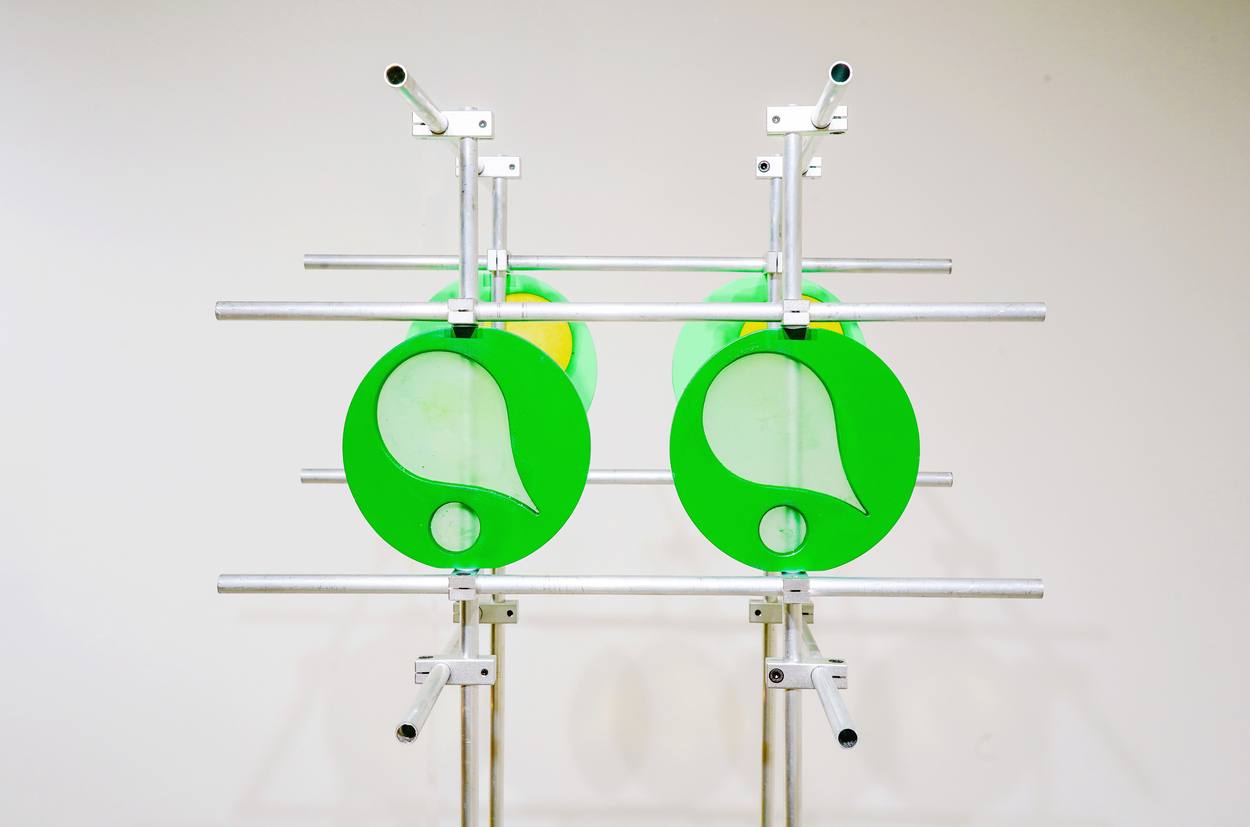
Lee's use of chroma-key colour gives the sculptures a distinctive second life. In film and broadcasting, saturated green or blue surfaces are conventionally associated with the substitution of one image for another. We recognise the visual language of the green screen even when no dramatic illusion is being performed. In Ghost Play, many of the sculptural surfaces are coated in a vivid green. Cameras record the installation, and image processing substitutes digital colours and forms for selected parts of the physical scene. The sculptural surface becomes both a colour we see directly and a threshold through which a different image appears.
This is an intelligent reversal of a familiar convention. A chroma-key backdrop is ordinarily designed to disappear, surrendering its place to a different picture. Here, colour refuses to remain passive background. It clings to the sculpture as a conspicuous skin, drawing attention to the interface between what a camera records and what a screen might subsequently produce. The very hue that suggests erasure also makes the object difficult to overlook in the room.
There is pleasure in the resulting contradiction. The pieces can feel exuberant, even toy-like, without becoming lightweight. Their emphatic colour and borrowed forms offer an inviting first encounter; behind that brightness lies a rigorous question about visibility. Is a sculpture most real when we stand in front of it, or when it appears as a carefully framed image? And what does a colour associated with technological disappearance do when it is attached to something so insistently tangible?
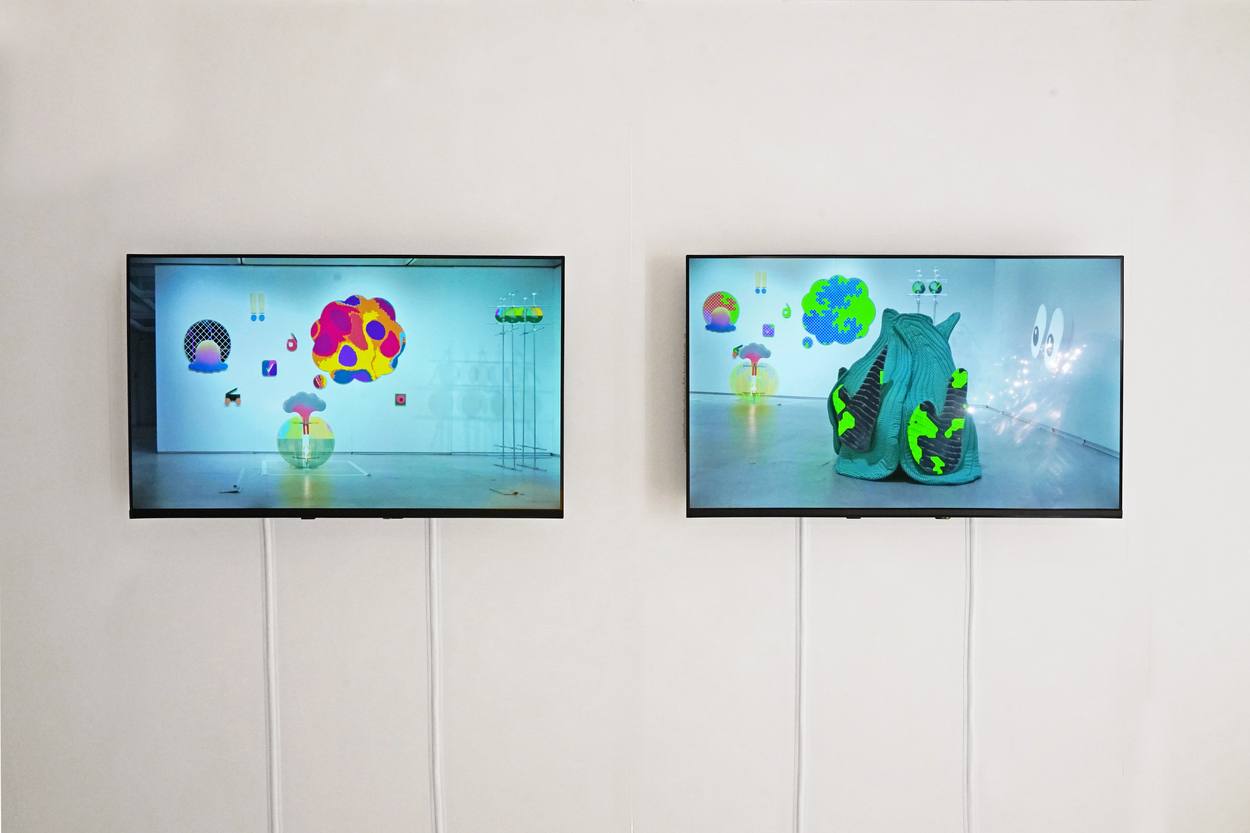
The most distinctive element of Ghost Play is that Lee does not regard fabrication as the end of the translation. A screen in the first area of the exhibition presents a digitally altered view of sculptural objects and the space they inhabit. At first this might seem like a virtual scene in its own right. Visitors then move into the adjacent area and discover the green-coated physical objects that underpin the imagery they have just watched. What appeared to be a self-contained digital environment is exposed as an interpretation of an actual room.
Only then does the delay become decisive. According to Lee's artist statement, the screen is not truly live: its footage runs two minutes behind the physical action. When visitors return, they can encounter an image of themselves from moments earlier, walking among the sculptures. In an installation concerned with ghosts and presences, this is an especially eloquent device. The visitor becomes both the person present in the room and a figure who has already passed through it. The screen records not an imaginary apparition but an ordinary body rendered momentarily out of time.
The sequence matters. The digital image is encountered before its source; an apparent virtual creation becomes a physical discovery; the return to the image produces the surprising recognition of one's own recent past. It is a work of sculpture, moving image and carefully staged perception, with the visitor's movement functioning almost as its punctuation. Nothing requires an elaborate technical explanation for the experience to resonate, though the mechanics become more interesting once they are understood.
Every stage adds something and leaves something behind. The original digital sign is flat and readily repeatable. Its three-dimensional translation possesses a particular scale, texture and encounter with light. The processed footage restores flatness, yet it carries traces of a physical event: a camera angle, a temporal interval and the evidence of a body occupying space beyond the frame. The apparent return to the beginning is therefore a subtle transformation rather than a repetition.
This distinction feels especially relevant when exhibitions circulate widely through installation photographs, online previews and social feeds. Often the photograph becomes the dominant public version of a work. Lee makes the passage between object and image part of the work's own grammar. Rather than lamenting digital mediation, she gives it a visible structure and allows viewers to contemplate its consequences.
The title Ghost Play introduces another layer. A ghost is not simply something absent; it is something that appears to be there without fully agreeing to the terms of ordinary presence. The exhibition approaches that uncertainty through signs that are recognisable but not necessarily readable, objects that seem to belong to screens, and processed images that point back to sculptures outside their own flat surfaces. The delayed image of the viewer adds a ghost of a more intimate kind: one's own past self, familiar and yet irretrievable.
Playfulness is crucial to the effect. Lee does not turn the digital into a threatening abstraction or insist that new technology has made ordinary human experience less authentic. The forms embrace visual wit, the expressive directness of emojis and the small absurdities of translation. There is room for the viewer to be amused by a familiar graphic becoming oddly monumental, and for that amusement to give way to a slower consideration of what the object has gained or lost.
The invisible narratives suggested by the exhibition are not plotlines waiting to be solved. They are the possible histories of a symbol: the messages in which it might have appeared, the emotion someone might have attached to it, the version of it that a different screen would render, the person who is absent from the exchange. Such associations never become fixed. They hover around the objects as potential rather than instruction, making spectatorship a kind of imaginative participation.
This approach also gives the exhibition its human dimension. Digital symbols can compress feeling to the point of seeming automatic, but that compression is precisely why they are interesting. Behind an apparently frictionless sign sits an intention, a social relationship, perhaps even a misunderstanding. By making the signs cumbersome in the best sense—objects that occupy room and require time—Lee restores the possibility of ambiguity and attention.
The ease with which Lee moves between the object and the image reflects the artist's design background. Working under the name Yelin-ment, the Seoul-based artist studied visual design at the University of Seoul and worked in graphic design, including with Studio Hong Eunjoo & Kim Hyoungjae. Her CV records involvement with Typojanchi 2021, the International Typography Biennale, and projects spanning graphic communication and artistic installation. That history helps explain the unusual sensitivity to the relationship between signs, surfaces and the spaces in which they are read.
Her exhibition record includes Synesthetic Translation at Q Archive, Seoul, in 2025, and Invisible Friends at the KimHongdo Art Gallery, Ansan, in 2026. Rather than making a sharp break from design, Ghost Play turns a designer's foundational question—how does a sign communicate?—into a sculptor's question about material, scale and the body. The result has the rigour of a visual system without forfeiting an artist's appetite for unpredictability.
For collectors interested in the increasingly porous boundaries between physical and digital practice, the work proposes a useful way of looking. Material, colour and construction are not incidental supports for a concept; they are the means through which the concept becomes compelling. The live image, in turn, is not simply an optional extension. It exposes the sculpture’s changing conditions of visibility, making the relationship between the two formats integral to understanding the work.
The questions raised here are not limited to the future of digital art. They concern the present tense of looking itself: how quickly we assign a meaning, what happens when recognition falters, and why the encounter with a surface or an object can still surprise us after we have already seen its image. What distinguishes Lee’s approach is its willingness to preserve delight in that inquiry. The objects remain visually approachable while the implications become increasingly layered.
There is a generosity in this balance. Conceptual work about technological life can sometimes ask an audience to admire its apparatus from a distance. Ghost Play instead begins with a language almost everyone knows and makes it physically strange. The process is accessible without being simplistic: familiarity draws the visitor in; the reciprocal movement between gallery and screen keeps the encounter open.
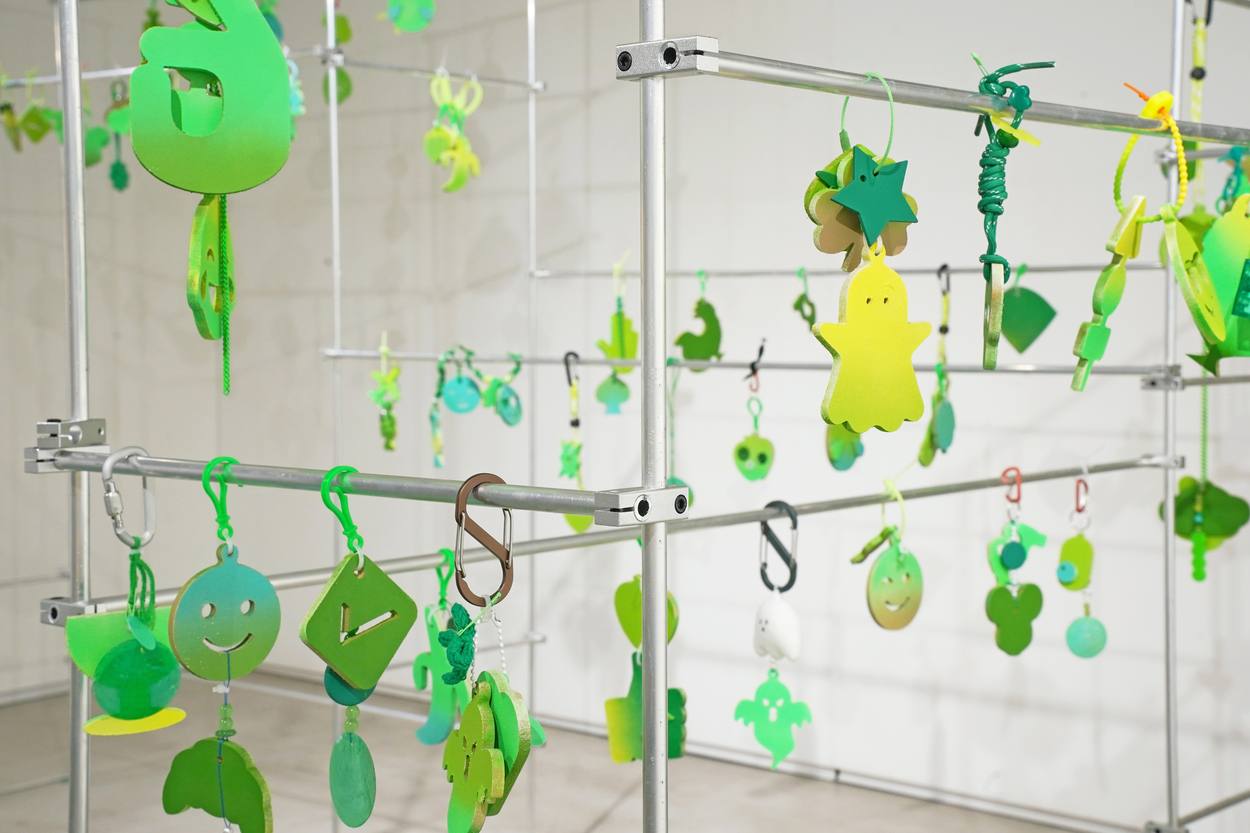
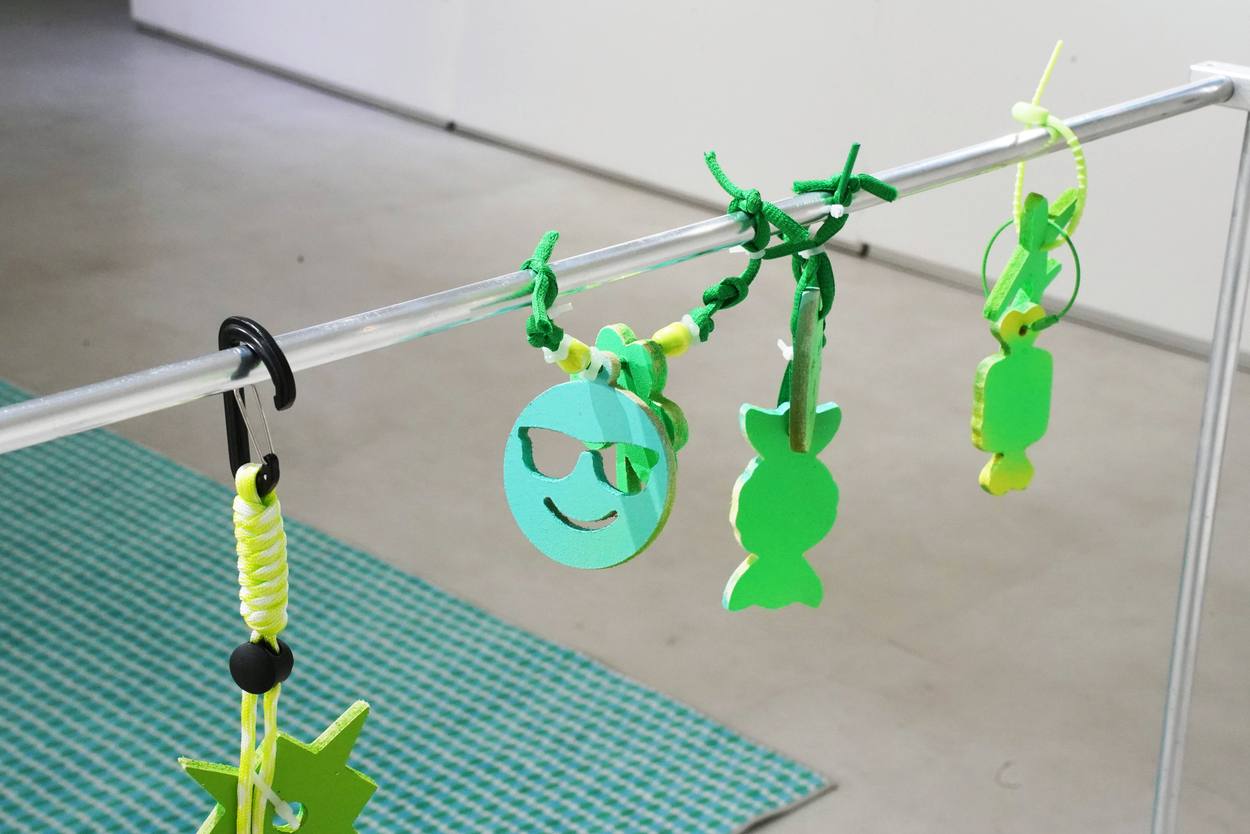
At the exit, Lee's circuit takes an unexpectedly worldly turn. The artist's statement describes an 'Art Shop' where sculptural emoji forms return as small, lightweight consumer objects, including keyrings. After appearing as marks on a screen, becoming substantial works in the gallery and acquiring a second life as delayed video, the signs are miniaturised once more for everyday circulation. The cycle is no longer simply digital–physical–digital. It ends in the portability and familiarity of an object that might be attached to keys or a bag.
It is an astute conclusion because it refuses to keep art separate from the economies of images and things. Museums and galleries, like social platforms, create experiences and also circulate objects. Lee treats that commercial threshold not as an embarrassing afterthought but as part of the exhibition's logic. The miniature becomes another translation—affectionate and lightly mischievous, but alert to how quickly a new visual language can become something to acquire and carry away.
The detail sharpens the show's wit. What began as an almost weightless sign can become an outsized sculpture and then return to the intimate scale of a hand-held keepsake. Rather than declaring one state more authentic than another, Lee asks what each change of medium makes possible: a new encounter, a new relationship, a new form of circulation.
Perhaps the most resonant aspect of Ghost Play is the fact that nothing in its cycle is entirely original or entirely a copy. A digital sign is transformed into a new object, then into a new image, and each iteration carries something of its predecessors while establishing its own conditions of perception. Even the visitor becomes an afterimage: present in one room, returning on a screen two minutes later. The ghost of the original persists, but it never quite settles.
In that sense, Yelin Lee offers more than an ingenious translation of the internet's visual shorthand. She offers a way to understand contemporary presence as something made and remade across materials, media and memory. The sculptures refuse the idea that the virtual has no substance; the delayed images refuse the idea that the physical can ever be fully contained by a frame. Between the two, Ghost Play finds a lightness of touch and a seriousness of purpose that make its questions linger long after the screen has changed.
Yelin Lee's Ghost Play transforms emojis into sculpture, uses chroma-key screens and a two-minute delay, and turns visitors into their own fleeting afterimages.
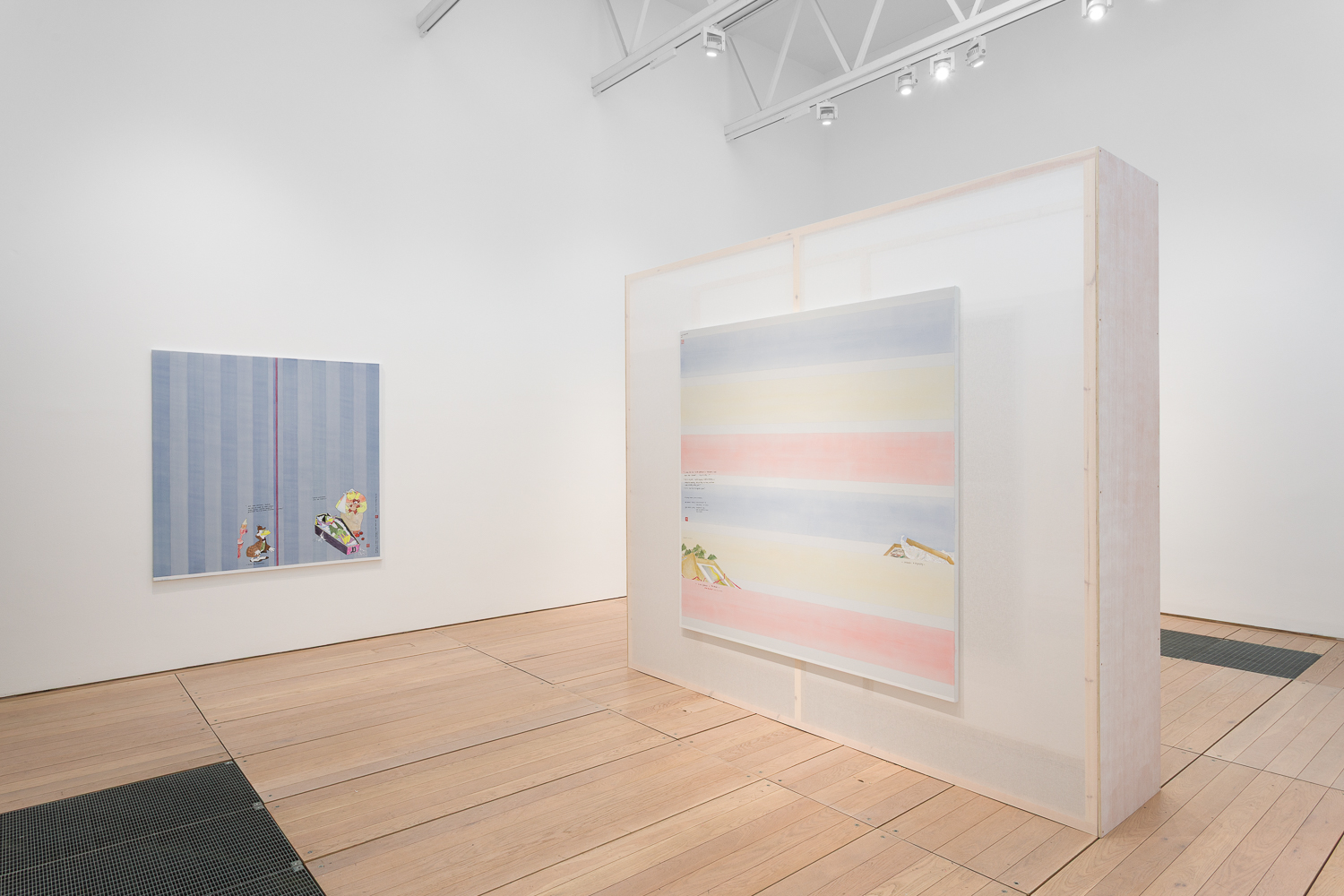
In her first UK institutional exhibition, Evelyn Taocheng Wang turns mistranslation, Agnes Martin, Chinese literati painting and fantasies of Britain into a deliberately unstable language of identity.
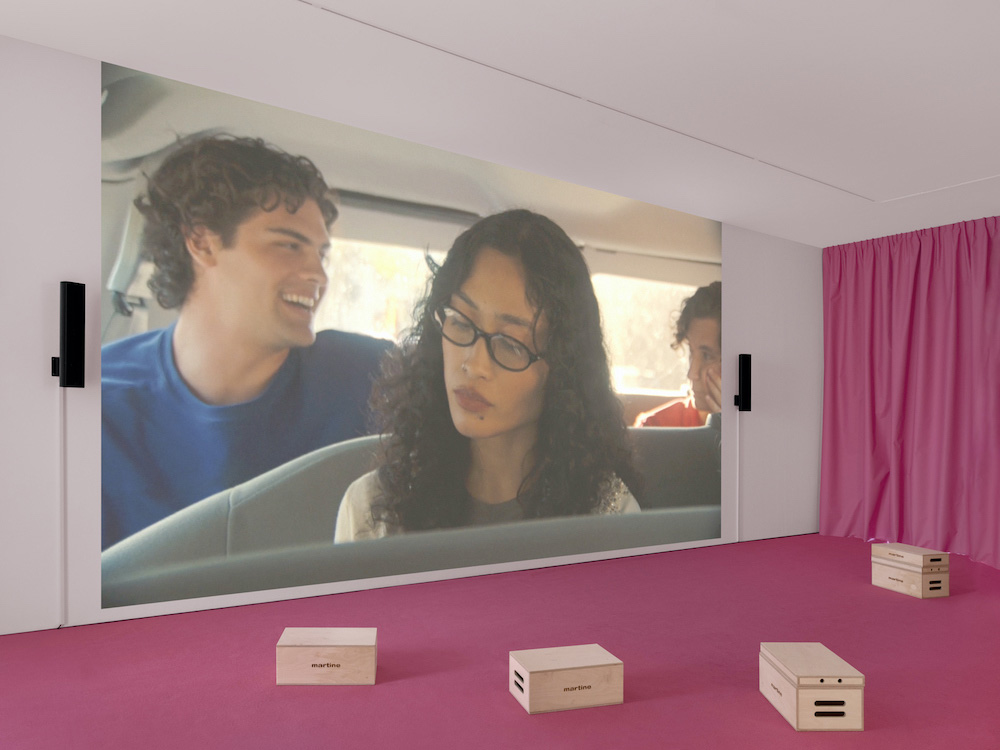
From Robert Ryman and Lorna Simpson to Mary Ramsden, Martine Syms and Nicola Turner, the strongest London route during Frieze week begins outside the fair.