
September 30, 2026
Articles
Articles
Christie’s reveals the late Clive Davis’s private collection, from Warhol and Hockney to Stella and Mitchell—and the discerning eye behind a lifetime of collecting.
In his first London solo exhibition and first show with David Zwirner since joining the gallery, Louis Fratino broadens his intimate figurative language into city life, landscape and a more expansive dialogue with art history.
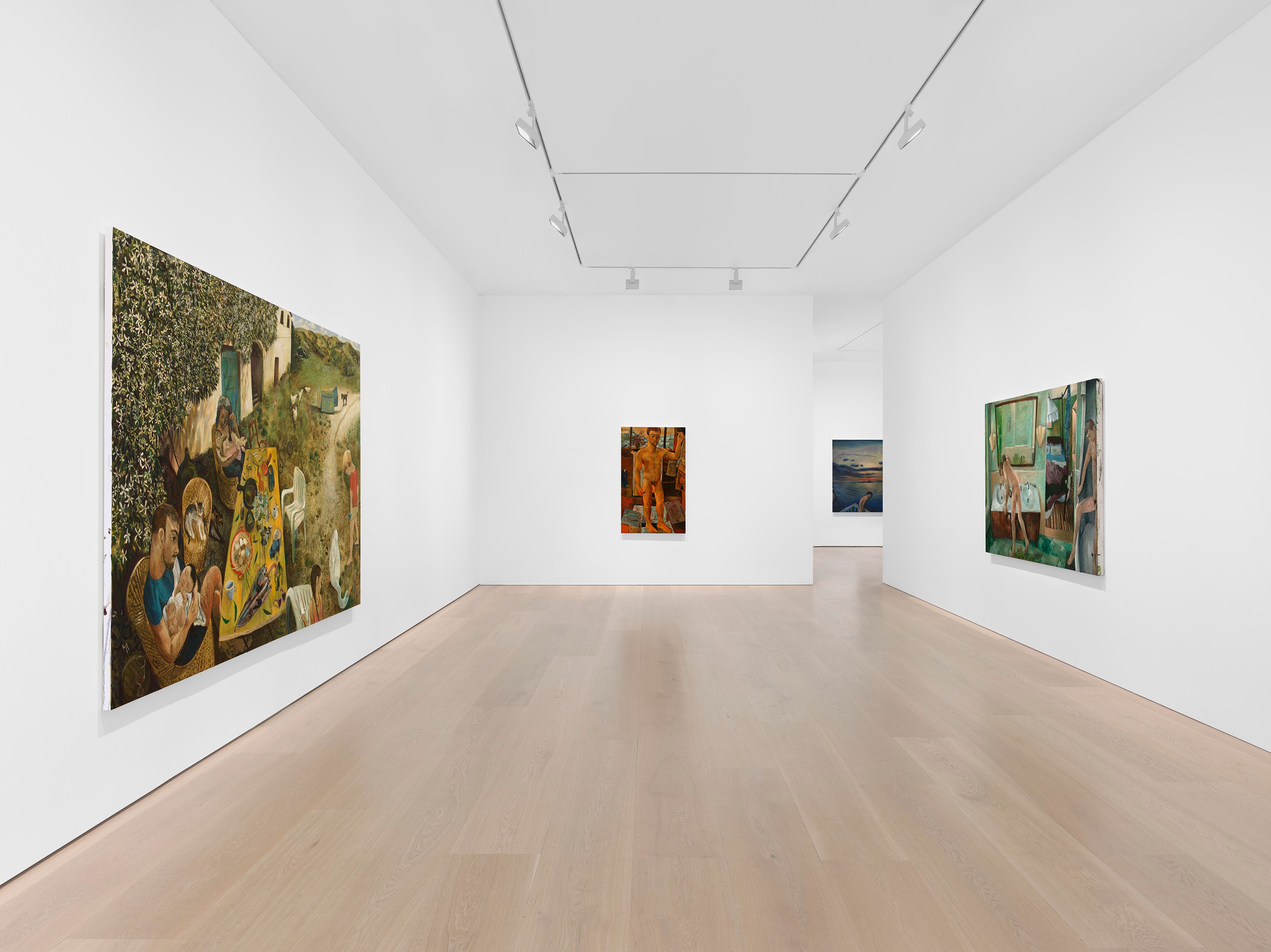
Louis Fratino’s paintings have always understood that intimacy is partly architectural. Bedrooms, bathrooms, cafés, gardens and subway cars are not neutral backdrops in his work. They determine how bodies approach one another, how private experience becomes visible and how memory attaches itself to a room. In Prose, his first solo exhibition in London and his first with David Zwirner since the gallery announced his representation earlier in 2026, that domestic intelligence expands into a broader account of public and private life.
Installation view, Louis Fratino: Prose, David Zwirner London, 2026. Courtesy David Zwirner.
On view from 18 September to 31 October 2026, the exhibition consists entirely of new paintings. Its title is well chosen. “Prose” suggests the everyday rather than the heroic, and Fratino repeatedly locates significance in ordinary situations: a bath, a subway journey, a family gathering, coffee, a sauna, a landscape glimpsed while travelling. Yet these scenes are never casual. They are built through a dense awareness of painting’s history.
David Zwirner’s press material identifies an unusually wide range of references in the new paintings. Summer in the city looks to Edward Burra’s urban intensity and, more broadly, to the emotional charge of interwar European painting. Ale in his mom’s bedroom (after Corot) adopts the contemplative mood and atmospheric colour of Corot. Elsewhere, Fratino engages with Bonnard, Turner, Lucian Freud, Leon Kossoff, David Hockney and F. N. Souza.
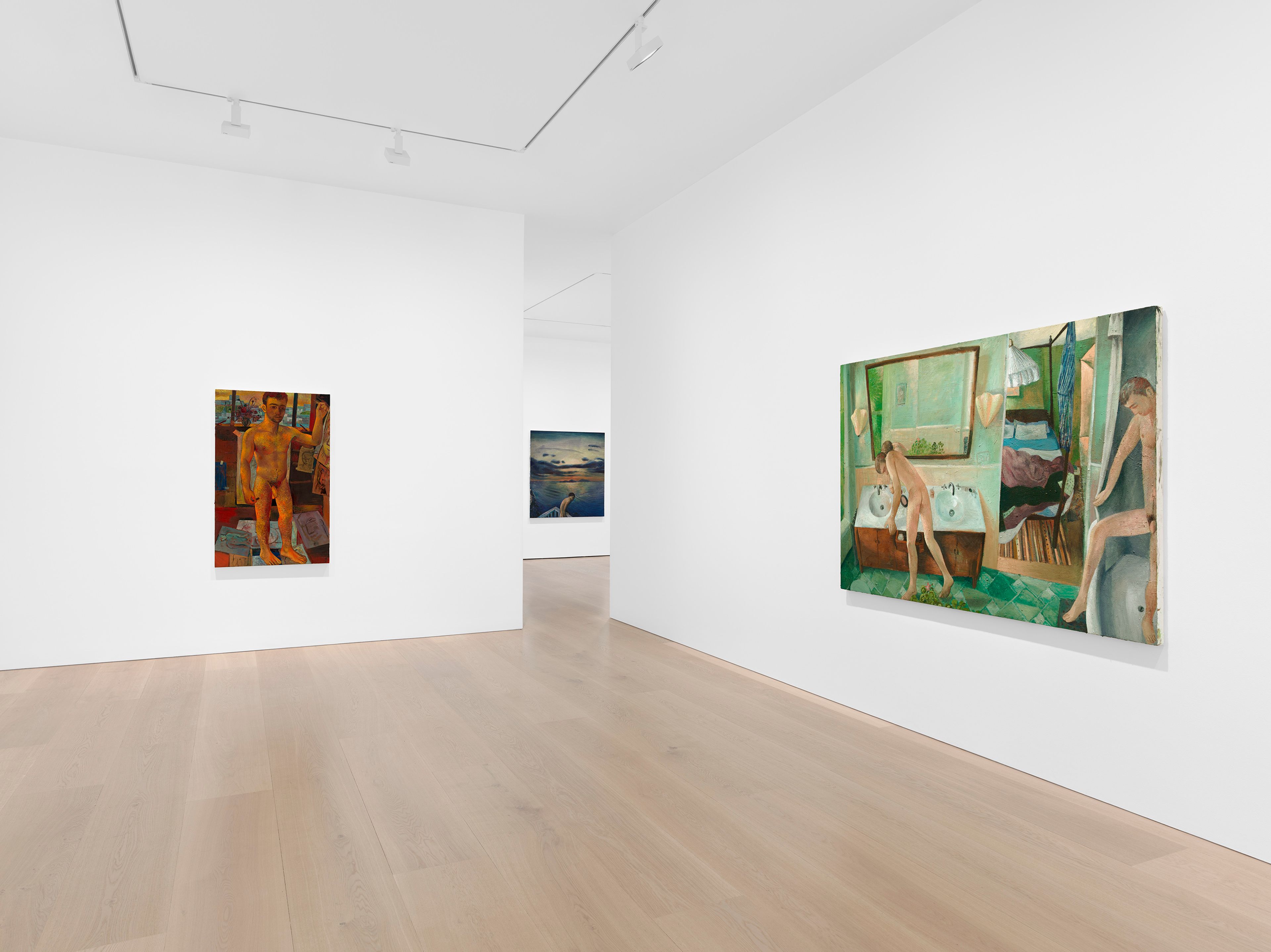
Installation view, Louis Fratino: Prose, with domestic and landscape subjects sharing the gallery. Courtesy David Zwirner.
The point is not quotation for its own sake. Fratino uses art history as a means of intensifying present experience. A contemporary bedroom can carry the compositional gravity of nineteenth-century painting without becoming nostalgic. A subway car can inherit the crowding and psychological pressure of expressionism while remaining recognisably New York.
This elasticity is one reason the exhibition feels larger than a straightforward gallery debut. Fratino is not abandoning the intimate scenes with which he became identified. He is testing how far that language can travel.
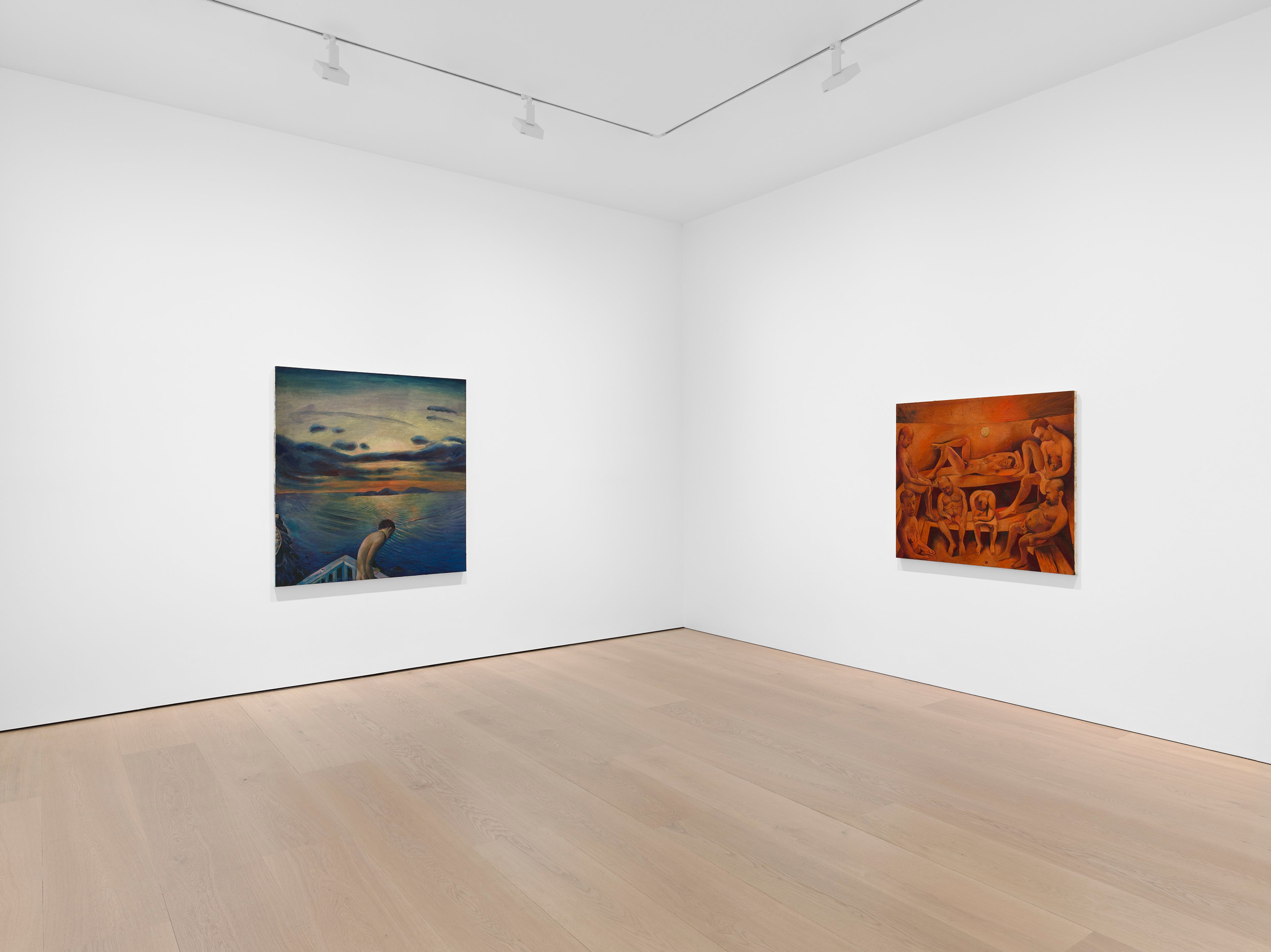
Installation view showing Fratino’s landscape and figure paintings in Prose. Courtesy David Zwirner.
Fratino’s earlier work frequently centred the body at close range. In Prose, public space becomes more insistent. Coffee, The subway car and Summer in the city introduce communal environments in which intimacy has to coexist with strangers, movement and noise. The social field widens, but the paintings retain the artist’s interest in proximity.
That shift is important for collectors following Fratino’s development. It demonstrates expansion rather than repetition. The exhibition includes interiors, landscapes, nudes, family scenes and urban crowds, allowing his characteristic figuration to operate at different emotional temperatures.
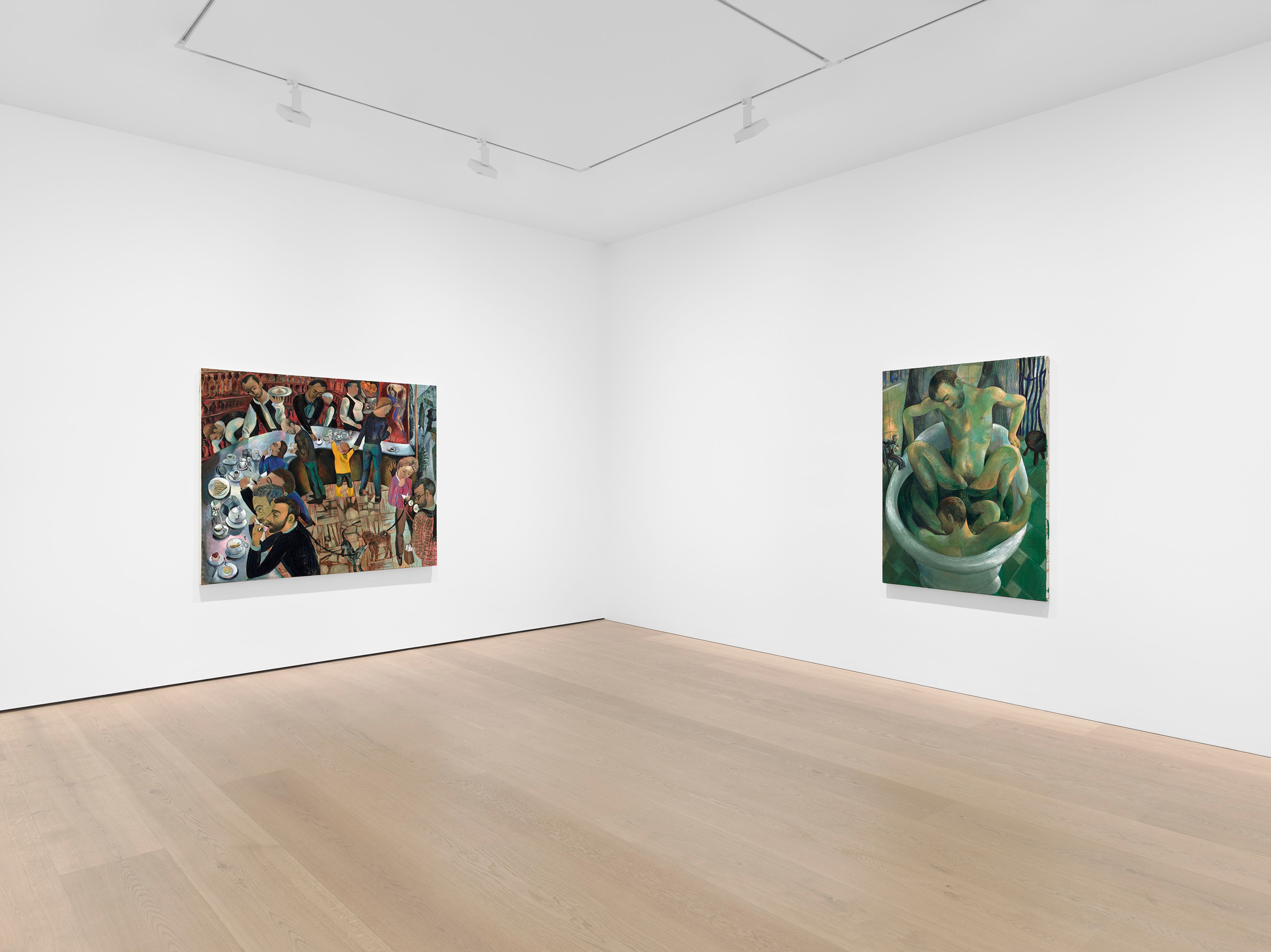
Installation view with Fratino’s Coffee and The green bath, 2026. Courtesy David Zwirner.
Fratino remains particularly compelling when the room itself becomes part of the subject. The bathroom mirror and Ale in his mom’s bedroom (after Corot) show how architecture can organise feeling. Walls, tiles, beds, mirrors and windows are not accessories. They establish the distances between figures and the conditions under which looking takes place.
This quality also helps explain why the paintings work effectively in domestic collections. Their subjects belong to lived space, but the paintings are structurally sophisticated enough to resist becoming merely decorative. They can feel familiar at first glance and increasingly complex with time.
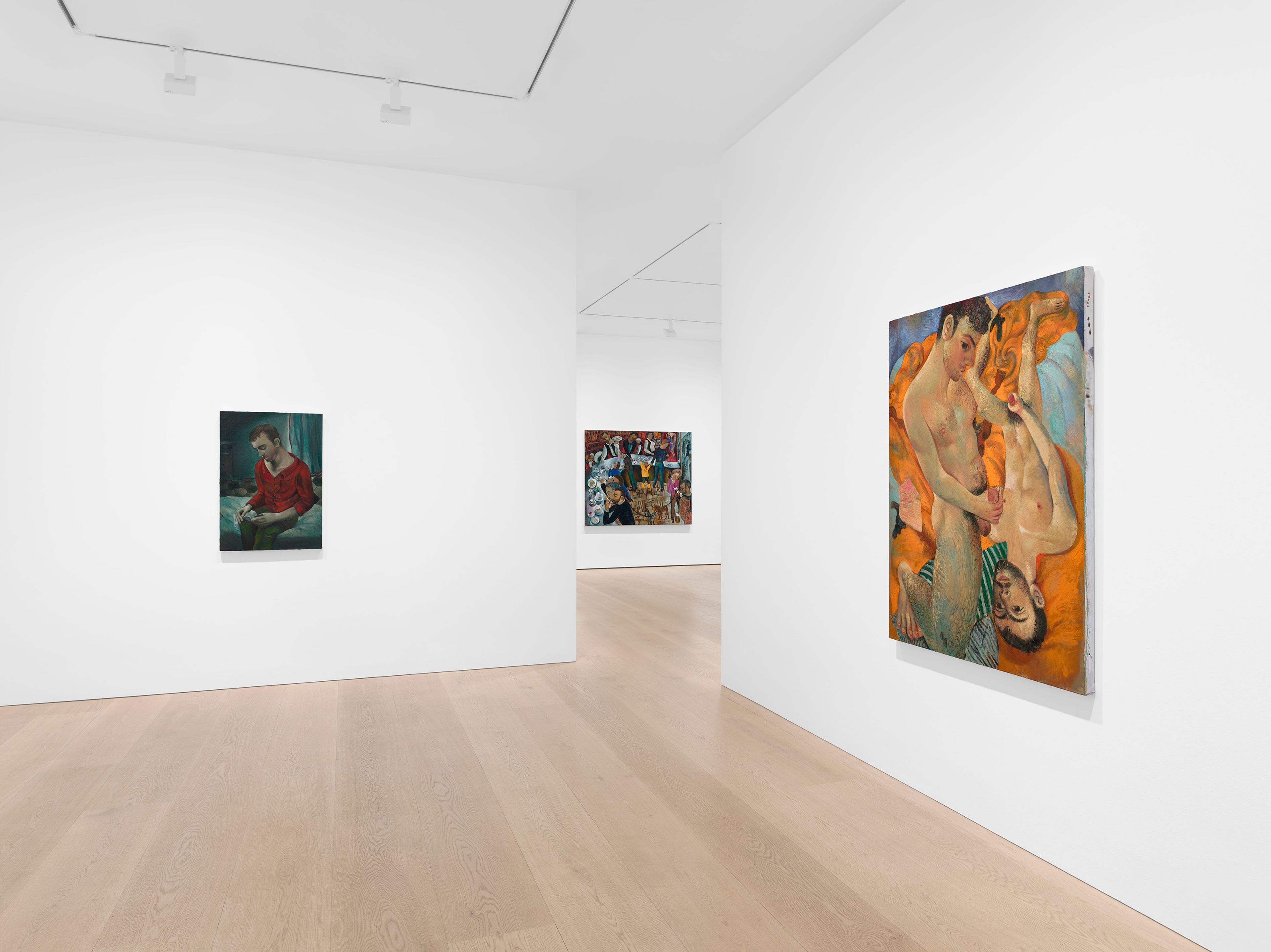
Installation view, Louis Fratino: Prose, David Zwirner London. Courtesy David Zwirner.
The timing gives Prose additional significance. Fratino joined David Zwirner earlier this year after a period of rapid institutional visibility that included the 2024 Venice Biennale, the solo exhibition Satura at Centro per l’arte contemporanea Luigi Pecci, and a 2026 dialogue with Matisse at the Baltimore Museum of Art. His first London solo exhibition therefore arrives with substantial attention already focused on the work.
What matters is that the paintings do not behave as though they are trying to confirm a market identity. The new body of work is heterogeneous. Fratino moves between tenderness, eroticism, comedy, solitude and the density of public life without forcing those moods into a single signature image.
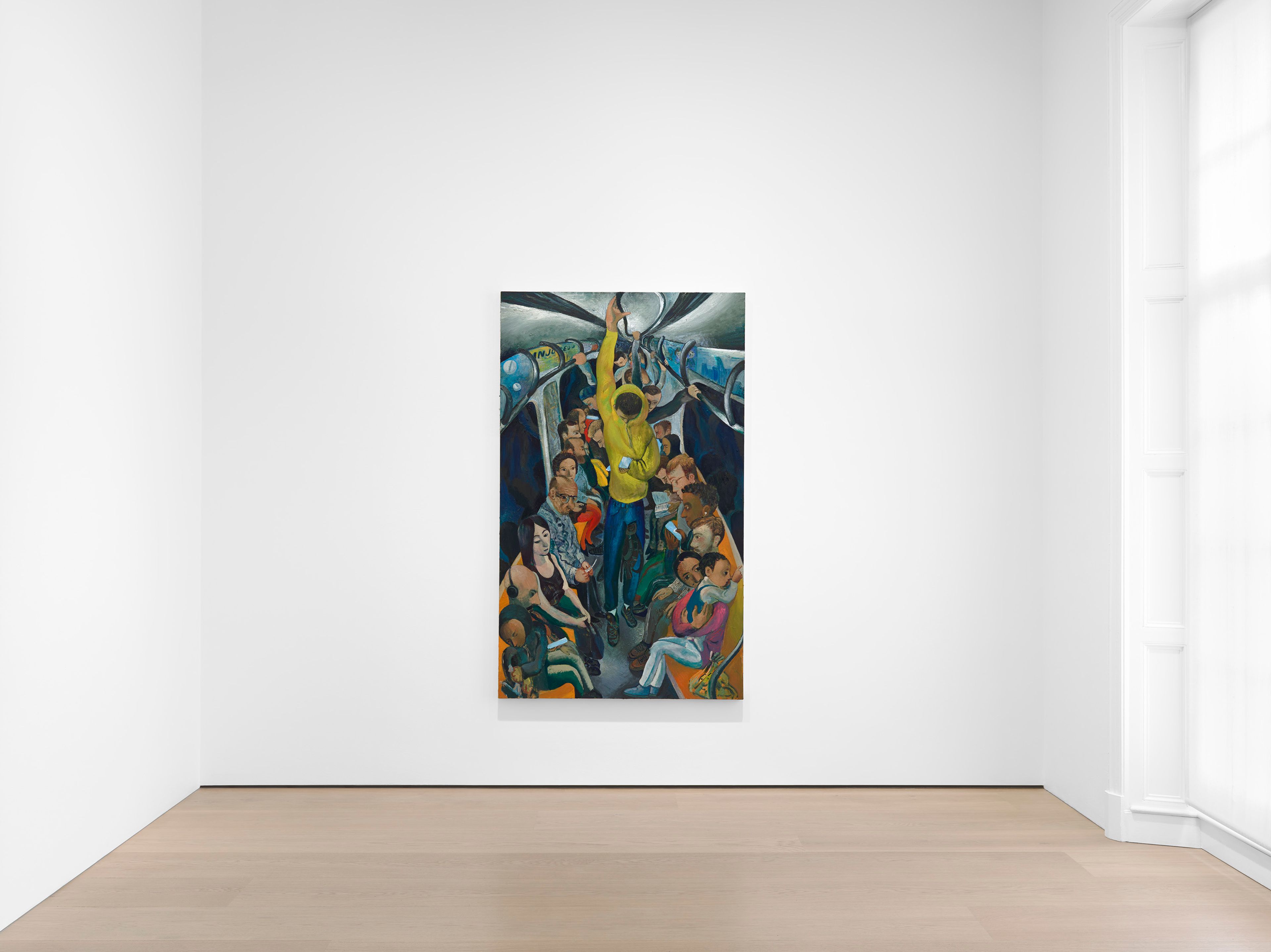
Installation view featuring The subway car, 2026, in Louis Fratino: Prose. Courtesy David Zwirner.
For collectors, that is the more useful signal. A young painter entering a major-gallery programme is most interesting when the work appears capable of becoming less predictable rather than more. Prose suggests that Fratino’s next phase may be defined not by abandoning intimacy, but by discovering how much of the world can be made intimate.
Louis Fratino: Prose
David Zwirner, 24 Grafton Street, London
18 September–31 October 2026.
Christie’s reveals the late Clive Davis’s private collection, from Warhol and Hockney to Stella and Mitchell—and the discerning eye behind a lifetime of collecting.
In his first London solo exhibition and first show with David Zwirner since joining the gallery, Louis Fratino broadens his intimate figurative language into city life, landscape and a more expansive dialogue with art history.
For his first UK solo presentation and first exhibition with David Zwirner, Daichi Takagi turns stones, moonlight, leaves and ancient trees into paintings poised between exact observation and the surreal.