
September 30, 2026
Articles
Articles
Christie’s reveals the late Clive Davis’s private collection, from Warhol and Hockney to Stella and Mitchell—and the discerning eye behind a lifetime of collecting.
Christie’s reveals the late Clive Davis’s private collection, from Warhol and Hockney to Stella and Mitchell—and the discerning eye behind a lifetime of collecting.
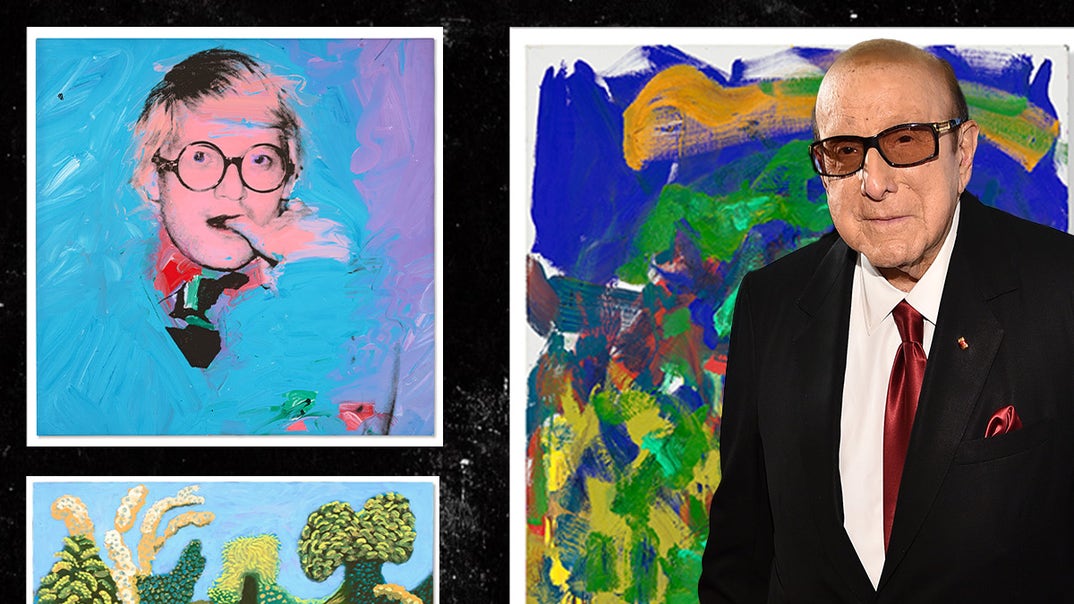
Clive Davis spent more than six decades identifying voices that could change popular culture. Less publicly, he was also building a collection of post-war and contemporary art around a strikingly similar principle: not stylistic consistency, but unmistakable artistic identity. Christie’s decision to bring the collection to market after Davis’s death in 2026 opens a rare view onto that private side of his life.
The collection spans Pop, abstraction, Neo-Expressionism and post-war painting, with works by Andy Warhol, David Hockney, Frank Stella, Joan Mitchell, Jean Dubuffet, Jean-Michel Basquiat, George Condo, Fernando Botero and others. Christie’s expects the group to realise more than $35 million, with eight works scheduled to headline its 20th Century Evening Sale in New York during the November marquee season and additional material offered across its autumn sales. But the more revealing story is how Davis chose, lived with and connected these works.
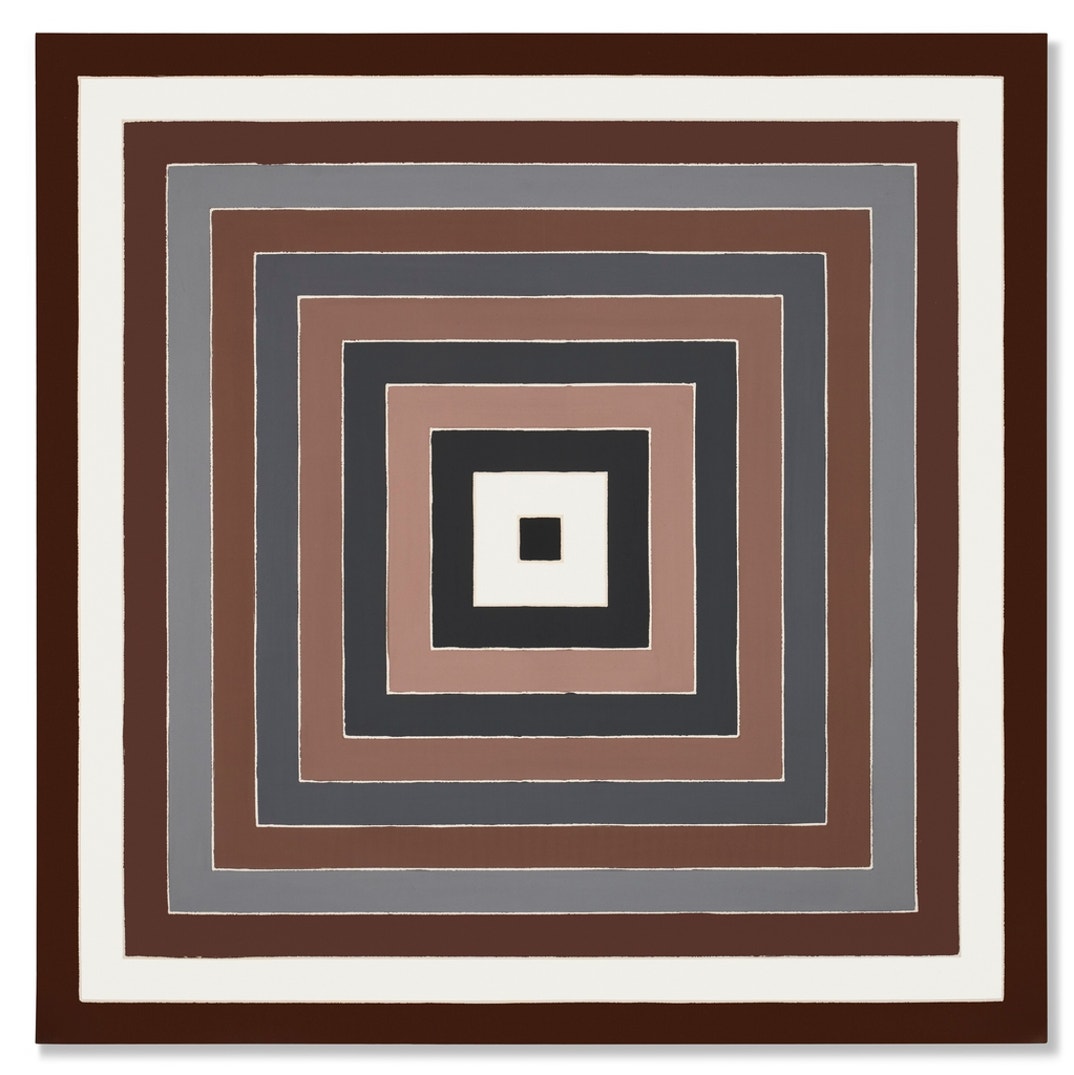
Frank Stella, Attica II, 1978, from the Clive Davis Collection. Courtesy Christie’s; image delivery via TMZ.
One of Davis’s earliest significant acquisitions was Frank Stella’s Attica II, 1978, from the artist’s Concentric Squares series. Christie’s records Davis describing the painting in his Pound Ridge weekend house as though the architecture itself had been designed around it.
That anecdote says something important about the difference between acquiring art and living with it. A work encountered repeatedly in a home develops a different kind of authority from one seen briefly at a fair or auction preview. Light changes. Furniture moves. Visitors react to it. The painting accumulates domestic history alongside art-historical provenance.
Stella’s strict concentric geometry is especially suited to that kind of sustained encounter. Its apparent simplicity becomes more complicated through repetition, proportion and tonal variation. For Davis, the work was not simply an important example by a canonical American artist. It became part of the structure of a place.
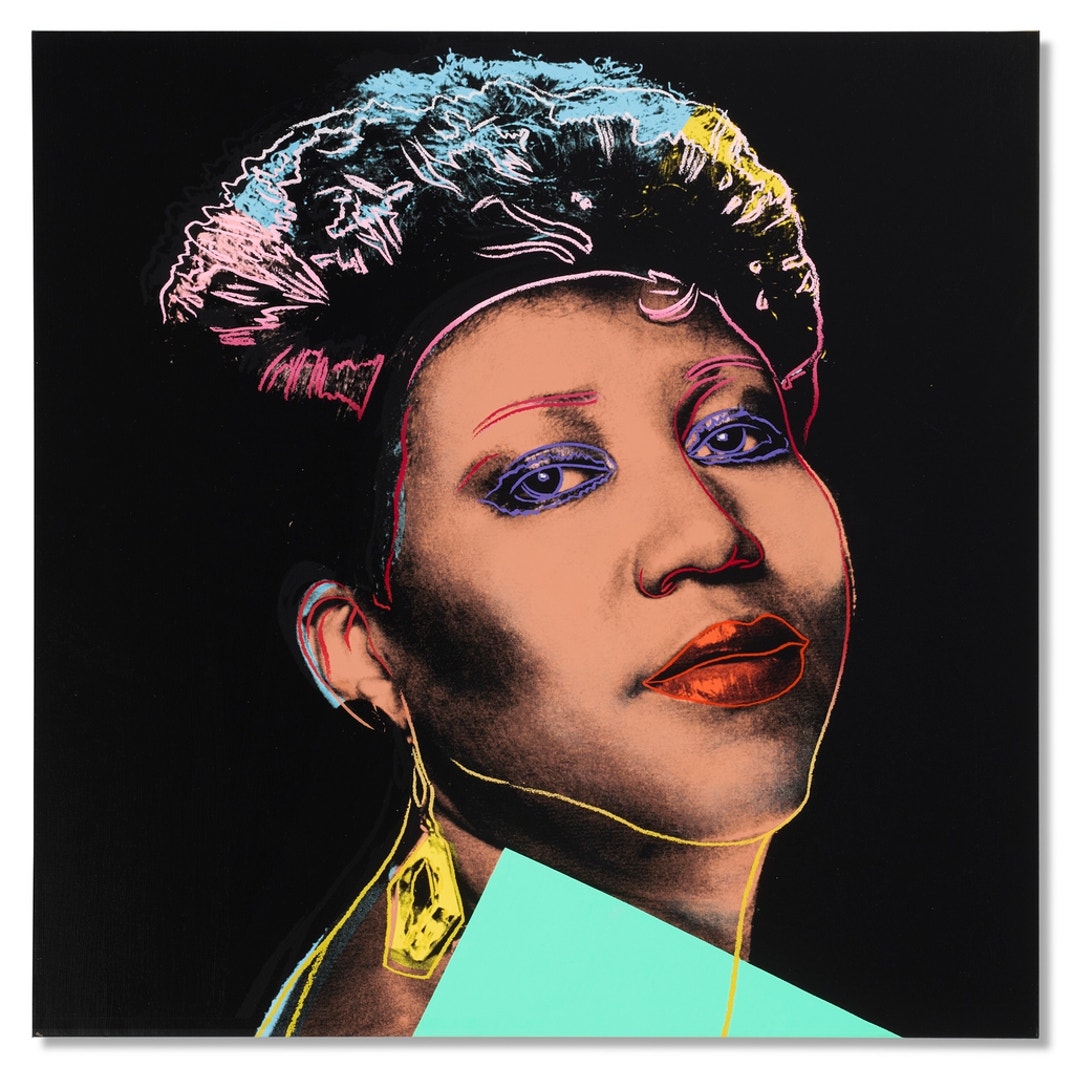
Andy Warhol, Aretha Franklin, circa 1986, from the Clive Davis Collection. Courtesy Christie’s; image delivery via TMZ.
Andy Warhol’s portrait of Aretha Franklin is where Davis’s professional and collecting histories overlap most clearly. Franklin joined Arista Records in 1980 and developed a long professional and personal relationship with Davis. When she wanted Warhol to create an image for her 1986 album Aretha, Davis was in a position to connect two figures who already belonged to his cultural world.
The portrait therefore carries an unusually layered provenance. It is a late Warhol, an image of one of the defining American singers of the twentieth century, and an object bound to Davis’s direct working relationship with Franklin. Those layers deepen the painting’s history without replacing the need to judge the work on its own terms.
That distinction matters for collectors. Personal provenance can intensify an object’s meaning, but biography should not become a substitute for quality. In Davis’s strongest holdings, the two reinforce one another.
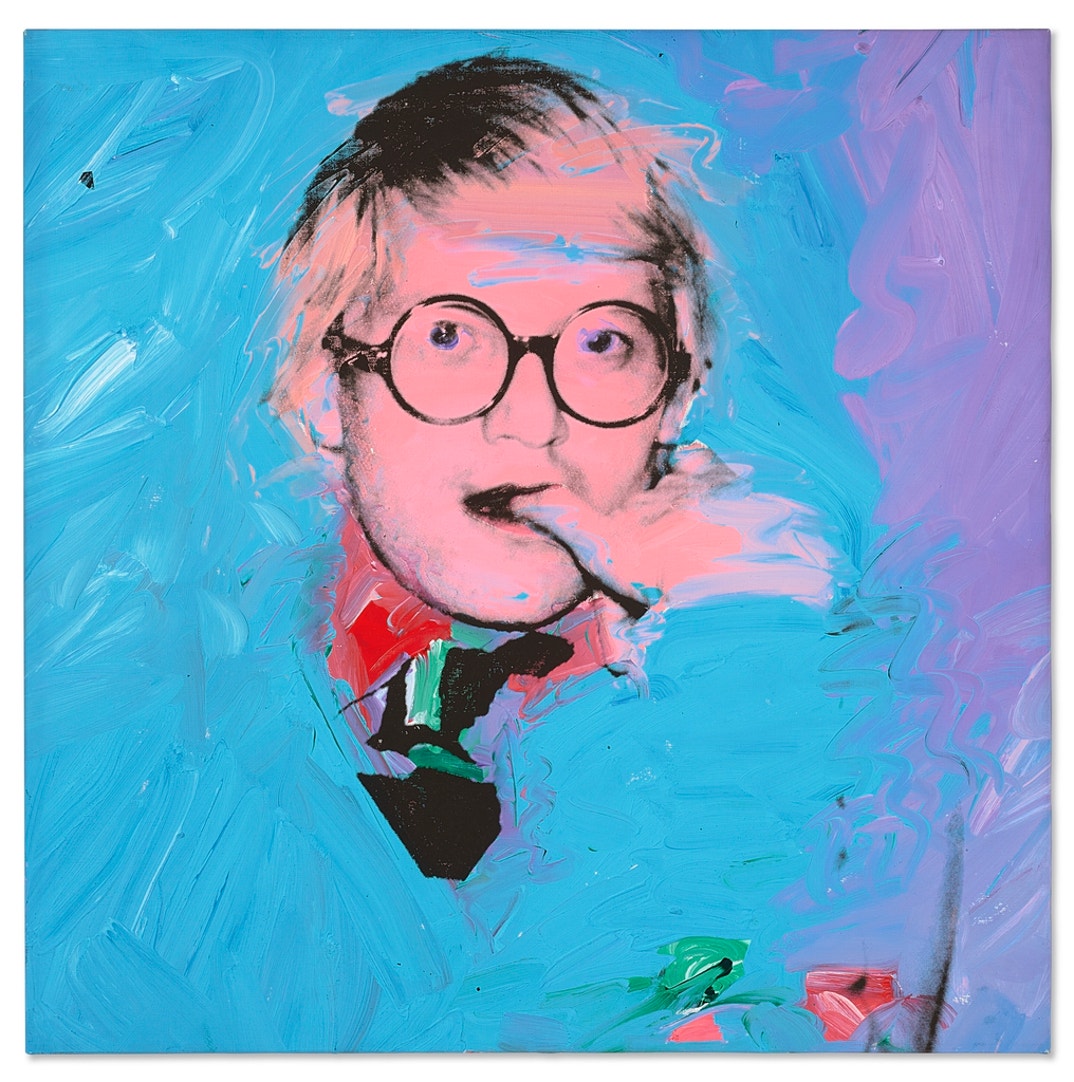
Andy Warhol, David Hockney, 1974, from the Clive Davis Collection. Courtesy Christie’s; image delivery via TMZ.
Warhol’s David Hockney, 1974, belongs to another network of relationships. Warhol and Hockney were connected through the New York art world, and Davis later became close to Hockney himself. In 2022, Hockney painted Davis for the Smithsonian National Portrait Gallery after Davis travelled to the artist’s Normandy studio to sit for the work. The resulting portrait became the first Hockney painting to enter the Portrait Gallery’s collection.
This makes the Warhol portrait particularly resonant inside Davis’s collection. A picture of one artist by another sits within the collection of a man who knew both, and who would decades later become Hockney’s own sitter. The provenance reads almost like a cultural diagram linking music, Pop art, portraiture and friendship.
But again, the collecting lesson is broader than celebrity access. Proximity to artists creates opportunities; it does not automatically produce a coherent collection. Davis’s stronger choices retain their significance when the social history is stripped away.
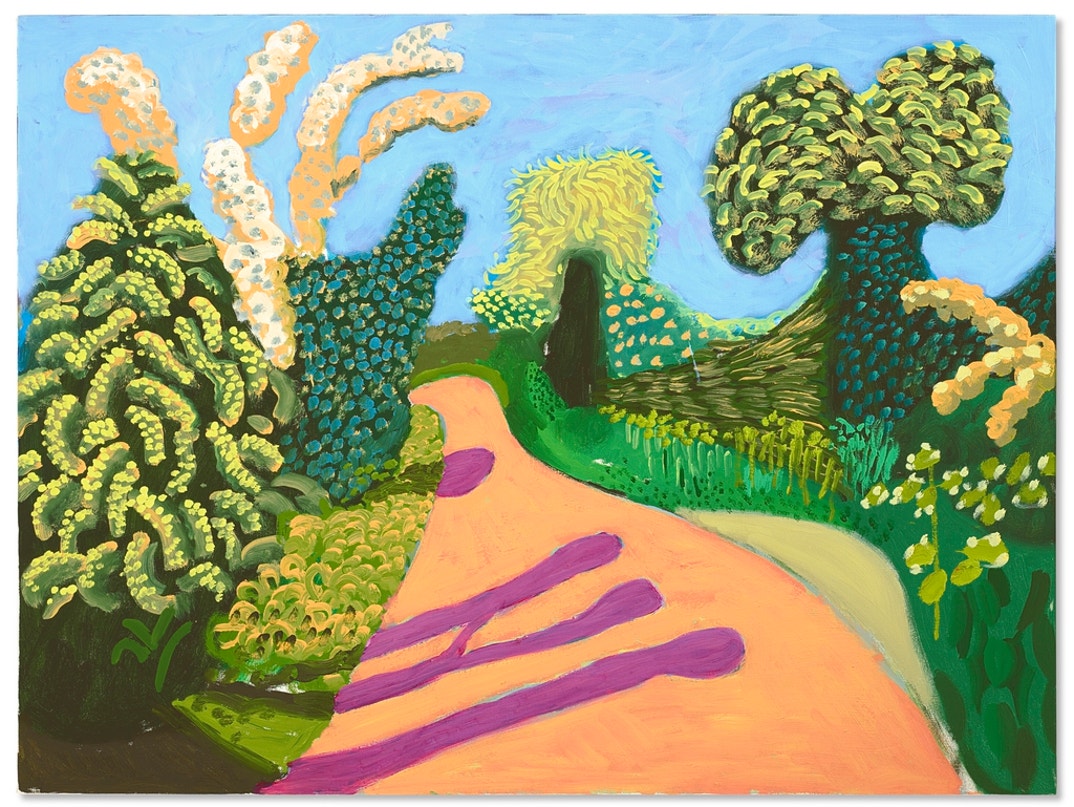
David Hockney, Hawthorne Blossom, Woldgate No. 4, 2009, from the Clive Davis Collection. Courtesy Christie’s; image delivery via TMZ.
Davis also collected Hockney away from the portrait genre. Hawthorne Blossom, Woldgate No. 4, 2009, belongs to the celebrated period in which Hockney returned to the East Yorkshire landscape of his childhood and translated its roads, trees and seasonal changes into a heightened pictorial language.
The work is useful within this collection because it resists any simplistic explanation of Davis’s taste. There is no obvious formal bridge between Stella’s disciplined geometry, Warhol’s silkscreened portraiture and Hockney’s saturated landscape. What connects them is the strength of each artist’s visual language.
That is perhaps the clearest link between Davis the music executive and Davis the collector. He did not build his career by looking for singers who sounded alike. He looked for voices that could remain recognisable while reaching large audiences. His collection suggests the same sensitivity to singularity.
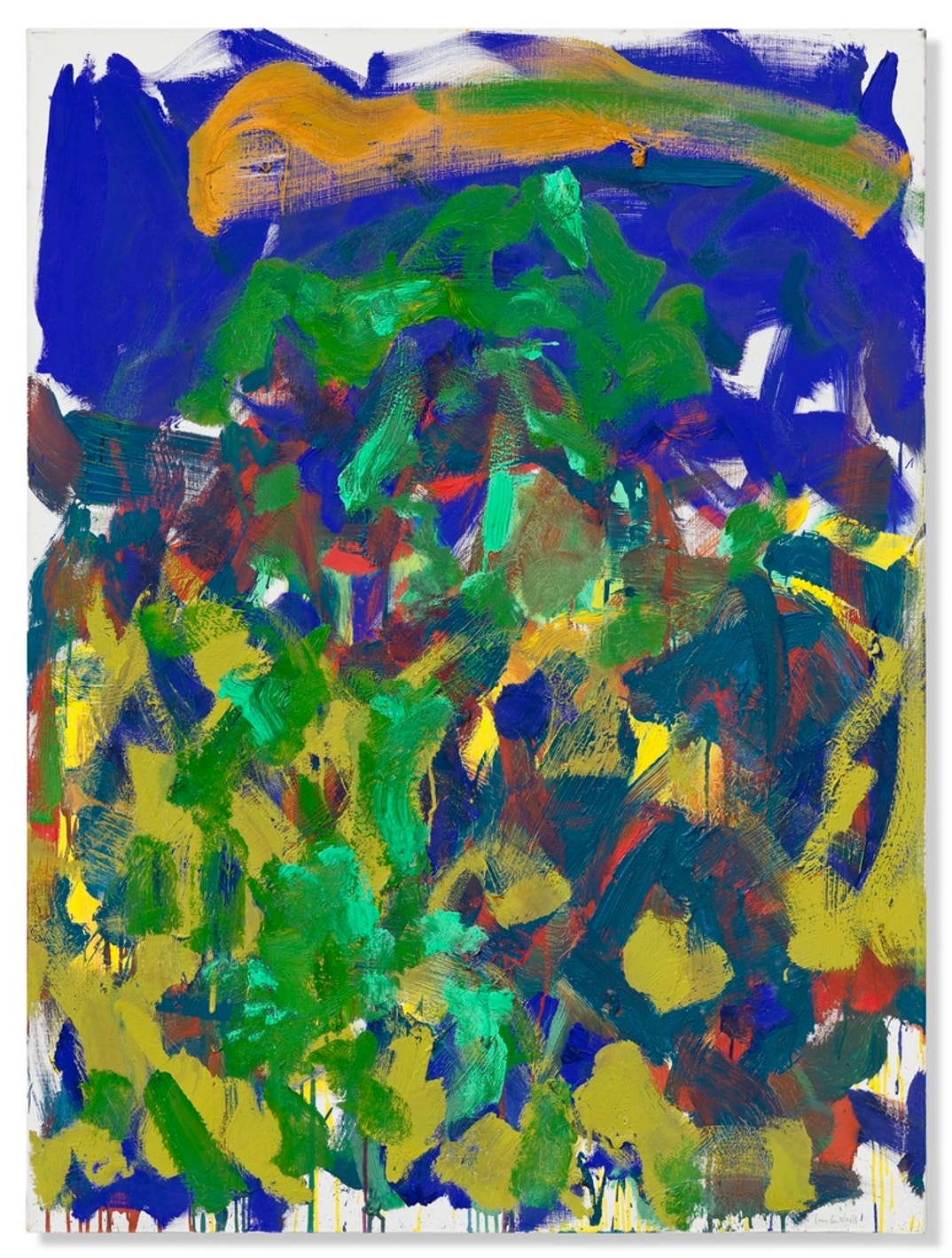
Joan Mitchell, Untitled, 1992, from the Clive Davis Collection. Courtesy Christie’s; image delivery via TMZ.
Joan Mitchell’s Untitled, painted in 1992, the final year of the artist’s life, introduces a very different register. Christie’s highlights the work’s deep blue, green, yellow and orange passages and connects its atmosphere to Mitchell’s longstanding relationship with landscape, memory and colour.
Mitchell repeatedly described painting as a means of communicating what could not be adequately contained by words. In the context of Davis’s collection, that idea has an obvious resonance with music, but the painting should not be reduced to an analogy. Its force lies in its own physical structure: layered passages, abrupt directional changes and colour held in tension across the canvas.
The work also makes clear that Davis’s collection was not organised around easy legibility. Mitchell’s late abstraction asks for a very different kind of attention from Warhol or Stella. A collection becomes more interesting when it can hold those differences rather than smoothing them away.
Christie’s describes Davis as a largely self-directed collector who spent considerable time studying auction catalogues, reading about artists and continuing to learn. That detail is more useful than the familiar idea that successful collecting is simply another form of instinct. Instinct matters, but Davis’s example suggests that instinct was reinforced by repetition: looking, reading, comparing and living with art over time.
His access to artists and cultural figures was extraordinary, but access alone does not explain the collection. The stronger explanation is that Davis responded to artists with developed, individual languages. Stella, Warhol, Hockney and Mitchell do not form a movement. They form a collection because someone consistently responded to conviction.
That is why the phrase “golden ear, collector’s eye” works only when it is taken seriously. In both music and art, Davis’s professional and private histories were built around distinguishing originality from familiarity — and then deciding which voices were worth returning to.
The Clive Davis Collection
Christie’s New York
Autumn 2026, including the 20th Century Evening Sale in November and additional Post-War, Contemporary and Prints & Multiples sales.
Christie’s reveals the late Clive Davis’s private collection, from Warhol and Hockney to Stella and Mitchell—and the discerning eye behind a lifetime of collecting.
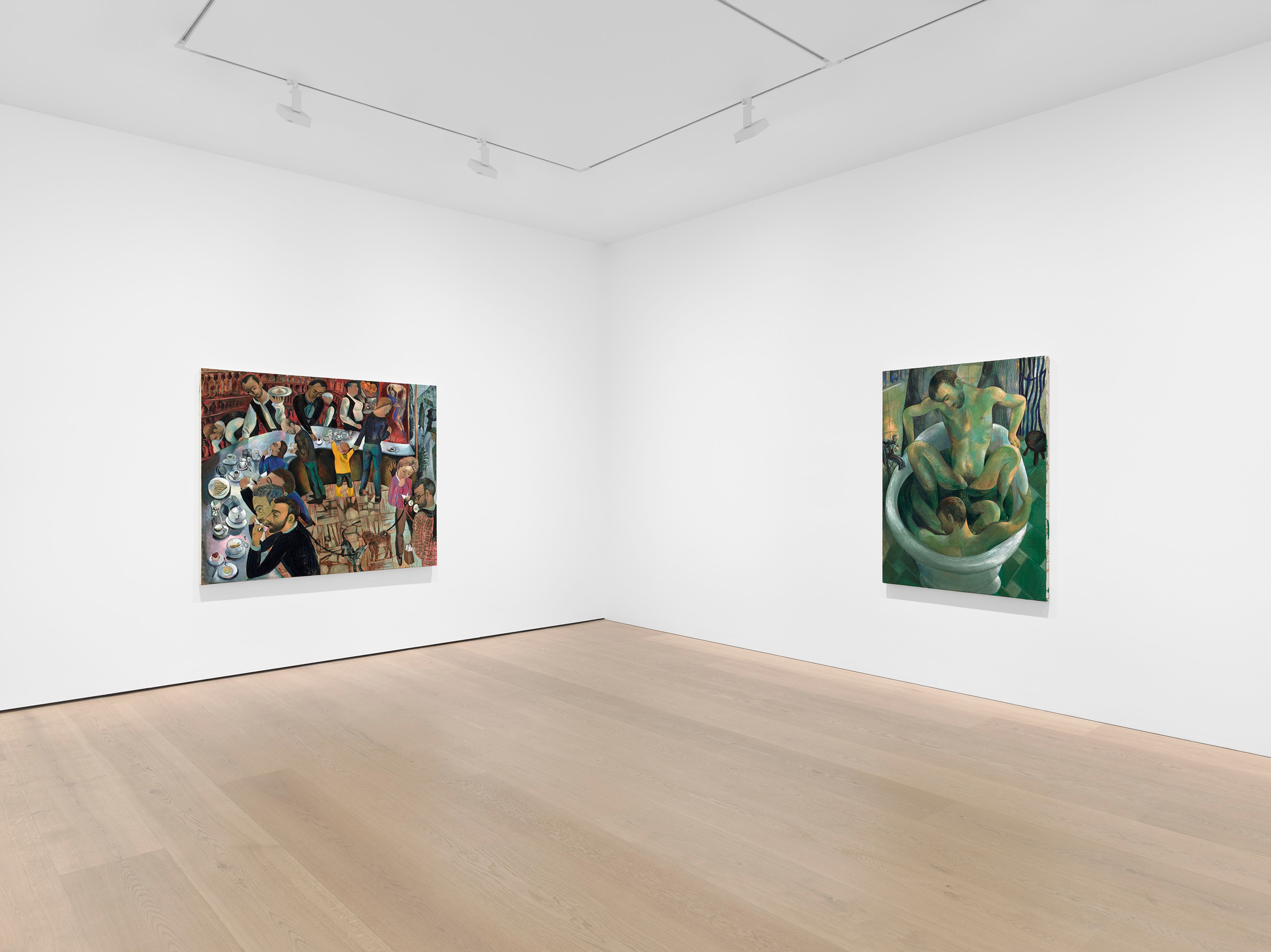
In his first London solo exhibition and first show with David Zwirner since joining the gallery, Louis Fratino broadens his intimate figurative language into city life, landscape and a more expansive dialogue with art history.
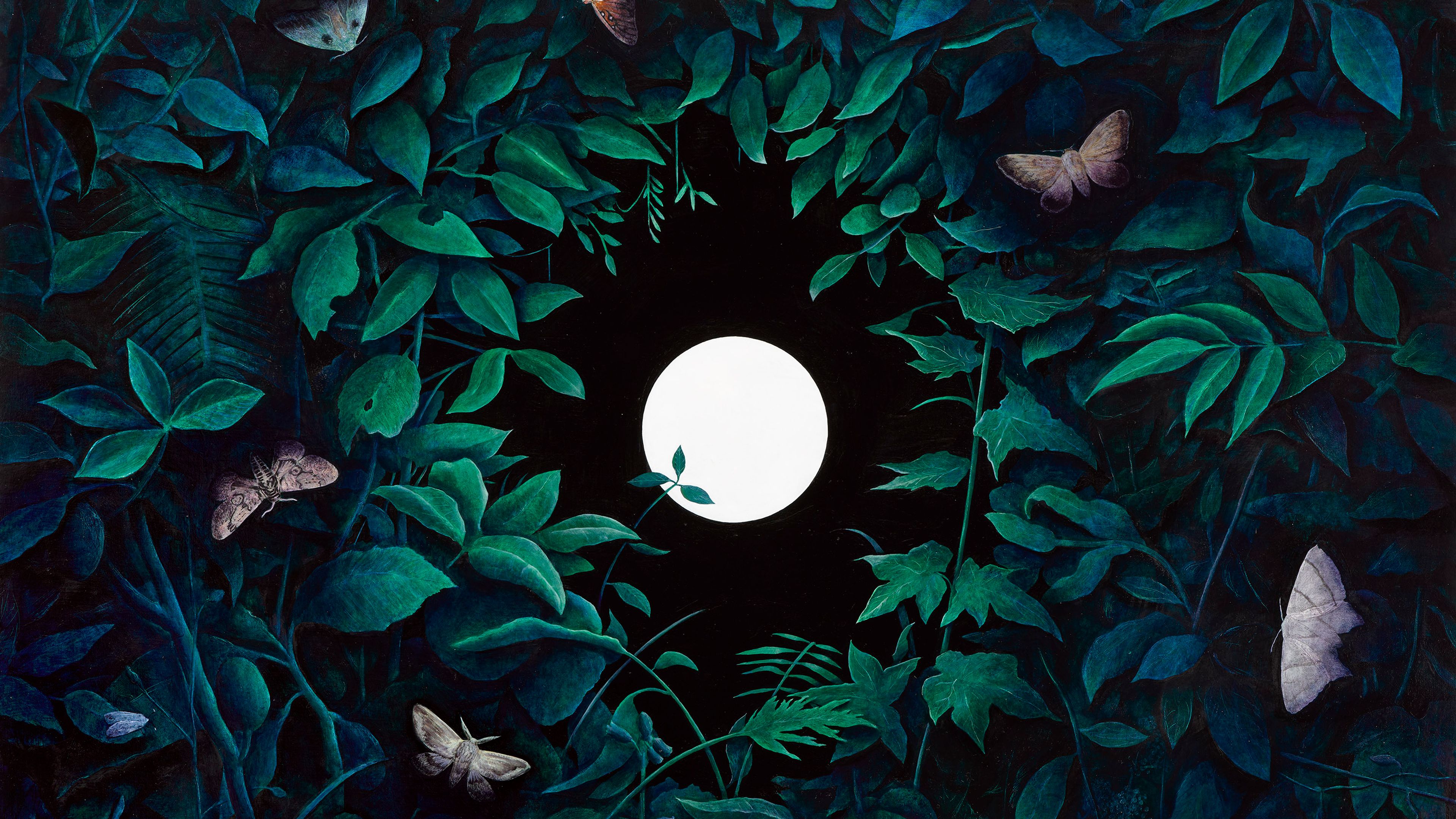
For his first UK solo presentation and first exhibition with David Zwirner, Daichi Takagi turns stones, moonlight, leaves and ancient trees into paintings poised between exact observation and the surreal.